Antaryami
Festivals & celebrations
Diwali: a little light for a new beginning
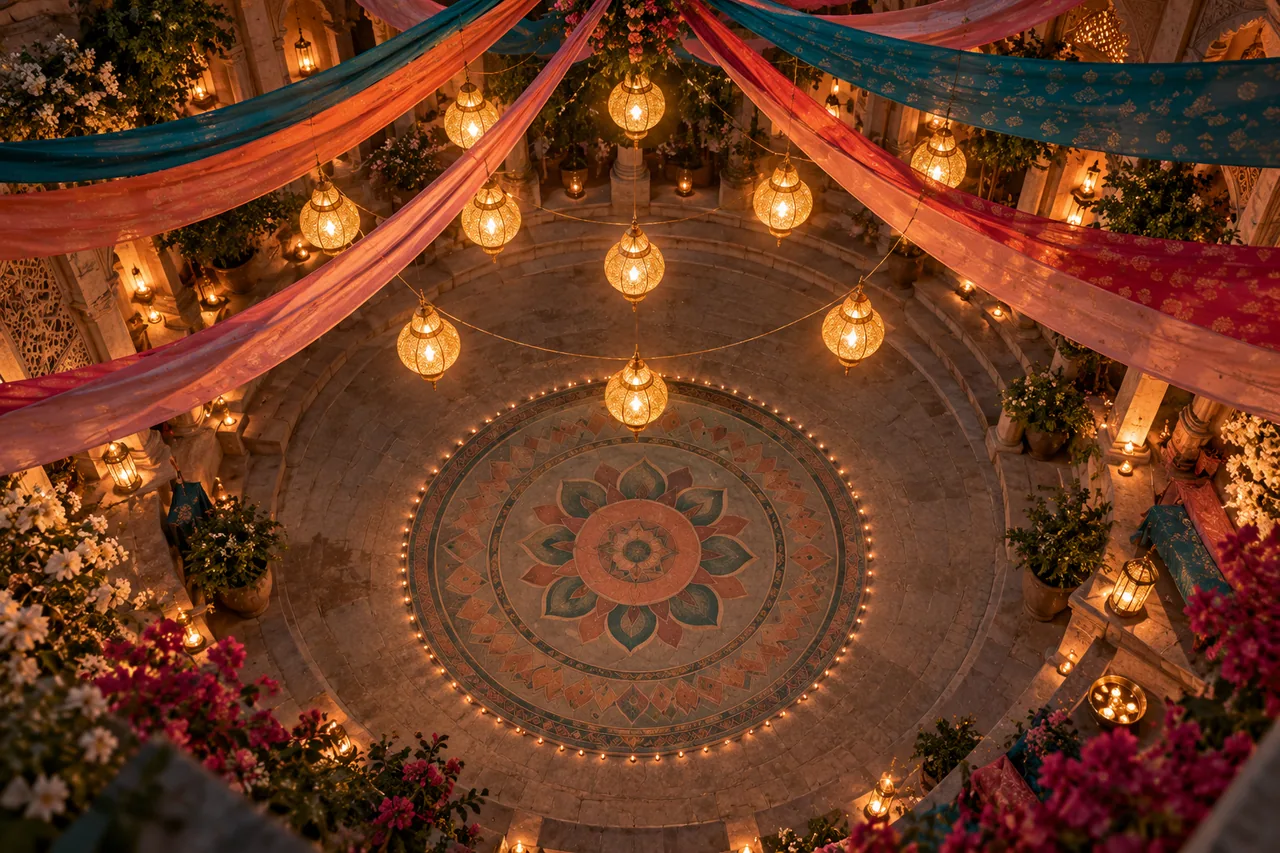
A lamp on a doorstep is a small thing with a generous message: there is room here for light. Diwali can invite a fresh beginning without requiring your life to be perfect before you celebrate.

Make room before making resolutions
For many families, Diwali brings lamps, gatherings and a renewed sense of welcome. Your household may observe it differently from a neighbour or another community. Begin with the practices you actually share rather than a universal checklist. A cleared corner, a thoughtful greeting or an unhurried conversation can carry more meaning than an elaborate celebration assembled under pressure.
A beginning does not always arrive with a dramatic announcement. Sometimes it is a cleared corner, a returned call or an evening when people can sit together without rushing. Diwali can offer a setting for those small changes. The lights may be the visible part, but the question beneath them is personal: what would you like to make room for? You do not need an impressive answer to begin. A little more attention to an ordinary relationship may matter more than a long list of resolutions.
Look at the difference between making room and trying to perfect everything. A home can be welcoming without looking like a photograph prepared for a campaign. A gathering can feel warm even if plans change. If preparation becomes a source of pressure, ask which parts genuinely serve the people coming. You may discover that a simple arrangement leaves more energy for conversation. The occasion does not have to prove that every part of life is already in order.
You can also acknowledge that a new beginning may involve an unfinished feeling. Someone may arrive after a difficult year, or join from far away with mixed emotions about home. Let the invitation be broad enough for that experience. Celebration does not require everyone to display the same mood. A gentle welcome allows joy and uncertainty to share the evening without demanding an explanation from the person who feels less festive.
Prosperity is not a guaranteed result
It is possible to honour prosperity as a cultural theme without promising that a ritual changes someone's income. Decide what you can comfortably spend before shopping begins. A festival should not become a test of wealth, generosity or spiritual worth. If a purchase does not fit your circumstances, choosing a simpler celebration is not an inauspicious act.
Prosperity is a powerful word because it can mean security, opportunity, generosity or simply having enough. The meaning you choose matters. If it becomes a requirement to spend beyond what is comfortable, the celebration may move away from the care it was meant to express. A gift can be thoughtful because it fits the recipient, not because it has a particular price. No auspicious label makes an uncomfortable purchase compulsory.
It is reasonable to enjoy traditional symbolism while separating it from a financial promise. A meaningful ceremony or a chosen object does not guarantee returns, erase risk or establish that a particular investment will succeed. Consequential money decisions need the relevant practical evidence and appropriate advice. The festival can accompany your values without becoming a substitute for understanding an agreement. This boundary lets symbolic meaning remain meaningful without asking it to provide certainty it cannot establish.
A useful question is, "What would enough look like for this celebration?" You might choose a smaller gathering, a modest gift or time with someone who has been difficult to reach. These are personal choices, not a universal prescription. Their value comes from fit: the people involved, the available resources and the intention. A festival should not become a contest in which one family's display determines whether another family has celebrated properly.
Let the next morning matter too
Choose one intention you can still recognise after the decorations come down: thanking a person, tidying an unfinished task or setting aside time together. Antaryami can offer a space for personal reflection, but your chart is not a certificate that the coming year will be effortless. A hopeful beginning remains worthwhile even when the future is uncertain.
The next morning is a good place to test a beginning. If the intention was to be more present with someone, what small action carries that forward? It might be a planned call or an agreement to share a task. If the intention was to reduce clutter, perhaps one manageable area is enough to maintain. The action does not need to match the scale of the evening. A habit becomes more realistic when it fits ordinary life after the decorations are put away.
You might write a short note before the celebration: one thing to appreciate, one thing to release and one thing to continue. Review it later without judging the entire season by whether every intention succeeded. Some plans will need adjustment. That does not cancel the meaning of the occasion. Reflection is useful when it helps you see what happened, rather than forcing the outcome to confirm a prediction you made in a hopeful moment.
In Antaryami, traditional chart themes can introduce another perspective on a question, but they should remain tied to the correct saved profile and their stated method. A general Diwali article is not a personal reading. Nor does a date on a festival calendar establish an individual Muhurat. These are different kinds of content, and a clear product should not merge them simply because they appear during the same season.
A festival wherever you live
If you celebrate away from home, keep local time, community arrangements and your own family tradition in view. A date seen on an Indian calendar is not automatically your local ritual timetable. Enjoy the public stories here, then use your own selected profile in Antaryami for personal exploration. General festival writing is not a reading of every visitor's future.
If you are celebrating away from the place you call home, consider the local circumstances as well as the memory. Work schedules, travel and time zones may change how people gather. Copying an hour from another city is not the same as checking a local observance. Follow the relevant community's guidance for the occasion you are joining, and avoid treating one calendar screenshot as a universal answer for every family and location.
For a shared celebration, ask before assuming. Some guests may enjoy every ritual; others may join for the meal, conversation or lights. Their participation does not have to be identical to be sincere. Explain the parts that matter to the hosts, invite questions and leave room for a respectful choice. A warm gathering gives people a way to belong without making them perform certainty about traditions they are still learning.
Nitish Raj Walia's Antaryami Journal approaches Diwali as an invitation to understand and celebrate with care. Thank you for making room for your own meaning and for the people around you. Light can be a beautiful symbol without becoming a guarantee about the year ahead. Let the evening be joyful where it can, gentle where it needs to be and connected to one small action that remains worthwhile when the festive season moves on.
Astrological interpretations are for reflection, not a diagnosis, a guaranteed prediction or a substitute for professional advice. Journal guides are prepared with AI assistance; they are educational content, not individual consultations.