Antaryami
Family & care
Jupiter, Saturn and double transits: where the calculation ends and the claim begins
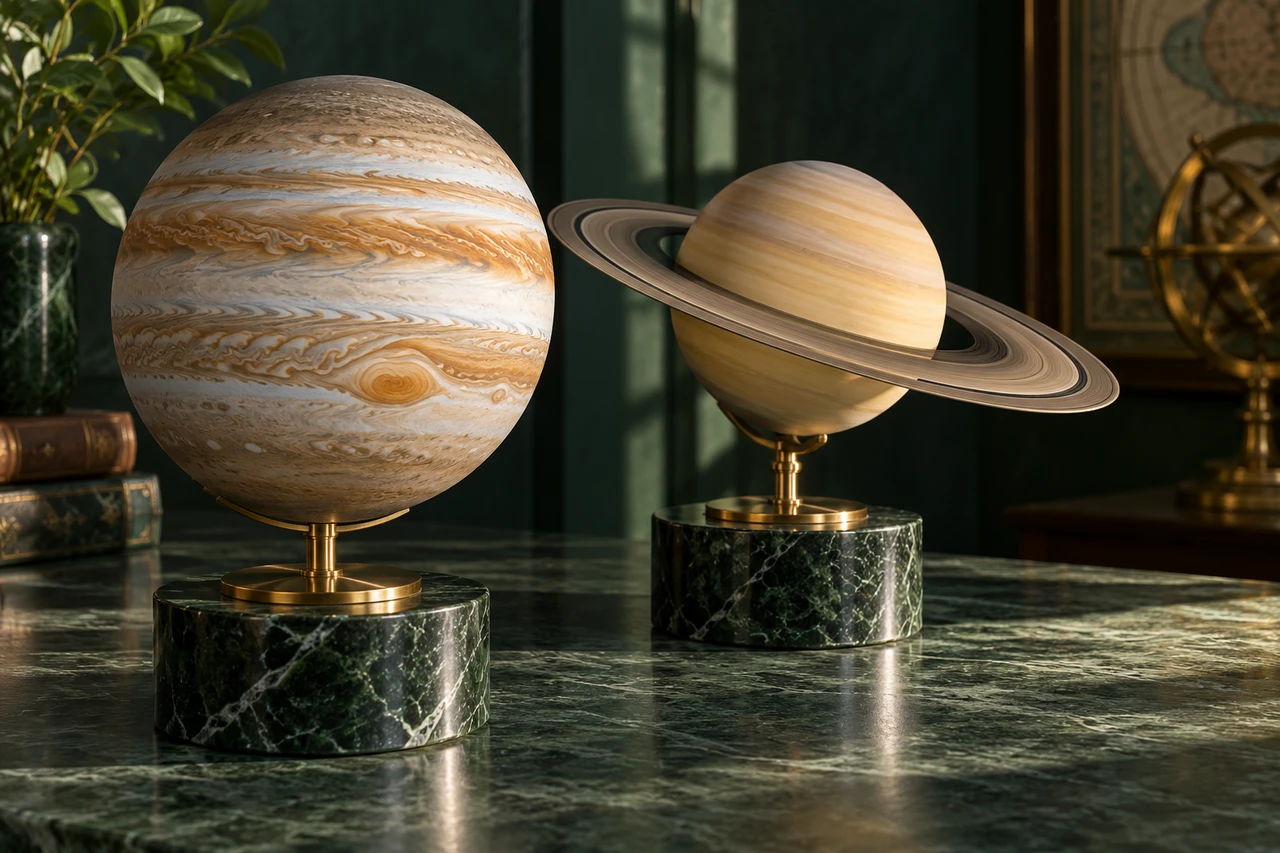
Two planets, one important life event: that is the appealing shape of many double-transit explanations. The language can sound technical enough to settle an uncertain question, especially when a result comes with dates and precise degrees. But precision in the input does not remove uncertainty from the conclusion. This Antaryami guide looks at Jupiter and Saturn as astronomical bodies, at transit as a chart term, and at the extra step involved when someone interprets their positions. It does not calculate an auspicious conception window. The aim is to make the reasoning visible so that a reader can enjoy learning without mistaking a traditional pattern for medical evidence.
Keep three layers of information separate
The first layer is the position of a celestial body at a stated time under specified calculation conventions. The second is the astrological rule used to relate that position to a natal chart. The third is a claim about a person's life. These layers require different kinds of checking. You may verify a position mathematically without accepting the chosen interpretive rule. You may understand the rule without agreeing that it predicts an event. A clear explanation should not slide through all three layers as though each automatically proves the next.
A transit generally refers to a current or otherwise selected-time chart position considered in relation to a reference chart. The word does not mean that a planet physically passes through a person's house or body. In a double-transit discussion, the interpreter considers conditions involving two moving chart factors. The exact conditions depend on the method being used. Before asking what an overlap means, ask how the overlap is defined. An unexplained label such as activated is not a substitute for describing the rule that produced it.
An everyday comparison can help. A weather measurement, a rule for identifying a pattern and a decision about whether to hold an event are connected, but they are not identical. With astrology the distinction is even more important because the personal-outcome claim is not established by the existence of a calculated position. The interface should allow you to inspect each layer independently. If all you receive is a confident life forecast with numbers beside it, you have not been shown the reasoning in a form you can meaningfully evaluate.
The actual planets offer fascinating facts without a forecast
NASA's solar-system reference material gives approximate orbital periods of 11.9 Earth years for Jupiter and 29.4 for Saturn. Those are periods around the Sun, not fixed schedules for events in an individual life. An Earth-based chart describes apparent positions from its chosen reference framework, which is a different view from simply following a planet around the Sun. The distinction matters because a headline about a twelve-year cycle may blend an astronomical fact with an interpretive statement that the fact itself does not establish.
You do not need to make the planets agents of reward or punishment to find them interesting. Their different orbital motions help explain why their apparent relationship changes over time. A schematic can show two tracks and a viewpoint, but it should say when it is not to scale or not based on current ephemeris data. A beautiful diagram becomes more educational when its limits are visible. Readers should not have to guess whether an illustration is a live astronomical state, a traditional chart or simply an explanatory drawing.
At Antaryami, technical care should mean telling the user which of those things they are seeing. If a page describes a calculation engine, that description is not permission to claim every animated planet is a current measured output. If a demonstration uses fictional details, it should remain clearly a demonstration. The real planets are compelling enough that they do not need a manufactured promise beside them. Learning how an instrument represents them can be an enjoyable experience even when no personal prediction follows.
Sources: NASA: Solar-system orbits and reference information
Retrograde motion is a viewpoint lesson, not a verdict
NASA explains the apparent retrograde loops of outer planets in terms of Earth's own orbital motion. As Earth moves relative to them, their apparent direction against the background stars can reverse. That does not mean Jupiter or Saturn suddenly reverses its orbit around the Sun. The word apparent is doing important work. A chart may mark retrograde status accurately, while the emotional interpretation attached to that status remains a separate matter. A backward-looking track does not by itself establish that your plans will fail or that you must stop making decisions.
This is a useful example of how an observer's perspective changes a description. The underlying motion can remain consistent while the appearance from another moving position changes. A good educational animation can make that distinction visible through labelled viewpoints. It should not require a dramatic story about chaos to keep the reader interested. If you are curious, ask what coordinate system the chart uses and what the motion symbol means. Understanding a symbol often reduces the anxiety created by a headline that treats it as an omen.
Traditional readings may assign a particular meaning to retrograde status. You can discuss that convention as part of the tradition without declaring it a demonstrated cause of a family event. The same symbol should not be used as a reason to delay a medical appointment or as a way to blame someone after a difficult outcome. A label about apparent celestial motion cannot carry that responsibility. Its technical definition and its interpretive use should be introduced separately, with room for the reader to question the second.
Sources: NASA: Apparent retrograde motion of Jupiter and Saturn
An overlap depends on the rules chosen to find it
When a service announces that two conditions coincide, ask which conditions it checked. Was it looking at sign positions, aspects, houses or a particular reference point? Was the period defined by exact angles, broader sign-based rules or a selected tolerance? This guide does not endorse one predictive method or supply a conception algorithm. It suggests that a technical term should come with a technical explanation. Without the rules, the reader cannot tell whether two services disagree because of different inputs, different settings or entirely different interpretive choices.
A date range can look more certain than the rule behind it. If the service chooses a broad interval and later highlights a particular day, that day may be an editorial choice rather than an independently calculated event boundary. A clear output identifies the basis of the range. It should also distinguish a sample chart from the selected person's chart. Precision should not be created by formatting alone: a timestamp with seconds is not useful if the system never explains what event that timestamp represents.
For learning, you can write a neutral description of the rule before discussing meaning. For example, the software found that two stated chart conditions were present during a stated interval. That statement is very different from saying a pregnancy will occur during the interval. The first can be checked against the implementation. The second requires evidence appropriate to the predicted outcome. Keeping the wording neutral helps you notice when an explanation has moved from a reproducible calculation to an unsupported promise.
What would evidence for a prediction have to address?
A persuasive story about one family is not a test of a general prediction. To evaluate a claim, you would need a clear statement of what is predicted, for whom, over what period and how success or failure is counted. You would also need an appropriate way to compare the claim with what would happen without that rule. This is a general reasoning exercise, not a claim that any particular study has been performed. The important point is that a precise celestial position does not answer those questions on its own.
Retrospective selection can make a pattern appear stronger than it is. If someone first learns the outcome and then searches many possible chart conditions, a matching condition may be easy to find. If only the matches are described and the non-matches disappear, the reader gets an incomplete picture. A responsible educational piece should not use that kind of storytelling as proof of medical effectiveness. Personal anecdotes can explain why someone values a tradition, but they cannot establish a conception probability or a validated fertility forecast.
Ask what observation would count against the claim. If every outcome can be explained as confirmation, the rule is not being tested in a meaningful way. A promise may be softened after the event, moved to a new date or attributed to another factor. That flexibility can be part of symbolic interpretation, but it should not be marketed as measured predictive accuracy. Readers deserve to know whether they are receiving an open-ended narrative or a claim that has actually been evaluated for the purpose stated.
An engine licence is not a medical validation certificate
Swiss Ephemeris is developed by Astrodienst for celestial-position calculations. Antaryami's founder has confirmed its licensing. That is not the same as demonstrating that a specific live page uses every available method, and it is not a validation of reproductive predictions. A service should state its actual calculation scope rather than borrowing the library's reputation for an unrelated claim. The library can help answer where a chart factor is under chosen conventions; it does not certify what a future family event will be.
A useful technical review therefore checks inputs, calculation settings, versioning and consistency. A useful editorial review checks how the numbers are described and whether the language exceeds what they support. These reviews complement each other. Perfect code can still display a misleading sentence, and cautious prose can still accompany a chart calculated for the wrong person. The reader needs both identity correctness and honest interpretation. Neither a brand badge nor an impressive number of decimal places should be treated as a replacement for those checks.
This matters when instruments are displayed in an experience centre. A demonstration should invite questions, not imply that a visitor has already received a private finding. A shared article can show how a concept works without importing the viewer's reproductive concerns into a sales funnel. If a capability is not live, say so. If an output is illustrative, label it. Those simple distinctions let the technical work be appreciated for what it actually does, rather than for a promise attached to it after the fact.
Use a transit discussion as a prompt you can put down
If transit language interests you, choose a non-medical question for reflection. Perhaps a theme of patience makes you consider how you handle changing plans, or a theme of expansion makes you review a project you have neglected. The action should come from your circumstances, not from an assumption that the planets require it. You can decide that a prompt is helpful, unhelpful or simply not relevant. A reflective practice should leave you able to close the chart and proceed with ordinary information gathering.
For family planning, do not turn the prompt into a schedule that overrides consent or care. A partner's readiness, medical advice and practical circumstances matter independently of an astrological interval. A shared reflection can discuss hopes, responsibilities and support without announcing a conception month. If a reading has made you anxious, you are allowed to stop using it. You do not need to purchase another interpretation to undo the first one, and you do not need to persuade relatives that a different transit is more favourable.
Keep a note of what you actually learned. Did you understand a coordinate term, recognise a setting difference or identify a question you want to ask? Those are useful outcomes. A chart discussion does not have to end with a prediction to justify the time spent on it. In fact, a guide that leaves you better able to distinguish calculation from claim may be more valuable than one that confidently supplies an answer it cannot support. Curiosity can be satisfied without surrendering your judgement.
Keep the wonder and remove the unsupported certainty
Jupiter and Saturn are remarkable objects to learn about. Their motions, apparent relationships and representation in different instruments can sustain a thoughtful conversation on their own. Double-transit language adds an interpretive layer within astrology, not a medical conclusion. Once that distinction is clear, the subject becomes less of a countdown and more of an opportunity to understand how a model works. A model can be interesting without being authorised to decide your reproductive future or the character of a child.
Before accepting a strong statement, ask three short questions: what was calculated, what rule was applied and what evidence supports the personal conclusion? Keep the answers separate. If the first two are clear but the third is missing, you have learned something about the chart, not established the forecast. If all three are vague, a beautifully animated interface does not fix the problem. The user's trust should be earned through explanation, not borrowed from the visual authority of science or the emotional authority of tradition.
Antaryami's Journal makes space for that careful curiosity. This article supplies no conception dates, pregnancy odds or personalised medical assessment. It invites you to admire the sky and inspect the reasoning between an astronomical fact and a sentence about your life. Those are compatible ambitions. The wonder belongs to learning; the choice belongs to you; health decisions belong in an evidence-based conversation. A responsible instrument does not lose its appeal when it tells the truth about where its capabilities stop.
Astrological interpretations are for reflection, not a diagnosis, a guaranteed prediction or a substitute for professional advice. Journal guides are prepared with AI assistance; they are educational content, not individual consultations.