Antaryami
The sky this season
Orionid meteor shower: how to plan a patient evening
A meteor shower is not a fireworks booking. The pleasure is in giving the sky time, with expectations shaped by conditions rather than a spectacular edited clip.
Look widely, not through a narrow frame
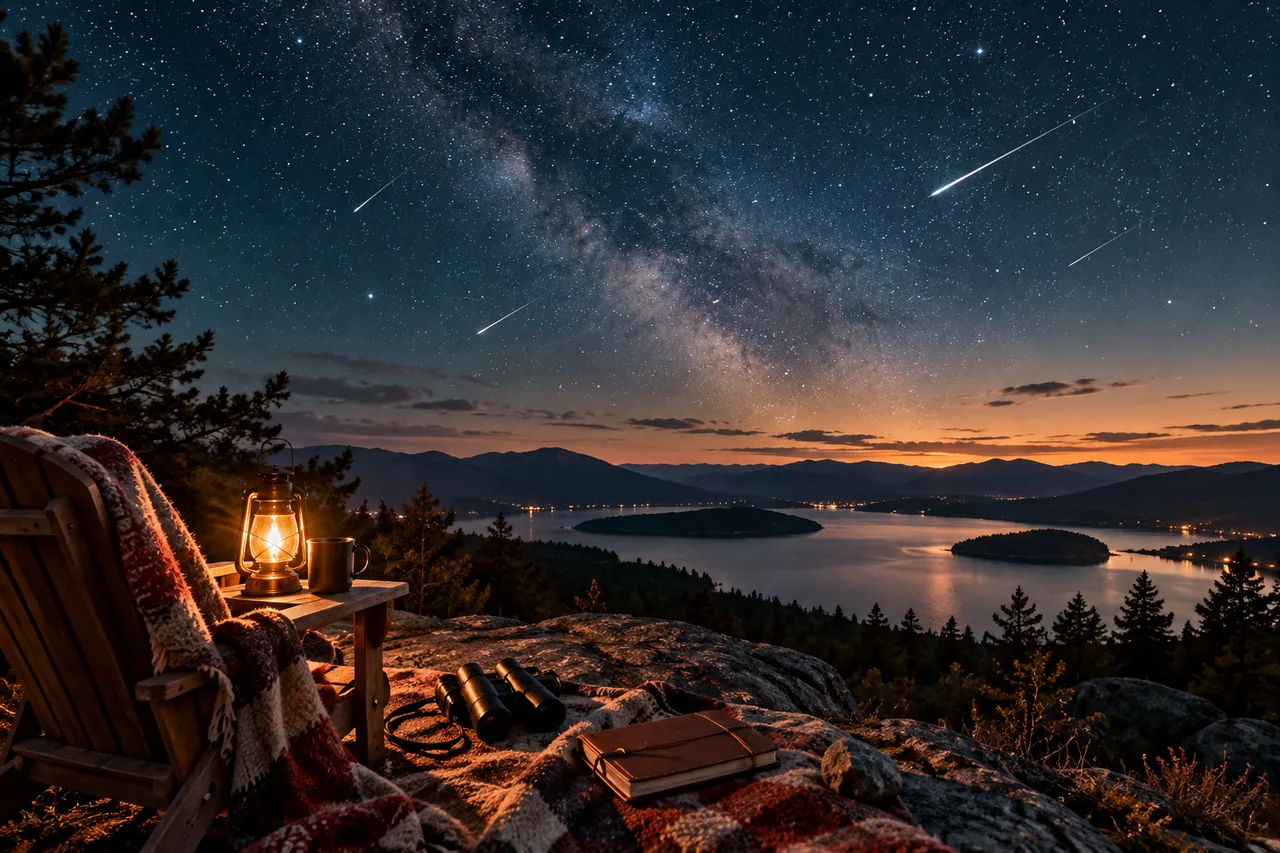
A shower's radiant is the direction from which its meteors appear to originate, not a small target that contains every streak. A broad, unobstructed view is useful. Screen glare and nearby lights can make faint meteors harder to notice. Decide whether you can reach a suitable place comfortably instead of treating a remote journey as a requirement.
Start with the kind of experience you want. Do you have time for a relaxed session, or are you hoping to identify one streak during a short visit outside? Neither has to become a competition. The plan should fit your circumstances. An edited image of many meteors is not a booking for what your eyes will see in a particular minute.
NASA identifies the Orionids with debris from Halley's Comet and recommends a broad sky view rather than staring only at Orion. The constellation helps name the shower; it is not the source launching the particles. Understanding that distinction gives the event a clearer astronomical story without requiring you to recognise every constellation before beginning.
Choose a place where you can comfortably view a useful area of sky. Check access, your return arrangement and the practical conditions before making a remote trip. The pursuit of a dramatic image does not make an inconvenient outing compulsory. You can also decide to observe from a modest local view and describe its limits honestly.
A quoted rate is not your personal count
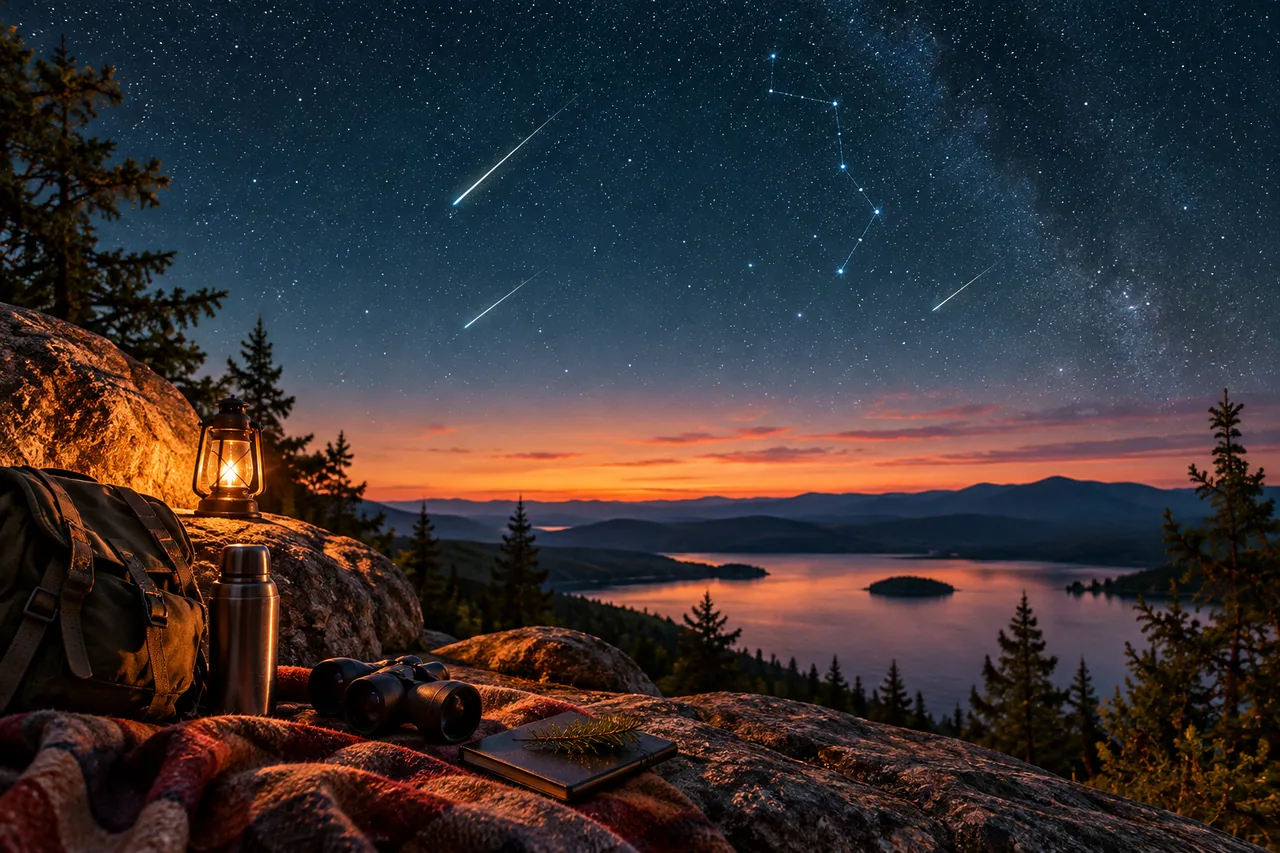
Published meteor rates describe specified observing conditions. Moonlight, haze, obstructions and your time outside can change the experience. A photograph may combine many moments; your eyes see them one at a time. Seeing only a few streaks does not mean you missed a cosmic message or failed at observing. A quiet evening can still be worthwhile.
A published rate needs its conditions attached. NASA's page gives a dark-sky rate, not an individual guarantee. Moonlight, nearby lighting and an obstructed view can affect what is noticeable. The number in a headline should not become a target you must achieve in order to count the session as successful. Read the source context before comparing it with your own count.
A photograph and a live observation are different records. Ask how an image was made before assuming it represents one brief moment. A composite or long observing sequence can show more activity than you notice during a short session. That does not make the image worthless; it means the image needs a caption that explains what it represents.
Do not attach a personal verdict to the count. Seeing fewer meteors than hoped is not evidence that a wish was rejected or that a difficult week is coming. The observation concerns the sky and conditions. You can choose a personal reflection afterwards, but that association is another layer, not a result established by the number of streaks.
A practical pause
- Use a current observing guide, not a recycled peak-date graphic.
- Choose a broad sky view and allow an unhurried session.
- Note conditions alongside the number of meteors you notice.
Choose the step that fits your actual situation. You do not have to follow every suggestion, buy a product or make a major decision to learn something from the question. A useful explanation leaves you more informed and free to decide, rather than feeling that you must act immediately.
Read a current guide and retain the year with any timing advice. NASA's Orionid page, checked for this article, lists the 2026 peak night as 21-22 October. Interpret any stated period with your local context and current conditions. An old graphic circulating without its year can be attractive while no longer answering the question you are asking.
Make a simple observing note: the location in general terms, session time, sky conditions and what you noticed. Mark an uncertain identification as uncertain. You do not need to transform every fleeting light into a confirmed Orionid. A note that preserves the doubt can be more useful than a confident count assembled from events you could not identify.
Set the phone aside when it is not needed for the task. A viewing session can become an endless effort to prove the moment online instead of experiencing it. Decide whether you want a photograph, a written note or simply time looking up. If you share an image, describe its actual status and keep other people or private location details out unless sharing is appropriate.
Keep the context visible
A skywatching guide answers what you might observe, not what will happen in your private life. Location, daylight, weather and the horizon all matter. A public illustration is not an observation or a calculated personal chart. Keep an observing note separate from any traditional interpretation you choose to explore; neither a beautiful image nor a confident headline removes uncertainty.
You are welcome to read the Antaryami Journal without a personal reading. If you choose to explore further, use the website to create or manage your account, and check the intended saved profile before any personal instrument or report. The fuller Antaryami experience belongs in the app; public editorial examples are not your own calculated chart.
A quiet session can still teach you something. You may learn which part of the horizon is blocked, what a current guide means by a viewing direction or how much time you want to allow next visit. Those are practical observations. The experience need not end with a spectacular count in order to be worth remembering.
If you later explore an astrological theme, keep it separate from the observing record. The skywatching date is not your birth date, and the place you stood is not automatically your birthplace. A personal calculation needs its own appropriate inputs and authorised saved profile. A beautiful meteor illustration is educational artwork, not a private reading of your future.
Antaryami's Journal can invite you to look up with curiosity while keeping the claims clear. Thank you for giving the evening time instead of asking it to match an edited clip. Read the source, make a comfortable plan and record what actually happened. Sometimes the memorable part is a streak; sometimes it is the patient attention you gave an ordinary sky.
Astrological interpretations are for reflection, not a diagnosis, a guaranteed prediction or a substitute for professional advice. Journal guides are prepared with AI assistance; they are educational content, not individual consultations.