Antaryami
Omens without fear
Spilled salt: a small accident is not a verdict
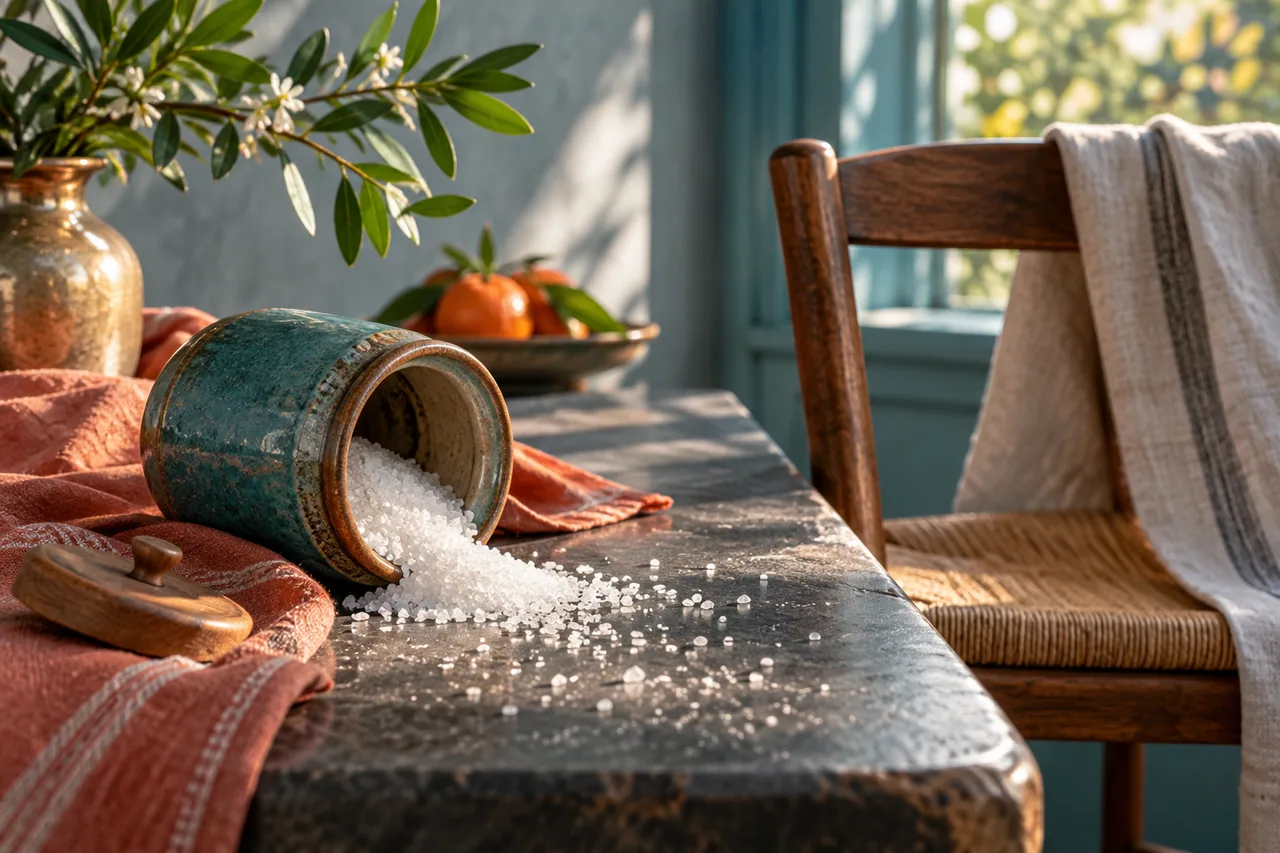
An ordinary spill can become unsettling when a familiar superstition supplies a warning. You do not have to turn the moment into a prediction about the rest of your day.
A household story is not evidence of harm
People inherit different stories about salt, luck and etiquette. You can recognise a story without accepting that it establishes a causal connection. A spill may simply be a spill. Notice whether the interpretation adds meaning or creates unnecessary fear.
The spill happens first; the warning may arrive a second later as a remembered phrase. Separate the two. One is an ordinary event you can describe. The other is a belief or story you have encountered. Familiarity can make the warning feel automatic, but it does not establish what will happen after lunch or explain an unrelated difficulty later in the day.
You can recognise a household story respectfully without accepting every claim it carries. Someone may remember hearing it from a relative, while another person has never encountered it. That difference does not require a contest about whose family is more authentic. Ask what the story means to the person telling it and distinguish that meaning from a verified causal explanation.
Avoid inventing an origin to settle the conversation. A neat historical anecdote can sound persuasive even when it lacks a source. If you want to investigate the history, use a suitable reference and identify the tradition being discussed. This article does not claim one universal origin for salt beliefs. Its purpose is the practical distinction between a story and evidence about your future.
Deal with the practical task
Clean up appropriately and continue what you were doing. Antaryami should not make a person feel obliged to purchase a remedy after a domestic accident. If you want a reflective question, ask what helps you recover calmly from a small interruption, rather than who or what caused a supposed curse.
Attend to the actual interruption first. Deal with the spill appropriately for the surface and setting, then return to the task. The event may require nothing more than a practical response. You do not have to reinterpret the entire day around it or buy something to make the cleanup feel complete.
A small mistake need not become a judgement of the person who made it. If another person spilled the salt, courtesy is more useful than blame. A simple response can acknowledge the inconvenience without turning it into a warning that they brought bad fortune to the household. The shared meal should not become a trial about who caused an imagined outcome.
If you enjoy a personal gesture afterwards, keep it voluntary and harmless in scope. Its meaning is different from evidence that it prevents an event. Do not tell another person that declining the gesture puts them at risk. A familiar custom should not be used to impose fear or demand participation from someone who understands the moment differently.
A practical pause
- Attend to the practical cleanup.
- Recognise the superstition as a belief, not a finding.
- Resume the day without treating the spill as a forecast.
Choose the step that fits your actual situation. You do not have to follow every suggestion, buy a product or make a major decision to learn something from the question. A useful explanation leaves you more informed and free to decide, rather than feeling that you must act immediately.
Try describing the sequence in plain language: an object moved, salt spilled and I remembered a warning. That sentence preserves what actually happened without adding a future claim. If a later event concerns you, examine its own circumstances. The earlier spill does not establish the cause merely because it was memorable.
Notice what an explanation is asking you to do. Does it invite reflection, or does it insist that you must pay for a remedy to avoid harm? A sales request needs to be evaluated as a sales request. A confident warning does not prove that the product can control your day. You can decline without treating the refusal as another omen.
Do not search endlessly for a prediction that will cancel the first prediction. That can turn a small interruption into a much larger project than the event warrants. You are free to leave the story unresolved and continue with ordinary plans. A useful explanation should make the situation clearer, not create a new obligation to keep checking.
Keep the context visible
People find meaning in patterns, objects and coincidences. A personal association can be interesting without establishing that an event predicts the future. Do not turn a symbol into blame, a diagnosis or pressure to buy a remedy. Antaryami's public explanations should invite reflection while keeping ordinary causes, uncertainty and the reader's freedom to disagree clearly in view.
You are welcome to read the Antaryami Journal without a personal reading. If you choose to explore further, use the website to create or manage your account, and check the intended saved profile before any personal instrument or report. The fuller Antaryami experience belongs in the app; public editorial examples are not your own calculated chart.
The same principle applies when a chart is introduced into the discussion. A planetary calculation does not establish that a domestic spill caused a later disagreement. The numerical result and the story about the accident are separate claims. A personal reading should state its own inputs and limits rather than borrowing a precise-looking chart to endorse an unrelated superstition.
Sharing the question can be simple. Ask about the belief generally rather than posting private family details or ridiculing the person who mentioned it. A thoughtful conversation can allow different preferences while remaining clear that a story is not a verified forecast. Respectful disagreement is possible without accepting a threatening conclusion.
Nitish Raj Walia's Antaryami Journal should leave you more informed and free to continue. Thank you for bringing an ordinary interruption back to its real scale. Recognise the belief if it is familiar, attend to the practical task and let the rest of the day be understood through what actually happens. A spill does not need to become a verdict.
Astrological interpretations are for reflection, not a diagnosis, a guaranteed prediction or a substitute for professional advice. Journal guides are prepared with AI assistance; they are educational content, not individual consultations.