Antaryami
Chart details that matter
Swiss Ephemeris is not a personality test
A respected calculation library can strengthen an astronomical computation. Its name does not turn a traditional interpretation into a proven assessment of your personality.
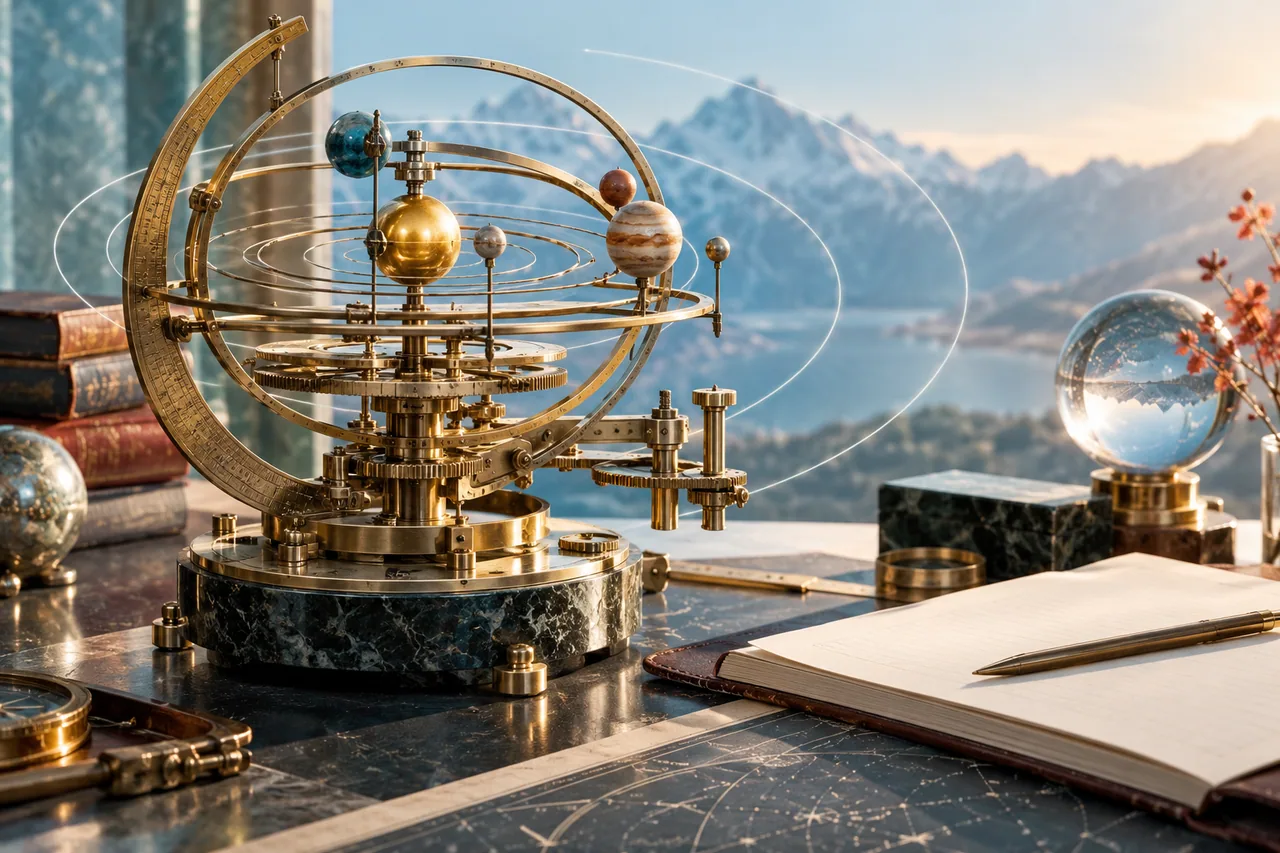
The library and the reading answer different questions
Swiss Ephemeris provides astronomical calculation capabilities. An application still chooses inputs, settings and how to use the result. The explanatory text that follows is a separate layer. A library name beside a reading does not certify every sentence, integration or personal prediction as accurate.
A technology badge can create a reassuring first impression. It tells you that a product is discussing a particular tool, but it cannot answer every question about the result next to it. What inputs were used? Which settings were selected? Was this particular screen connected to the calculation path? Those are application questions that need their own evidence rather than being settled by the badge.
Swiss Ephemeris documentation describes astronomical calculation interfaces. A personal explanation is another part of the product. It may use traditional associations, editorial rules or generated wording after the numerical work. Keeping those layers separate helps a reader understand what has been computed and what has been interpreted. The library name should not serve as a certificate for every sentence in the reading.
A useful analogy is a measuring tool and the story someone tells from a measurement. A reliable measurement can support a specific numerical statement; it does not automatically establish every later interpretation. The application must show how the result and explanation connect. This analogy is about keeping claims in scope, not a claim that an astrological reading is an empirical personality assessment.
Trust grows through clear boundaries
Antaryami should explain what was computed, what settings were used and what is interpretation. That distinction lets a reader appreciate engineering without outsourcing self-understanding to a number. A calculation can be useful even when you disagree with the theme attached to it. Your experience is not obliged to match the prose.
Begin with the person and input record. A calculation for the wrong profile is not made useful by a reputable library. A precise result based on a guessed birth time also needs its uncertainty explained. Good engineering includes correct selection and input handling, not just choosing an impressive component. The customer should be able to understand whose information the result describes.
Then read the method context. A general engine description does not state every option used for a particular request. A result should disclose the relevant conventions in an understandable way. If a label is unfamiliar, ask what it means. Transparency is not an invitation to overwhelm the customer with terminology; it is a way to make the important choices inspectable.
Finally, identify the interpretive claim. Does the paragraph describe a traditional association or announce a fact about your character? Is it framed as something to consider, or something you must accept? A respectful product lets you examine and disagree with a theme. Your lived experience does not become invalid because an explanation attached to a calculation says something else.
A practical pause
- Read the calculation method and inputs.
- Separate numerical output from interpretive language.
- Ask for provenance rather than relying only on a technology badge.
Choose the step that fits your actual situation. You do not have to follow every suggestion, buy a product or make a major decision to learn something from the question. A useful explanation leaves you more informed and free to decide, rather than feeling that you must act immediately.
Try checking one object from the table against the drawing and its accompanying text. The three should share a profile and calculation context. If the position matches but the text mentions a different placement, report the mismatch. It is not enough for one layer to be correct while another becomes detached. Personal accuracy concerns the complete experience, not an isolated numerical component.
Ask whether a public illustration is an example or a personal result. A symbolic cover and a fictional instrument tour can be excellent teaching material when clearly labelled. They do not demonstrate that your record has been calculated. The service should make that distinction before encouraging you to rely on what appears on screen.
Keep licensing claims in their proper scope as well. The founder has confirmed Swiss Ephemeris licensing for Antaryami, while the exact licence designation and deployed calculation scope need their own evidence. Licensing should not be presented as proof of every integration or personal prediction. A responsible explanation can acknowledge the tool without claiming more than has been verified.
Keep the context visible
A trustworthy chart explanation begins with the recorded inputs and the chosen method. Precise-looking output does not establish that a remembered time was precise. Swiss Ephemeris is a calculation library, not a guarantee about interpretation or every application integration. Read provenance and uncertainty alongside a result, and compare like-for-like settings before concluding that a difference is an error.
You are welcome to read the Antaryami Journal without a personal reading. If you choose to explore further, use the website to create or manage your account, and check the intended saved profile before any personal instrument or report. The fuller Antaryami experience belongs in the app; public editorial examples are not your own calculated chart.
A meaningful personal reading should remain connected to its saved profile across languages and report views. Changing a presentation option must not pull in another person's explanation. A recognised engine cannot compensate for a state-management or ownership defect. Those boundaries need implementation checks and tests; an article stating the requirement does not establish that a release has passed them.
When you ask a question, distinguish the result you want checked from the interpretation you want explained. One might need a method comparison, while the other needs clearer wording and limits. A general complaint that the reading feels wrong can begin a conversation, but a specific question makes the next action more useful. You do not need to disclose unrelated family records to make it precise.
Nitish Raj Walia's Antaryami Journal can celebrate careful engineering while remaining honest about what it proves. Thank you for asking how the layers connect. A good calculation can be appreciated on its own terms, and an interpretation can be considered without becoming a compulsory identity. The strongest experience makes both understandable instead of borrowing certainty from one to conceal uncertainty in the other.
Astrological interpretations are for reflection, not a diagnosis, a guaranteed prediction or a substitute for professional advice. Journal guides are prepared with AI assistance; they are educational content, not individual consultations.