Antaryami
Life seasons
Venus themes and festive relationship expectations
A festive photograph can make affection look effortless. Real relationships include schedules, boundaries and differing preferences. A traditional Venus theme may start a conversation; it should not decide whether someone has shown enough love.
Keep the symbol from becoming a score
Venus is traditionally associated with relationships, pleasure and aesthetics in many astrological readings. That does not make a person's placement a measurable love score. Antaryami's explanation should name the tradition and invite context. It cannot prove that someone will be caring, faithful or compatible because of a single planetary label.
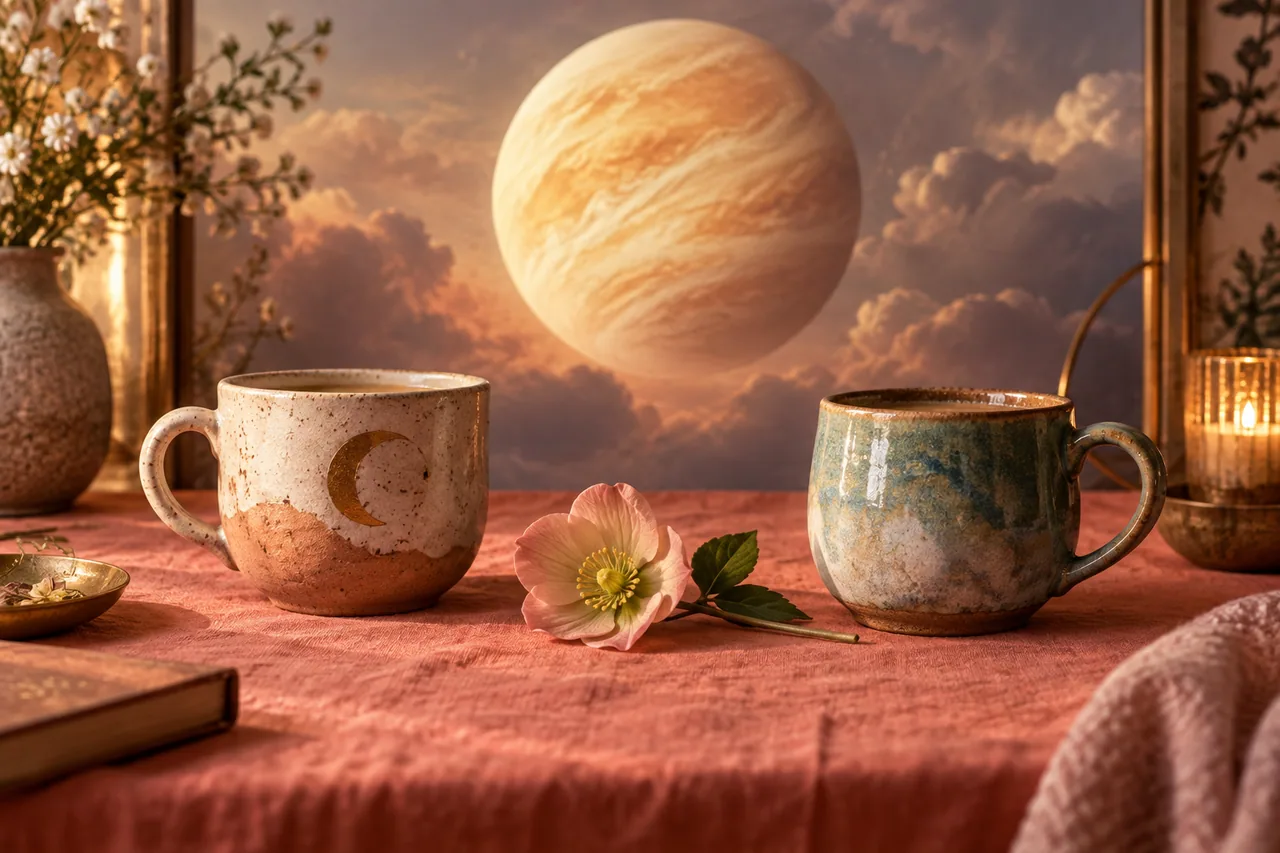
A festive image can make affection look as though it arrived fully arranged: coordinated clothes, a thoughtful gift and everyone smiling at the same time. The photograph does not show every conversation that made the evening possible. Start with the actual people and their preferences rather than using the image as a standard the relationship must meet.
A traditional Venus theme may offer language about pleasure or connection. Treat it as a starting point for a question, not a measurable score for whether someone loves enough. The chart does not see the whole relationship or certify a person's private intentions. A warm interpretation should not pressure the reader to accept claims about another person that have not been established.
Keep beauty separate from proof. A small gathering can be meaningful without looking like a styled scene, and an attractive photograph cannot establish that every interaction was comfortable. You can enjoy aesthetics while allowing the relationship to be more complicated than the image. The symbol is optional; the people's experience deserves attention.
Ask about the celebration you both want
One person may enjoy a large gathering, another a quiet evening. Discuss what would feel good without treating disagreement as rejection. A gift, photograph or public message is not compulsory proof of affection. Courtesy includes a genuine thank-you, a clear request and room to decline. Your practical conversation matters more than a forecast that claims harmony is guaranteed this week.
Ask what kind of celebration each person would enjoy. One may want company and conversation, while another prefers a quieter arrangement. Neither preference automatically means rejection. Put the options into practical words: the place, length of visit and activities involved. A clear request is easier to understand than expecting the other person to infer the whole plan from a romantic theme.
Gifts need the same room for preference. A person may appreciate a note, a shared activity or no new object. Do not make the amount spent a test of affection. If a particular gesture matters to you, explain why and ask whether it is welcome. The answer can guide the arrangement without becoming an argument about whose chart proves the better style of care.
It can help to distinguish the essential part of a plan from the optional detail. Perhaps spending some time together matters, while the exact venue is flexible. Saying so gives the other person something they can respond to. The alternative they suggest may preserve the intention even when it does not resemble the original picture you had in mind.
Public messages and photographs are choices too. Ask before sharing recognisable people or private details. Someone can enjoy being with you and still prefer not to appear on an open account. The celebration does not need public confirmation to be real. Courtesy includes accepting that preference without demanding a justification in front of other guests.
Do not use interpretation as an accusation
A chart cannot reveal a partner's private intentions or establish that a difficult exchange is caused by Venus. Consider actual behaviour, consent and communication. If a relationship raises serious concerns, use appropriate support rather than seeking certainty in an astrological label. A reflective prompt should help you examine your own response, not pronounce a verdict on the other person.
When an exchange feels disappointing, describe the event before assigning a planetary cause. What was requested, what was understood and what happened? Those questions may reveal an unspoken expectation or a practical limit. They cannot be answered by assuming a Venus placement reveals the other person's intention. A personal theme is not a substitute for the conversation.
Avoid using interpretation as an accusation. A sentence that begins with your chart shows can make the other person defend a framework instead of discussing the actual concern. Try ordinary language about the arrangement or action. You can keep astrology as a separate reflective interest without making it the authority that decides who is right.
A favourable reading should not erase an unwelcome interaction either. The chart does not establish consent or make every action acceptable. Keep direct information and stated boundaries visible. If the situation calls for support beyond an educational article, use an appropriate real-world context rather than asking a general horoscope to resolve it.
Keep the personal view properly bounded
For Antaryami's personal instruments, select the intended saved profile and retain the full calculation context. An article for the public is not a reading of your partnership. You can enjoy beauty, company and celebration without a transit granting permission. The possibility of a pleasant evening is not an astronomical guarantee, and an imperfect one is not a cosmic failure.
For any available personal instrument, select the intended authorised profile and read its context. A relationship article is not a personal calculation merely because the subject sounds familiar. A fictional showroom example can teach an interface, but it should remain identified as an example. The person and result need to stay connected wherever personal information is actually used.
Let the evening be imperfect without turning that into a cosmic verdict. A late arrival, changed plan or awkward photograph may need a practical response, not a prophecy. Notice the enjoyable moments and discuss the issues that matter. A review can be specific: next time we will agree on the timing earlier, rather than the whole relationship belongs to a difficult planetary season.
Nitish Raj Walia's Antaryami Journal should make room for warmth, beauty and a clear request. Thank you for leaving both people free to describe what they enjoy. A Venus theme can prompt a thoughtful question, while the celebration is shaped by actual care and arrangements. A pleasant evening does not need a forecast granting permission, and a different preference does not make the invitation a failure.
Astrological interpretations are for reflection, not a diagnosis, a guaranteed prediction or a substitute for professional advice. Journal guides are prepared with AI assistance; they are educational content, not individual consultations.