Antaryami
Festive plans & people
Celebrating a festival on your own: a complete evening, not a smaller life
A festival on your own can be a choice, a practical circumstance or something you did not expect. You might welcome the quiet. You might wish the room were fuller. Neither feeling needs to become the headline of your life. A celebration does not only count when there is a large table and a group photograph. This Antaryami guide is about making an evening that fits your circumstances, without insisting that solitude is either a problem to solve or an achievement to advertise. Begin with what you would enjoy, what would help you feel connected and what you have enough energy to do.
Decide what you want from the day
Ask yourself a small question before making a plan: would I like company, quiet or a little of both? The answer may change through the day, and that is allowed. You do not have to defend it as a statement about your personality. Someone who usually enjoys a crowd may want a calm evening. Someone who likes living alone may miss a familiar celebration. Describe this particular occasion rather than using it to decide who you are. That keeps the plan flexible and prevents one evening from becoming a verdict on your relationships or future.
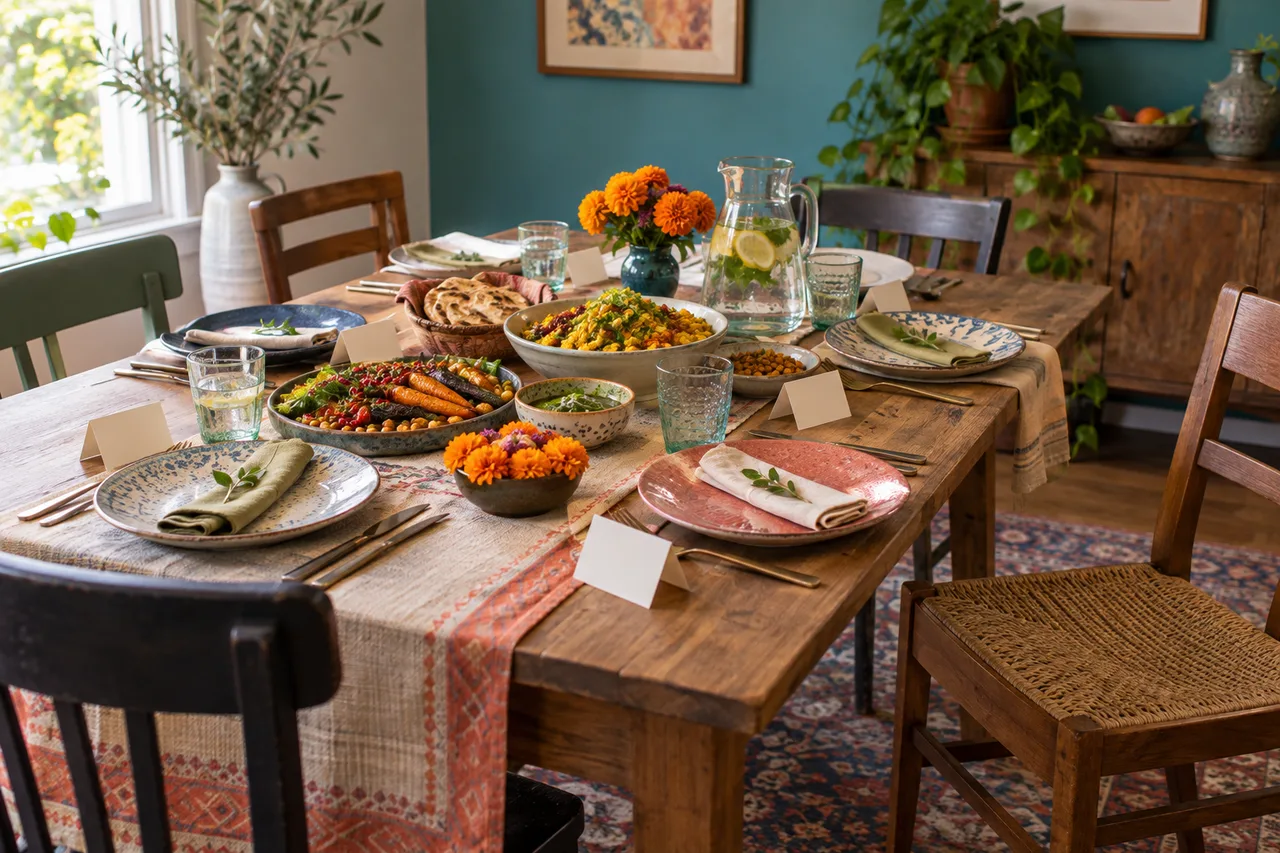
Choose a manageable anchor. It might be a meal you like, a short walk, a film associated with the season or a call with a friend. One planned detail can give the day shape without filling every hour. If cooking feels enjoyable, give yourself enough time for it. If it feels like another duty, a simpler option can be appropriate. There is no requirement to reproduce a menu designed for ten people when you are preparing food for one. The celebration can be recognisable without becoming a project that consumes all the pleasure you hoped to have.
If a religious practice matters to you, follow the guidance of the tradition or community you actually belong to. A general lifestyle article cannot decide what an observance requires. You may also choose a purely personal ritual, such as remembering somebody, expressing gratitude or writing a note. Label it honestly as your own reflection rather than presenting it as a rule everybody should follow. Antaryami can offer questions to consider, but a chart does not determine whether a quiet celebration is valid. Your reason for marking the day does not need a prediction to support it.
Let connection be small and specific
If you would like contact with someone, ask directly rather than hoping a general post will bring the response you need. "Would you have ten minutes for a call this evening?" is clear and easy to answer. It gives the other person a chance to say when they are available. A friend who cannot speak at your preferred time may still care about you. Try not to turn the speed of a reply into a measure of affection. People have their own schedules, commitments and notifications, especially around a busy celebration.
A call does not have to fill the entire evening. You could speak to a relative while having tea, exchange a photograph of something you made or send a voice message describing one detail of the day. Keep private records private when sharing. A public article is fine to pass along; a birth chart or report for another named profile is not something to attach casually to a festive message. If you would like somebody to explore Antaryami, invite them to look at the public journal without asking for birth details as the price of joining the conversation.
You may prefer meeting people outside your home. Look for an appropriate local gathering through information you can verify, rather than treating any event circulating in a group message as a recommendation. Check the setting and participation expectations before committing. You can attend briefly if that suits the event. You also do not have to find a group activity simply to avoid being seen as alone. The purpose is a form of connection you actually want. A crowded room that leaves you uncomfortable is not automatically an improvement over a calm evening you chose thoughtfully.
Make the space kind to the person who is there
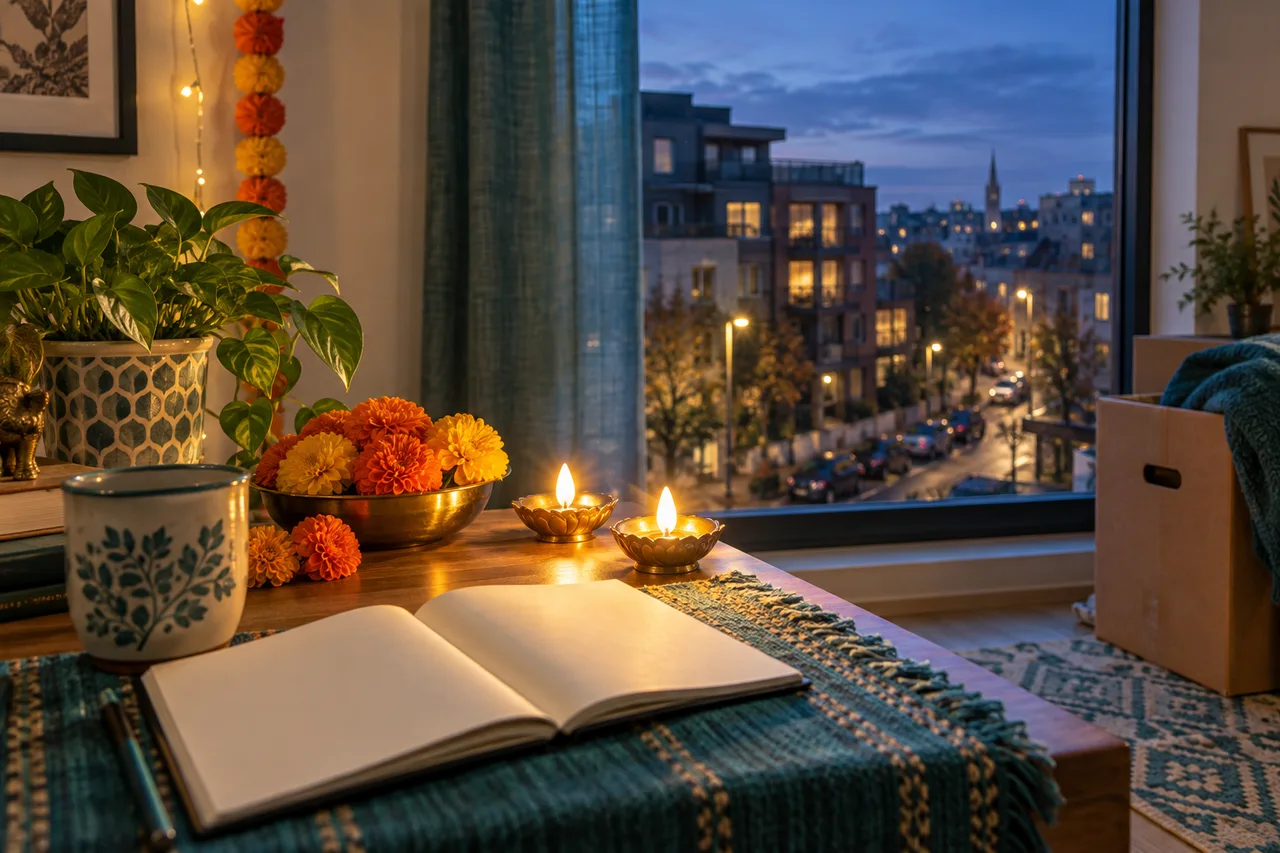
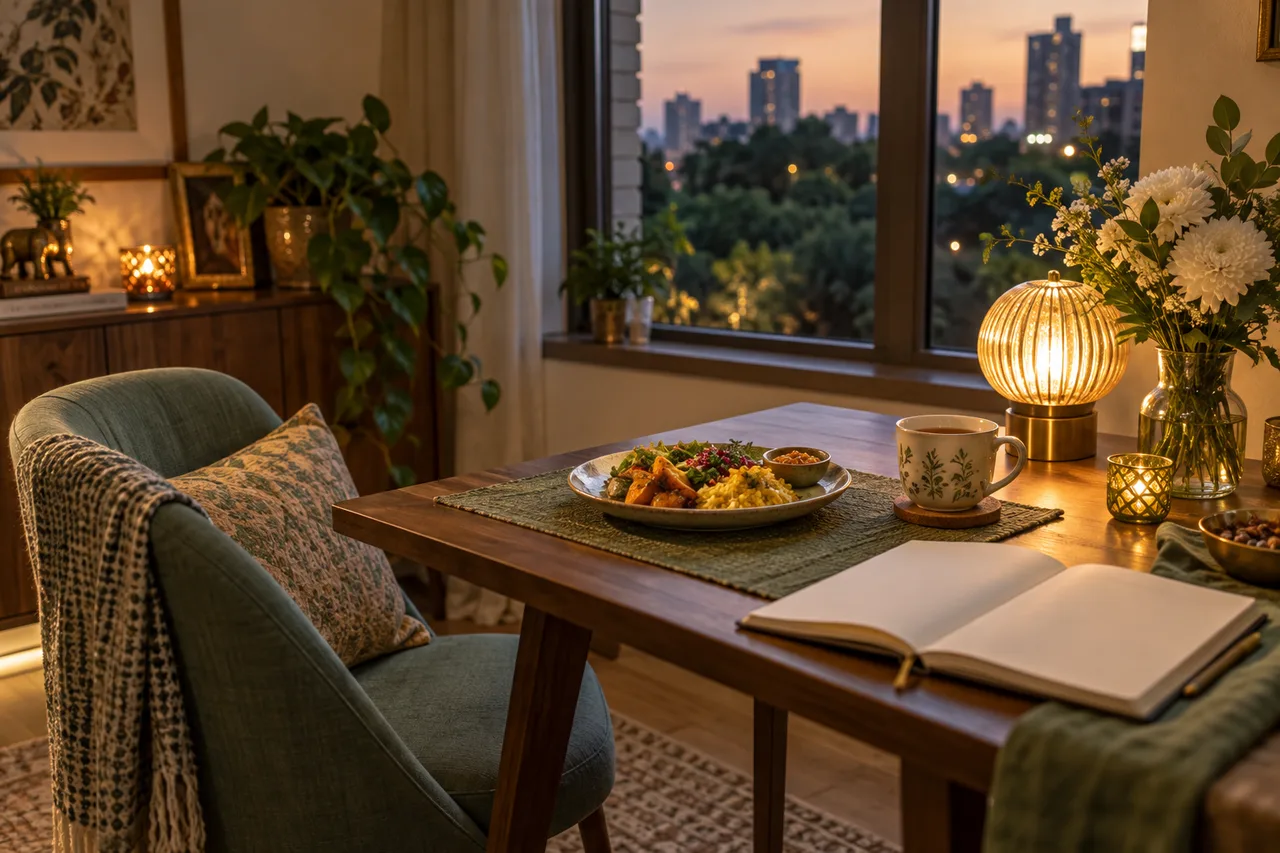
Prepare the corner you will use, not the entire home for an imaginary inspection. A clean place to eat, a comfortable seat and a light you enjoy can be enough. Put away the task that tends to claim your attention if you want a break from it. You do not need expensive decorations to make the moment deliberate. A small flower, a familiar cup or music at a comfortable volume can help distinguish the evening from an ordinary rushed dinner. Choose details because you enjoy them, not because a photograph will need evidence that you celebrated properly.
Leave room for mixed feelings. You might enjoy the food and still remember somebody who used to sit beside you. You might feel relieved not to travel and still miss a household sound. These experiences do not cancel each other. You do not need to label an unexpected feeling as a planetary effect, nor explain it away with a confident forecast. A reflective question can be gentler: "What am I missing specifically, and is there one way to honour that tonight?" You may find an answer, or simply give the question space without resolving it immediately.
Comparison often arrives through a screen. A series of large family photographs can make your own evening appear unfinished even when it felt satisfying a moment earlier. Remember that those images show selected moments, not complete lives. You can enjoy somebody else's celebration without using it as a template for yours. If scrolling makes it harder to enjoy what you planned, put the feed aside for a while. That is a practical choice about attention, not proof that you must reject technology or announce a permanent new way of living.
End the evening without issuing a verdict
At the end of the day, notice one detail you liked and one thing you might do differently next time. Those observations give you useful information. They do not establish whether you are good at being alone or whether every future festival should follow the same pattern. Perhaps you would like a longer call next year. Perhaps the quiet was welcome. Perhaps you want to invite one person instead of arranging a group. Let the answer stay specific. A change in preference is not a contradiction; it is part of paying attention to your circumstances.
For example, you might plan dinner, a favourite film and an early night, then discover that the film feels less inviting than a short conversation. You call a friend who is available, eat and leave the rest of the plan unfinished. Nothing important has failed. Another time you may happily complete the original plan. The useful skill is not perfect adherence to a schedule. It is recognising what serves you in the moment while considering the people whose time you are asking for. That is something a universal festival forecast cannot do on your behalf.
Antaryami should welcome occasional curiosity as readily as regular exploration. You do not owe the product a daily visit, a public post or a purchased report to make this reflection worthwhile. Learn about the instruments when you want to, check the current app availability and keep your own decisions central. For tonight, a celebration can finish simply: put the dishes aside, thank the person who called and keep one pleasant memory. An evening for one can be a complete evening. It does not need to explain the size of your life.
Astrological interpretations are for reflection, not a diagnosis, a guaranteed prediction or a substitute for professional advice. Journal guides are prepared with AI assistance; they are educational content, not individual consultations.