Antaryami
Festive plans & people
An interfaith festival dinner: welcome people without asking them to perform
You want to share something that matters to you. Your guest may be delighted, curious, uncertain or all three. A festival invitation across different beliefs can be a lovely gesture, but welcome works best when nobody has to guess the rules or demonstrate that they belong. The table should offer conversation, not an audition for cultural fluency. This Antaryami guide is about the small hosting choices that make that possible: explaining the evening clearly, giving genuine options and keeping your own tradition meaningful without treating it as a script everybody else must follow.
Make the invitation clear before making it beautiful
Begin with the ordinary details: where, when, how long and what will happen. Tell a guest whether you are inviting them to dinner, a prayer followed by dinner, an open house or a community event. An attractive invitation that omits this information can create uncertainty. Someone may want to join the meal but not participate in a religious observance, or may simply need to know when they can leave for another commitment. Explaining the plan does not reduce its warmth. It gives people the information they need to accept freely rather than agree and worry afterward.
Describe what you do in your own household rather than presenting a whole faith or culture as if it has one uniform practice. "In our family, we begin with this short observance" leaves more room than "Everyone must do this." If there are shoes to remove, a quiet area to respect or another practical expectation, explain it courteously. Give a guest a comfortable way to watch or sit out. A choice is not genuine if declining it becomes the topic of conversation for the rest of the evening. You can preserve what is sacred to you without demanding a declaration of belief from someone else.
Keep the invitation easy to decline. Work, family commitments, disability access, religious boundaries or simple tiredness may affect someone's answer, and they do not have to explain every private reason. Avoid language that turns attendance into proof of friendship or respect. If the relationship matters, it should be able to hold a polite no. You might offer another occasion for tea instead of pressing for agreement. The aim is to share a celebration, not collect a complete guest list at any cost. A smaller gathering with willing participants can be a better evening than a full room of people who feel obliged.
Ask practical questions without making assumptions
Ask about food requirements directly and early. Do not guess them from a name, appearance or the tradition you think a guest follows. Vegetarian, vegan, allergy-related and religious requirements are different questions, and individuals may practise them differently. Ask what the person needs and whether your planned meal can accommodate it. If you cannot provide what they need safely, say so honestly before the visit. A clearly explained limitation is more considerate than reassurance you cannot support. This guide is not food-safety advice; use appropriate guidance for handling and preparing what you serve.
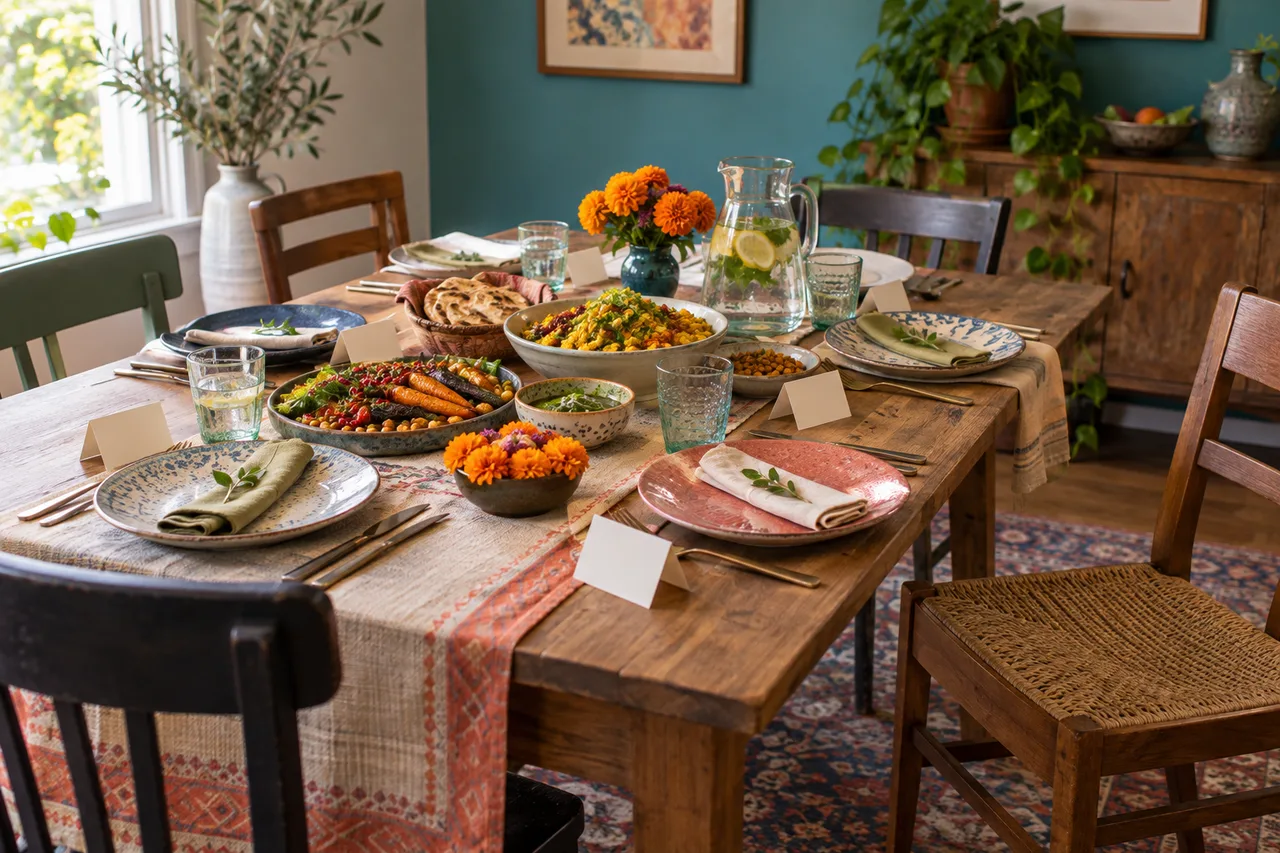
An easy hosting plan is to offer a manageable menu and tell guests what is in the dishes. You do not have to produce separate elaborate meals to show affection. What matters is that nobody discovers at the table that their needs were treated as an inconvenience or a topic for debate. If somebody brings their own food by agreement, let that be ordinary. Do not insist they taste something to avoid hurting the cook's feelings. Gratitude and hospitality should make space for a person's boundaries, not make those boundaries harder to maintain in front of a group.
Think beyond the menu. Can a guest reach the room comfortably? Is there a chair that suits them? Will loud sound, fragrance or an animal in the home affect their visit? A simple question about comfort is useful; demanding a medical explanation is not. Tell guests about relevant features of the setting and let them decide what works. If you are bringing people together who do not know each other, make introductions that offer common interests rather than private personal information. A name and a shared hobby are enough. Nobody needs their family history or beliefs narrated before they have sat down.
Let curiosity be a conversation, not a test
A guest may ask what a lamp, song or ritual means. Answer from the experience you know and acknowledge when practices differ. You do not have to deliver a lecture or represent everybody who celebrates the festival. Equally, a guest should not be expected to become the spokesperson for their own faith because they are the only person from that background at the table. Invite stories without demanding them. "Would you like to tell us about a celebration you enjoy?" is different from appointing someone to explain an entire community while the room waits.
Avoid making comparisons that rank traditions as more advanced, more authentic or more spiritual. You can discuss differences without turning the dinner into a contest. If a sensitive topic comes up, you are allowed to redirect it gently: "Thank you for asking; let us keep tonight focused on getting to know each other." Courtesy is not a refusal to think. It is recognition that a dinner invitation did not necessarily include consent to debate personal beliefs. A good host notices when a guest becomes the subject rather than a participant and creates space for them to rejoin on their own terms.
Astrological language deserves the same care. Do not read a guest's personality from their zodiac sign or use a chart label to predict their marriage, finances or faith. If someone is curious about Antaryami, explain that public guides offer educational context and symbolic reflection, not evidence about a person you have just met. A birth profile is private information, not a party game that everybody must enter to belong. Invite the person to explore later if they choose. Interest in a festival, curiosity about astrology and consent to share personal data are three different decisions.
Leave a warm memory, not a record of compliance
Ask before taking or sharing photographs. Someone may be happy to attend but not want their presence associated publicly with an observance or location. They do not need to justify that preference. Offer a photograph of the food or decoration instead, and check before adding names or tagging accounts. A shared picture should not become a public attendance register. Similarly, do not add guests to a marketing list because they accepted a dinner invitation. The fact that someone enjoyed your hospitality is not permission for ongoing promotional contact.
When the evening ends, thank people for coming and notice the practical kindnesses. Someone helped set the table, explained a question patiently or brought a dish after checking what was needed. These are good things to acknowledge without announcing that the event proved everybody's cultural openness. Let the gathering remain a human evening with its own small imperfections. If something felt awkward, a private apology and an adjustment for next time can be more useful than a public statement about the dinner's success. You can learn without turning your guests into material for the lesson.
Here is the simplest measure to keep: did people understand the invitation, have genuine choices and feel comfortable being themselves? That is not a numerical compatibility score, and it cannot be guaranteed by choosing an auspicious clock time. It comes from attention throughout the evening. Antaryami can help you explore the language of traditions while leaving human agency intact. Your table does not need to explain the whole world. It can offer a few chairs, a clear welcome and the ordinary pleasure of being treated with care.
Astrological interpretations are for reflection, not a diagnosis, a guaranteed prediction or a substitute for professional advice. Journal guides are prepared with AI assistance; they are educational content, not individual consultations.