Antaryami
Festive plans & people
Your first Diwali in a new home abroad: make room for belonging
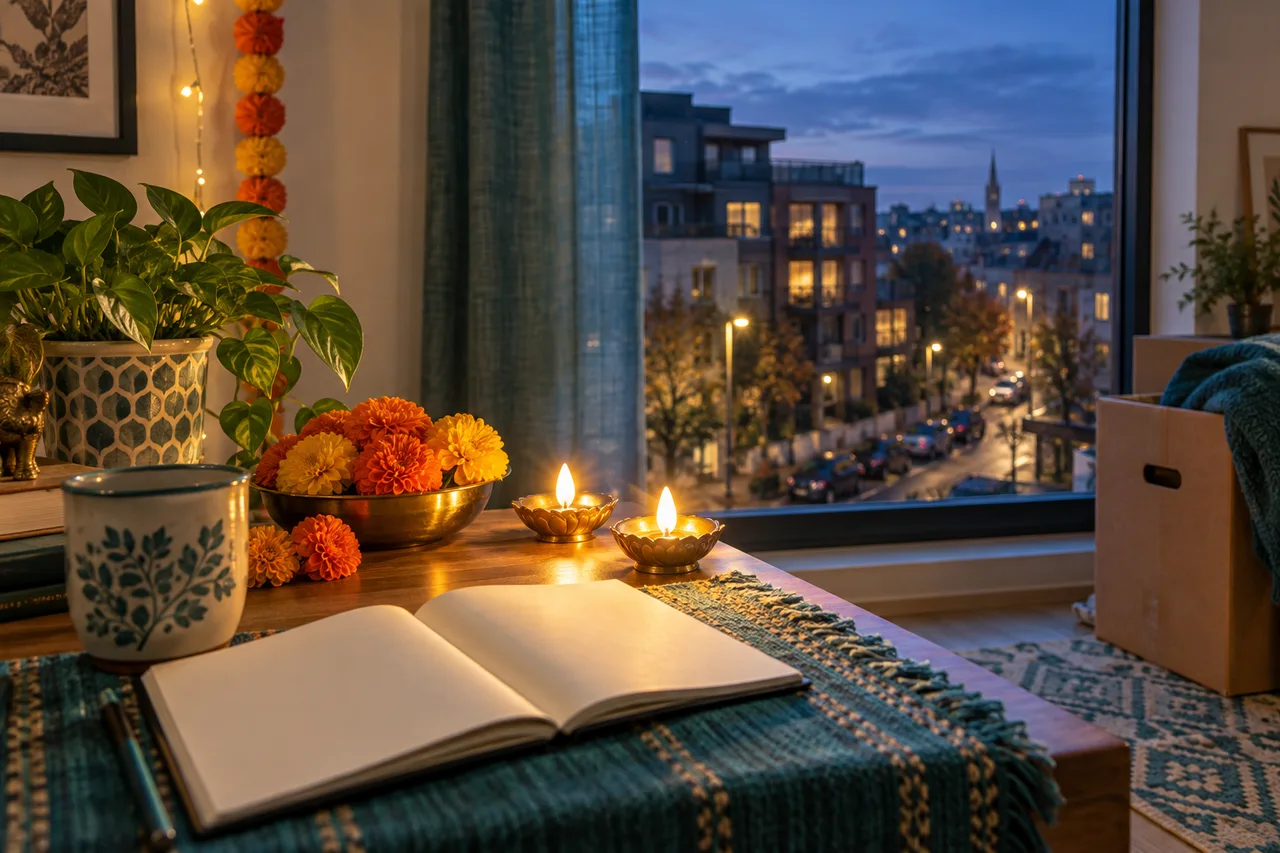
The boxes may still be on the floor. The shops may not sell the sweets you remember. Your family may be finishing their celebration while you are travelling home from work. A first Diwali abroad can make the distance feel unusually visible. It can also become a small beginning: not a replacement for home, but a way of bringing something familiar into the place where you now live. At Antaryami, we do not want to turn that beginning into a test of luck or cultural perfection. This is a guide to making the celebration yours, with practical choices and room for feelings that do not fit a cheerful photograph.
Choose one familiar thing, not an entire reconstruction
Start with a memory rather than a shopping list. Perhaps the strongest part of Diwali for you was a particular song, the smell of a favourite dish, a call from a relative or the moment everyone sat together after a busy day. Choose one thing you can reasonably bring into your new home. Recreating every detail of a large family celebration in a small apartment is not a requirement. If your kitchen, working hours or local supplies make a familiar recipe difficult, an adaptation can still carry affection. The meaning does not disappear because the ingredient came from a different shop.
Write down the difference between what you genuinely miss and what you feel you ought to display. Those lists may be surprisingly different. You might miss an unhurried conversation more than a decorated doorway. You might want to prepare a small meal while having no interest in hosting. Neither preference makes the celebration less valid. A first year in a new place already involves many decisions. Let this one be proportionate to your energy. One enjoyable detail that you can actually complete is often a better anchor than a complicated plan that leaves you apologising to yourself all evening.
A family tradition may include a particular observance or prayer. Ask the people whose practice you follow which parts matter to them rather than relying on a general internet checklist. Different homes may do things differently, even on the same street. You do not need to announce one version as universal. If local timing is relevant to the observance you choose, consult an appropriate current local calendar and keep its location and method visible. This article does not calculate a muhurat. A date or clock time copied from a relative's message should not quietly become a personalised calculation for your new city.
Make the home ready for people, not a perfect picture
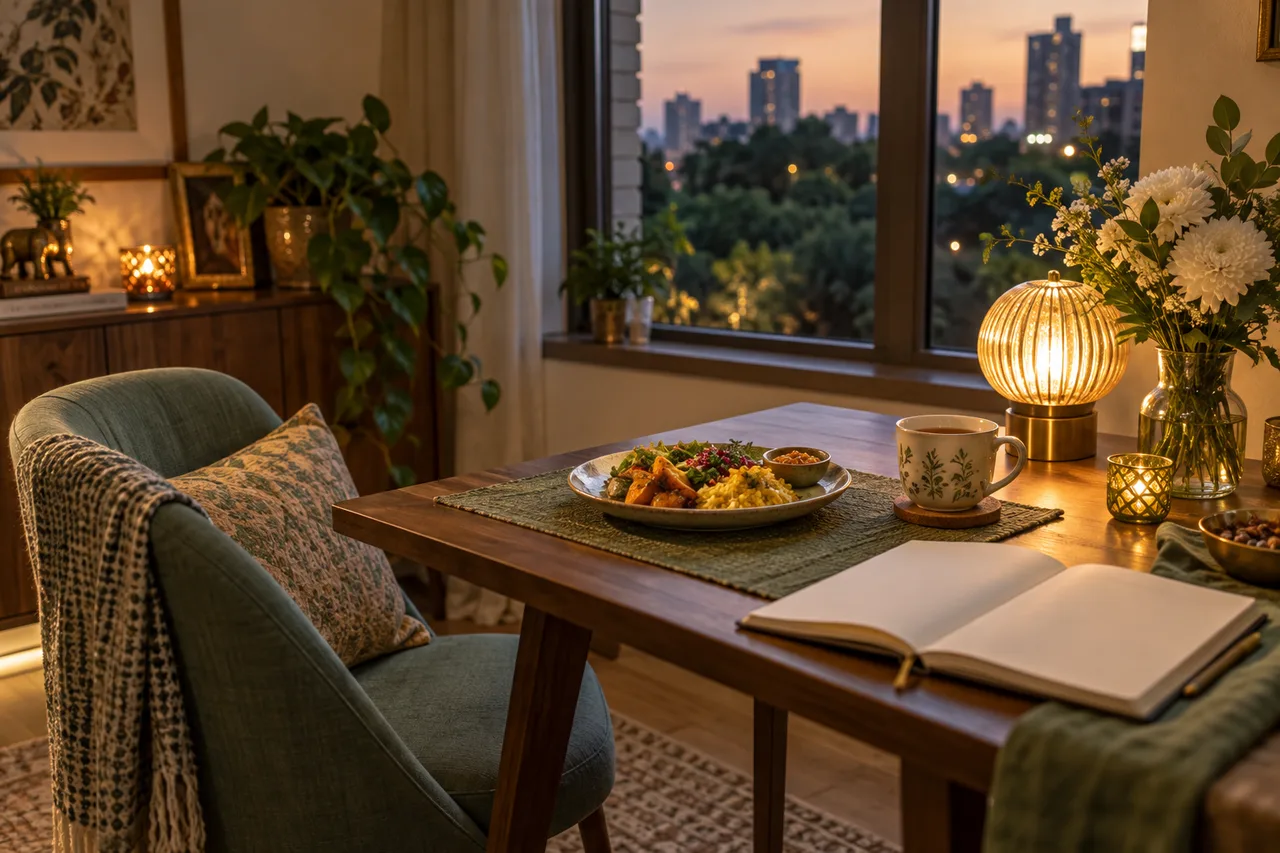
Think about the practical space before the decorative finish. Where will you eat? Can a guest sit comfortably? Is there somewhere to put a coat and bag? Which parts of the home are still full of moving boxes? It is fine to keep an unfinished room closed and celebrate in one usable corner. You do not owe a guest a complete tour of your new life. A lamp, a clean surface and a place to sit can make a room welcoming without pretending that everything about the move has been resolved.
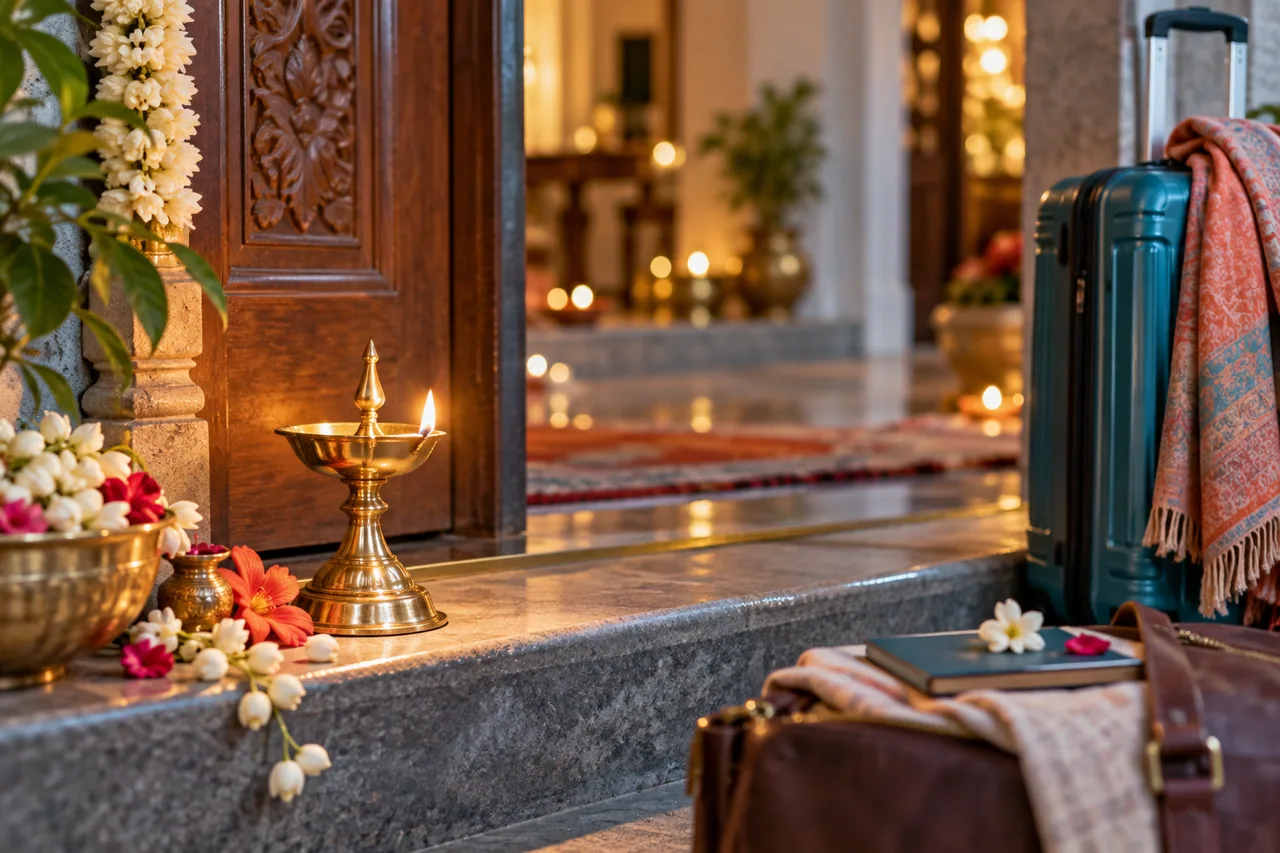
Check your building's rules and the instructions for any lighting you use. If open flames are unsuitable, electric lights are a practical option, not a spiritual failure. Keep decoration from becoming another source of pressure or avoidable risk. The same applies to sound and shared spaces: a celebration is more comfortable when neighbours know what to expect and ordinary access remains available. You can tell someone you are celebrating without assuming they must participate. Courtesy lets a tradition enter a new environment without making the environment feel occupied by it.
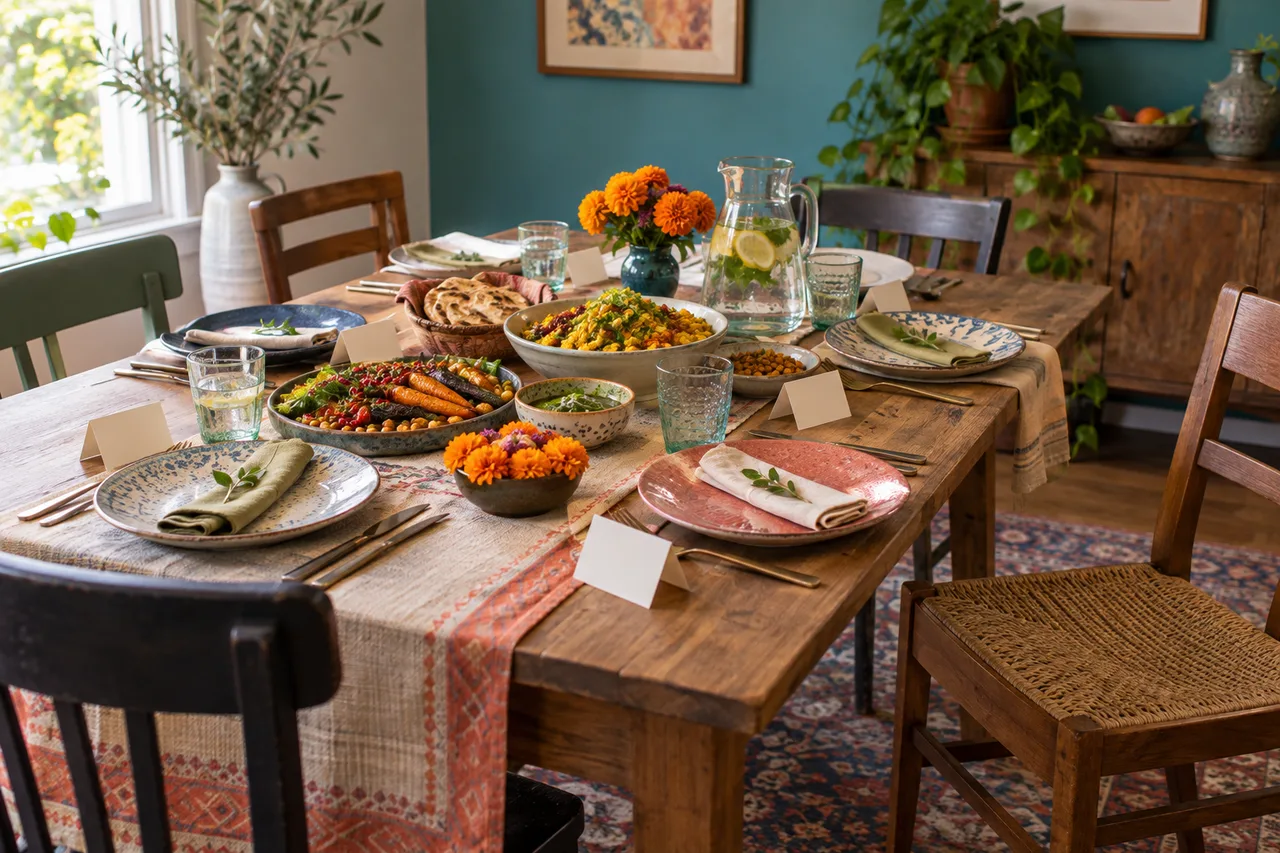
If you want company, offer a specific, low-pressure invitation. "I am having tea and sweets after work on Saturday; would you like to come?" is easier to answer than an elaborate invitation with unclear expectations. Say whether food is provided, ask about dietary needs and make it acceptable to arrive briefly or decline. Your neighbours do not have to know the history of every object on the table to be welcome. You can explain what a detail means in your household while leaving space for a different experience. Hosting is a conversation, not an examination of how well somebody understands your background.
Keep home and here in the same conversation
Arrange a family call at a time people can realistically manage, rather than insisting that everyone share the same instant. You may be in different parts of the day. A short call that is warm and attentive can be more satisfying than an exhausted video session organised around a photograph. Ask one relative to tell you what happened at home; share one ordinary detail from your new place. This allows the connection to include real life on both sides. It does not have to become a comparison in which one celebration is full and the other is missing something.
Homesickness can sit beside excitement. You may enjoy your new surroundings and still wish you could hear a familiar household getting ready. You do not need an astrological explanation before allowing that feeling. A chart can offer symbolic questions if you find that useful, but it cannot decide whether moving was right, promise when you will feel settled or rank the importance of your relationships. Try a grounded question instead: "What would make this week feel a little more connected?" The answer might be a walk with a neighbour, a call or making a recipe. It does not have to be a prediction.
Be careful with public sharing while you are missing home. A photograph can record a lovely moment, but posting it does not require exposing your address, travel plans or family's private details. Ask before including other people. If you use Antaryami to explore a personal chart, keep the saved birth profile attached to the correct person and separate that private record from the public festival story. Your new city is not automatically a replacement for your birthplace. A move changes many practical circumstances; it should not silently rewrite the inputs of an existing birth profile.
Let the first year be a first attempt
After the celebration, note what you would like to repeat. Perhaps you enjoyed inviting one neighbour rather than hosting a large group. Perhaps a familiar dish took too much time and a simpler meal worked better. Perhaps you wanted a longer call home. These observations are useful because they describe what happened, not what a perfect festival ought to look like. You are building a practice in a new setting. The first attempt gives you information; it does not need to establish the tradition for every year that follows.
A small example may help. Imagine you planned a fully decorated dinner, then discovered that work would run late. Instead of cancelling the entire evening, you keep the two lights, buy a modest sweet and call your family while the kettle boils. The result is not the celebration you pictured, but it is still a deliberate moment of connection. Next year you can plan differently. There is no need to call the change a bad omen or a sign that the new home is unsuitable. An inconvenient schedule is enough of an explanation without a larger verdict.
Antaryami welcomes people who explore for a particular moment and people who return regularly. A festival does not create an obligation to purchase a report or maintain a daily astrology routine. Learn about the instruments here, and check the current app availability when you want to continue your personal exploration. For tonight, let the home be lived in. Eat something you enjoy, thank someone who helped and give yourself permission to finish. Belonging can begin quietly, in an ordinary room with an unfinished box and one familiar light.
Astrological interpretations are for reflection, not a diagnosis, a guaranteed prediction or a substitute for professional advice. Journal guides are prepared with AI assistance; they are educational content, not individual consultations.