Antaryami
Reading thoughtfully
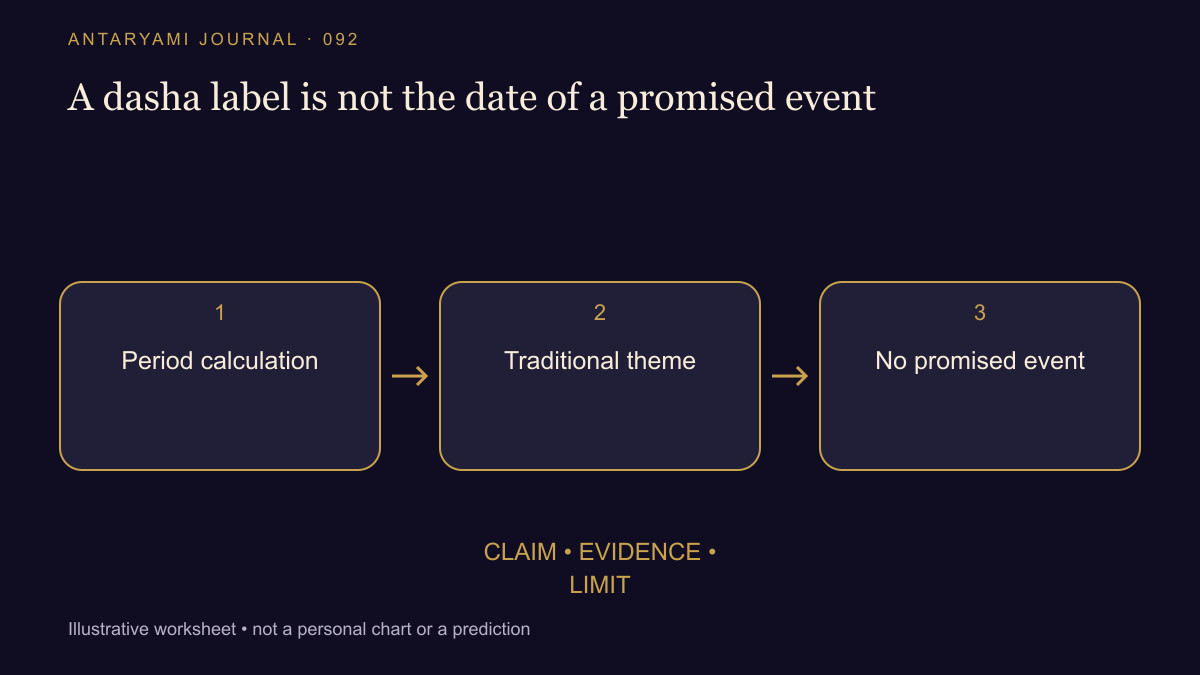
A dasha label is not the date of a promised event
A dasha label identifies a period within a particular astrological calculation and interpretive tradition. It does not by itself establish the date of a promised marriage, job or payment. A precise-looking start and end date can make a narrative feel more certain than its evidence warrants. Read the period calculation, the interpretation and the external event claim separately.
Check what the period label actually describes
For a fictional report, imagine a named main period and a shorter subperiod with stated boundaries. Ask which dasha system and settings produced them and what confidence attaches to the birth input. Do not assume that every period system uses the same sequence, duration or conventions simply because the interface uses similar words.
If a boundary is being compared, retain the date and time basis rather than a cropped year alone. Rounding, input differences or a changed convention can affect a displayed boundary. Such a difference needs a calculation check before it becomes an argument about which interpretation was destined to occur.
Inspect the leap from period to event
A reader may associate a period with themes such as responsibility or relationships within their chosen tradition. The sentence you will sign a contract on Tuesday makes a much narrower external claim. The existence of the period does not establish that contract, the other party's agreement or the precise event date.
Avoid retrospectively stretching a promised event to include anything that happened during a long interval. If a claim originally concerned a job offer, a casual conversation about work should not silently replace it as the fulfilled prediction. Keep the original wording and record uncertainty or mismatch honestly.
Keep practical planning independent
If the interpretation prompts useful preparation, choose an ordinary step: update a document, review an agreement or arrange a relevant conversation. Check real deadlines and commitments through their actual sources. A symbolic period is not permission to ignore a contract, delay needed care or make an unaffordable purchase.
An educational report can show the calculated label and its assumptions, then clearly mark traditional interpretation and optional reflection. It should not imply that repeated subdivisions create independent evidence for a life event. If the birth record is approximate or the method is undisclosed, state that limitation. The person remains free to find a theme interesting without accepting a promised date. A useful reading helps them ask better questions while leaving the occurrence and timing of external events unproved until ordinary evidence establishes them.
Astrological interpretations are for reflection, not a diagnosis, a guaranteed prediction or a substitute for professional advice. Journal guides are prepared with AI assistance; they are educational content, not individual consultations.