Antaryami
Jyotish concepts
Exalted vs debilitated planets: why neither tells the whole story
An exalted planet can sound like a prize; a debilitated planet can sound like a sentence. Neither reaction explains the terminology. These are traditional sign-dignity labels, and the label is only one part of the chart discussion. A person is not exalted or defective because an object has been assigned one of them. This Antaryami guide introduces the classical seven-graha list, explains the difference between a sign and a specific deep-degree point and shows how to ask about the rest of a reading. The goal is not to replace one simplistic verdict with another. It is to make the classification understandable, keep its traditional status visible and leave the learner able to examine a claim without being pushed toward either guaranteed success or unnecessary fear.
Exaltation and debilitation are traditional classifications
Exaltation and debilitation, often called uccha and neecha in this context, classify a planet's placement within a traditional system of sign dignity. They are not measurements of a person's intelligence, virtue or medical condition. The consulted Phaladeepika chapter gives a defined set of signs for seven classical grahas; the definition's existence does not prove that every modern outcome claim attached to it is correct.
A beginner should first ask which planet, which sign and which zodiac convention the result refers to. Those details establish the classification being discussed. Only afterwards does a practitioner offer an interpretation, possibly using other chart factors. Do not let the emotional sound of the English word decide the meaning before the method is explained. A technical label can be memorable while still being narrower than the story an online caption builds around it.
Imagine a hypothetical report that prints debilitated beside one planet and then announces that the reader will fail at work. The first field may accurately apply a stated traditional sign rule; the second is a much larger claim. Accuracy in the classification does not automatically validate the forecast. Ask how the interpretation was reached and what limits were retained. Antaryami's instrument guides make this distinction visible because a useful explanation should help the reader think, not use an unfamiliar word to make a confident prediction feel unavoidable.
Sources: Phaladeepika, chapter 1, verse 6: edition text checked against original page scans
The seven classical exaltation signs and their opposites
The list in Phaladeepika chapter 1, verse 6 gives Sun in Aries, Moon in Taurus, Mars in Capricorn, Mercury in Virgo, Jupiter in Cancer, Venus in Pisces and Saturn in Libra as exaltation placements. Their debilitation signs are opposite: Sun in Libra, Moon in Scorpio, Mars in Cancer, Mercury in Pisces, Jupiter in Capricorn, Venus in Virgo and Saturn in Aries.
Use this as a labelled reference for the seven classical grahas, not a universal list extended to every object a modern astrology app can display. This article deliberately does not add an unqualified Rahu-Ketu exaltation table. If a practitioner supplies node dignities, ask which source and convention they follow instead of assuming that a familiar seven-planet list establishes all later additions.
To practise the opposition relationship, draw a twelve-position ring and label the signs in order. A point six sign intervals away is across the ring. Count carefully: the sign itself is the first when using inclusive seventh-from terminology. The exercise helps explain why a source can describe an opposite sign through a seventh-place relationship without adding seven intervals. It is arithmetic on a defined zodiac model, not a test of personal fate. Keep the ring as a learning sketch and do not use it to invent an interpretation about a customer who has not supplied the relevant chart context.
Sources: Phaladeepika, chapter 1, verse 6: edition text checked against original page scans
A sign label and a deep-exaltation degree are not identical
The same verse names specific deep-degree points: Sun 10 degrees, Moon 3, Mars 28, Mercury 15, Jupiter 5, Venus 27 and Saturn 20 within their respective exaltation signs. The corresponding deep-fall points use those degrees in the opposite signs. This distinguishes the broader sign classification from a specific location within it. It does not authorise a homemade percentage of life success.
For an original numerical example, compare a marker at 9 degrees Aries with one at 10 degrees Aries. They differ by one degree while both remain in Aries. If the marker represents the Sun in the traditional classification being illustrated, the second lies at the named deep point. The example does not calculate a complete strength score or establish that the second hypothetical person would have a better life. No persons or actual birth charts are asserted.
This is a useful boundary against misleading dashboards. A tool may turn a technical interval or distance into an attractive bar, but the bar needs a documented formula and scope. A value called strength should not silently become probability of wealth or percentage of health. Ask what quantity is actually being shown and how it was obtained. A degree difference can be checked as geometry; the interpretation attached to it is a separate matter. Keeping that separation prevents a precise-looking display from lending certainty to claims it was never designed to measure.
Sources: Phaladeepika, chapter 1, verse 6: edition text checked against original page scans
Exalted, own sign and house lord name different relationships
A planet's own-sign relationship, exaltation classification and house-lord role are not interchangeable definitions. A reader can encounter more than one of them in the same chart discussion. The useful question is which operation supplies each label: sign ownership, a dignity list or a house relationship under the selected framework. Do not collapse the terms merely because all three are described as important.
An original analogy is to compare a person's workplace, their current task and a formal qualification. These can all matter, yet one does not replace the others. The analogy is limited; planets are not employees and the comparison does not validate astrological prediction. It simply makes it easier to recognise that several attributes may be attached to one object without being the same attribute.
Keep separate fields in a learning note. Record the planet's sign, the stated dignity, its house assignment and any ownership role being discussed. If the interpretation jumps between those fields, ask the practitioner to identify the step. This does not require a beginner to memorise every rule before learning anything. It requires the explanation to remain traceable. A polished reading becomes less helpful when several familiar terms are blended into an unexplained final verdict. Clear labels make it possible to understand where the writer is using a traditional convention and where they are drawing a larger interpretive conclusion.
One favourable label does not complete the chart
A traditional reading can consider several features together. Ask which factors the practitioner includes rather than assuming that an exaltation tag outweighs everything automatically. The phrase whole chart should also be made concrete. Which placements, relationships, calculation settings and interpretive rules are being considered? A long list of terminology is not an explanation unless the reader can understand how it is used.
Suppose a hypothetical learner finds a favourable dignity tag and wants to know whether a career question is settled. A responsible discussion can distinguish the classification from the broader traditional interpretation and from the actual career decision. The person still needs to understand their skills, commitments, opportunities and constraints. No isolated chart field can supply the terms of a job offer or the quality of a working relationship.
The opposite case deserves equal care. A difficult dignity label should not be used to declare the reader incapable of learning or undeserving of a relationship. If a practitioner discusses mitigating or cancellation conditions, ask for the specific source and rule rather than accepting a vague reassurance that everything is cancelled. This guide does not present a complete neecha-bhanga recipe or certify its application to a personal chart. It recommends the same standard on both sides: identify the condition, explain the method and avoid enlarging the interpretation beyond what has actually been established.
Separate classification, interpretation and decision in a note
Use three headings in an original learning exercise: classification, interpretation and decision. Under classification, record only the stated chart field, such as the planet and its traditional sign dignity. Under interpretation, record what the practitioner suggests it may symbolise and the method context given. Under decision, record the real-world action you are considering and the evidence or expertise that action requires.
For example, a person might consider whether to accept a new responsibility at work. A symbolic reading may prompt them to reflect on confidence or patience. The actual decision still needs the role description, time commitment, compensation and their own readiness examined. These are hypothetical circumstances, not a reading for a particular placement. The exercise shows how reflection can sit beside practical analysis without pretending to have completed it.
If a sentence cannot be placed clearly under one heading, inspect it. A claim that a favourable dignity guarantees a salary increase has moved from a traditional category to a measurable outcome. A claim that a difficult tag requires a purchase has moved into a commercial recommendation. Ask what supports the transition. This habit is especially useful when content combines educational terms with sales language. The reader should know when they are learning a definition, considering an interpretation or being asked to spend money. Those roles should not be hidden inside one impressive-looking paragraph.
Do not let a dignity label become a pressure tactic
Urgent language can make a reader feel that a technical term requires an immediate remedy. Pause before accepting that conclusion. Ask what the service is, what it claims to change, what evidence supports the claim and whether the price and limitations are clear. A traditional dignity label does not by itself demonstrate that a purchased object prevents an adverse event.
The same restraint applies to flattering promises. Guaranteed wealth, perfect relationships or effortless achievement are not made reliable by an exaltation tag. The reader may enjoy a favourable symbolic description while still keeping ordinary uncertainty visible. If the content discourages questions or treats scepticism as the cause of future harm, that is a reason to examine the claim carefully, not a reason to surrender the decision.
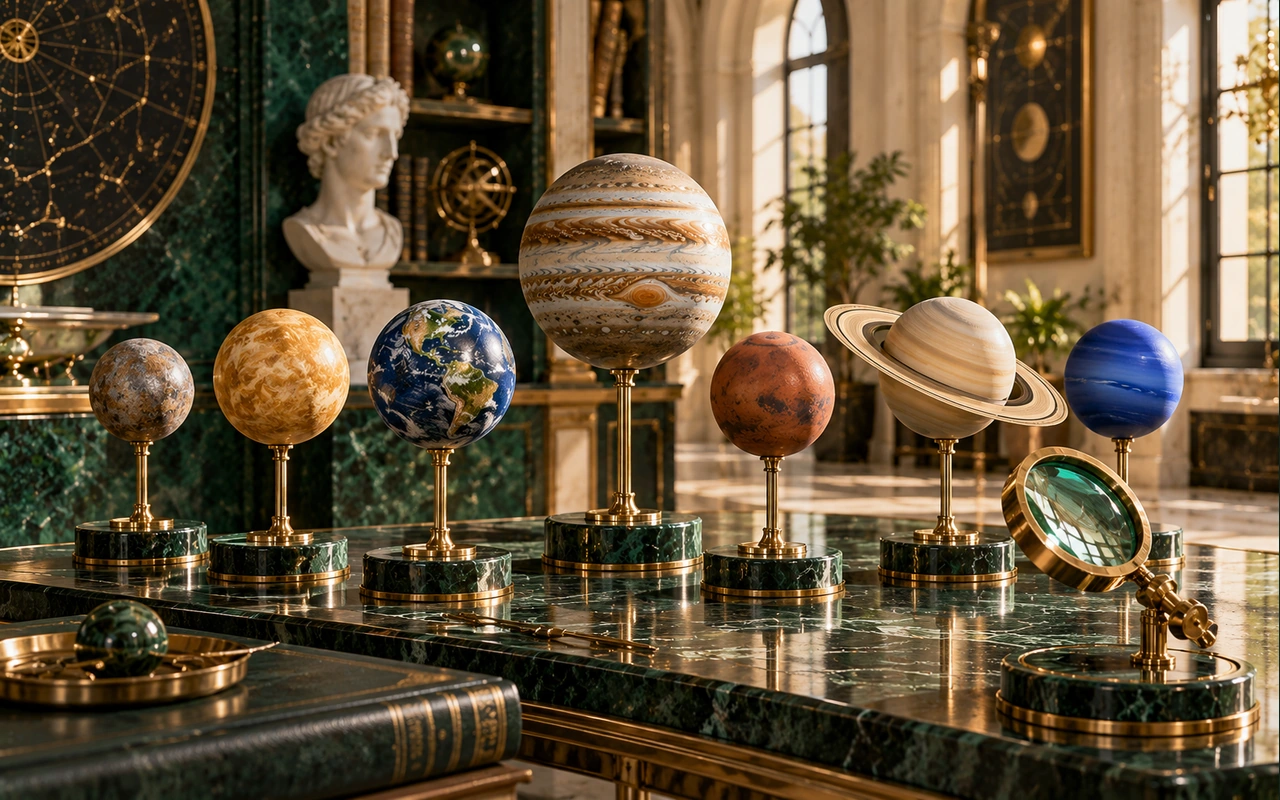
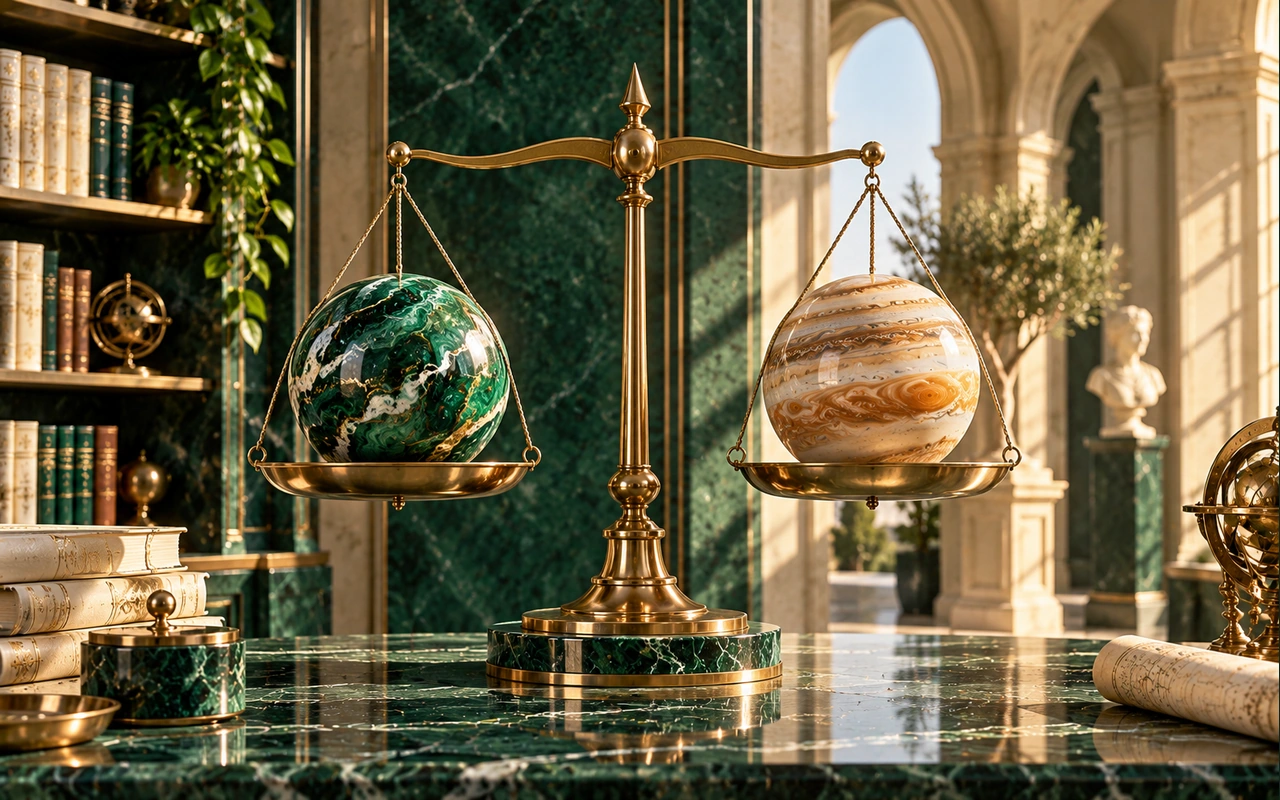
Antaryami distinguishes astronomical calculation labels from traditional interpretation. Our balanced-sphere cover is conceptual artwork; it is not a strength measurement or a moral ranking of planets and people. Guidance must not replace professional medical, mental-health, legal or financial advice. A person's difficulty should not be explained away as proof of a defective placement, and a person's success should not be promised from one field. Responsible language makes the subject approachable without attaching fear to the learning process or certainty to a result that does not establish it.
Ask what the label contributes, not whether it decides everything
When you encounter exaltation or debilitation, ask which traditional list is being used and whether the writer means the whole sign or a specific deep-degree point. Check the planet and sign, then ask what further context enters the interpretation. If a numerical score appears, request its formula and scope. The sequence turns an emotionally loaded word into a question that can actually be examined.
Keep the result with its settings and uncertainty rather than saving only the reassuring or alarming sentence. If comparing readings, identify whether the disagreement concerns calculation, classification or interpretation. Two writers can agree on a sign dignity and disagree about what it implies. That difference should not be concealed by pretending that the mathematical precision of the position has settled the interpretive debate.
Continue with Antaryami's chart, aspect and method-comparison guides when you want to connect these concepts, and check current app availability before assuming a personal report is already supplied. The seven-graha reference gives you a legitimate traditional starting point. It does not divide readers into winners and failures. An exalted planet is not a prize certificate, and a debilitated planet is not a sentence about your worth. The useful question is what the classification contributes within a named reading, with enough context that you can keep learning and make your actual decisions with care.
Identify the classification and its limits
Is a sign dignity the same field as a deep-exaltation degree?
No. A sign classification covers a broader interval; the traditional text also names specific degree points within the exaltation and opposite fall signs.
Does one exalted or debilitated planet settle a whole-chart outcome?
No. Ask for the stated interpretive context, and do not treat a dignity label as a guarantee of success, failure, health or moral worth.
Astrological interpretations are for reflection, not a diagnosis, a guaranteed prediction or a substitute for professional advice. Journal guides are prepared with AI assistance; they are educational content, not individual consultations.