Antaryami
Celebrations and belonging
Hosting your parents for a festival: when the familiar roles change
For years, a festival may have meant arriving at your parents' home and stepping into a plan that was already under way. This time they are arriving at yours. You know where the cups are, you decide when dinner happens and you may suddenly care a great deal about whether the house looks ready. The change can be affectionate, awkward and funny in the same afternoon. It does not have to become a test of adulthood. This Antaryami guide looks at the practical conversations that help when family roles change, without assuming that every household follows the same traditions or has the same relationship with hosting.
Give the invitation useful details
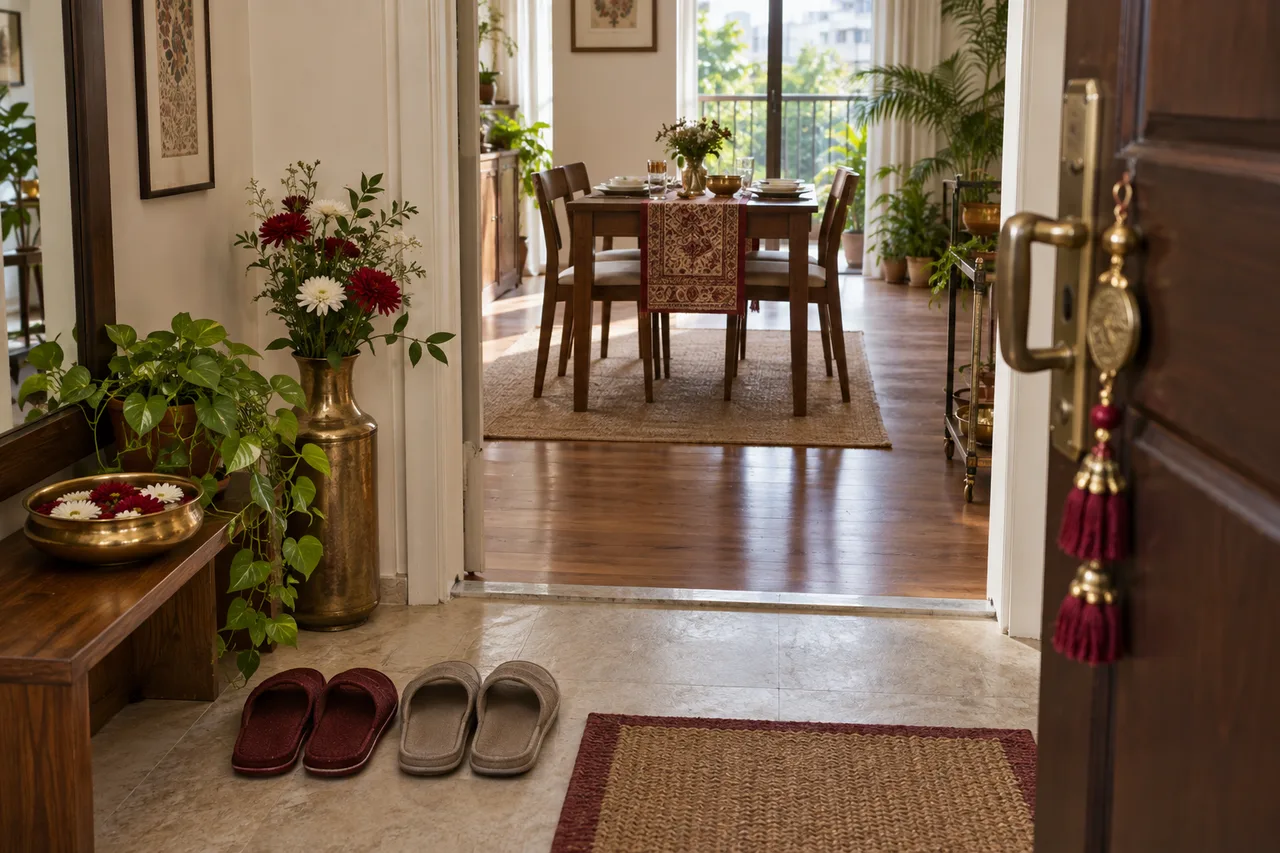
Begin with the arrangements that affect the visit: dates, arrival plans, sleeping space and the parts of the celebration you intend to host. A warm invitation can still be clear. If you have space for a meal but not an overnight stay, say so early rather than hoping the distinction becomes obvious later. If your working day ends late, explain what time you will actually be available. These details are not a rejection of family closeness. They help your guests plan a visit to a real household rather than an imagined version of your life.
Ask which part of the occasion matters most to them. The answer may be a particular observance, meeting a friend nearby or simply having an unhurried conversation. Do not assume that they expect you to reproduce everything from their home. Equally, do not assume that they have stopped caring about a familiar practice because they are travelling. Put the important pieces on the table while there is still room to arrange them. A specific question invites a useful answer; "You are not expecting too much, are you?" mostly invites reassurance without discovering what the expectation is.
If there are practical access or comfort needs, ask directly and privately rather than guessing. A person can tell you which arrangements would help them. You do not need to turn the conversation into a public discussion of their age or health. Keep promises realistic: a quiet room is only quiet if the household can actually keep it that way. When an arrangement is uncertain, explain that it is uncertain. Courtesy is not measured by how many assurances you give before checking whether you can deliver them.
Explain your household without apologising for its existence
Your home may have different routines, resources or rules from the place where you grew up. Explain the differences that visitors need to know. Perhaps you share the space, the kitchen is small or the building has rules about noise and decorations. Frame these as ordinary information rather than as defects in the celebration. "We can have dinner here, and the building needs quiet after this time" gives people a plan. A long apology for not owning a larger home can make everyone spend the visit reassuring you instead of enjoying it.
Choose a few familiar touches if they matter to you. A favourite dish, a flower arrangement or a song can make the visit feel connected without copying the entire family setting. You are also allowed to use the objects you actually own. Do not buy a household's worth of festival equipment solely to make a temporary visit look like a permanent transformation. This is not a claim about lucky spending or an astrological remedy. It is an invitation to distinguish what will make the visit welcoming from what merely answers an imagined criticism.
Let the people who live with you participate in the plan. Hosting your parents does not suspend a partner's, flatmate's or other family member's use of their own home. Agree on shared space and responsibilities before announcing arrangements to guests. A festival can bring several generations together without making one person invisible. If two preferences conflict, discuss the particular issue instead of turning it into a contest between modern and traditional people. Different schedules or kitchen habits are often just different schedules or kitchen habits, not declarations of loyalty.
Accept help without handing over every decision
A parent may arrive and immediately begin helping in the way they usually do. You may feel grateful, relieved or oddly displaced. Name the useful help instead of expecting them to read your reaction. "Thank you, could you help with the table while I finish dinner?" gives the offer a clear place. If you want to cook the main dish yourself, say that kindly. Accepting a contribution does not require surrendering the entire plan, and wanting to host does not require doing every task alone.
Advice about a dish or arrangement can be heard without becoming an instruction. You might answer, "That is useful to know; I am trying this version today." If something truly needs changing, change it for the practical reason, not to prove who is in charge. There is no need to transform every suggestion into a symbolic struggle over growing up. Of course, this guide cannot know the history of your relationship. It offers conversational options for an ordinary visit, not a promise that a particular phrase will resolve a longstanding family disagreement.
Make the division of work visible when several people are helping. A plan in your head can look like no plan to a guest who wants to be useful. Explain what remains to be done and what is already taken care of. If a task is not necessary, let it go instead of inventing work to demonstrate hospitality. A pleasant visit includes time when nobody is proving their value through activity. Sitting together can be part of the plan rather than something that happens only after the house has achieved an impossible standard.
Remember the visit, not the inspection you imagined
Leave some space for an ordinary conversation that is not about the event. Ask about a book, a recent outing or a memory they would like to tell. You do not have to turn the evening into a review of your achievements. If a personal question feels intrusive, you can say that you would rather discuss something else. A chart interpretation should not be used to explain away a person's answer or to announce what their behaviour supposedly means. Listen to the people at the table before consulting a story about them.
When taking photographs, ask who wants to be included and what may be shared. Your parents' visit is not automatically a public endorsement of your home, choices or business. A private photograph can remain private. The same boundary applies to any personal reading or saved profile you explore together: check the selected name and keep reports attached to the right person. A shared celebration does not turn everyone's birth details into shared content. The journal article can travel publicly; the family's personal records do not need to travel with it.
After the visit, thank them for something specific and ask what arrangement would make a future visit easier. You may discover that the detail you worried about was not the one they noticed. Keep the useful lessons and release the imagined inspection. Hosting is a relationship expressed through practical choices, not a final examination. At Antaryami, we favour questions that leave you more able to act: what made people comfortable, what did you enjoy and what would you change? That is enough to begin making the next occasion your own.
Astrological interpretations are for reflection, not a diagnosis, a guaranteed prediction or a substitute for professional advice. Journal guides are prepared with AI assistance; they are educational content, not individual consultations.