 Antaryami
Tarot card meanings
Knight of Cups tarot card: make the invitation beautiful enough to welcome and clear enough to trust
An invitation can change the atmosphere of a day. Someone asks you to join them, offers a creative idea or expresses something with enough care that you want to listen. The Knight of Cups carries that outward expression into a gentle riding scene. In this Antaryami guide, Nitish Raj Walia explores the appeal of an ideal without treating eloquence as proof of sincerity. A lovely message deserves to be understood: what is being offered, what is expected and whether the promise is followed through. The card cannot predict a proposal or certify a romantic person. It asks how feeling can become an invitation that another person can freely and clearly answer.
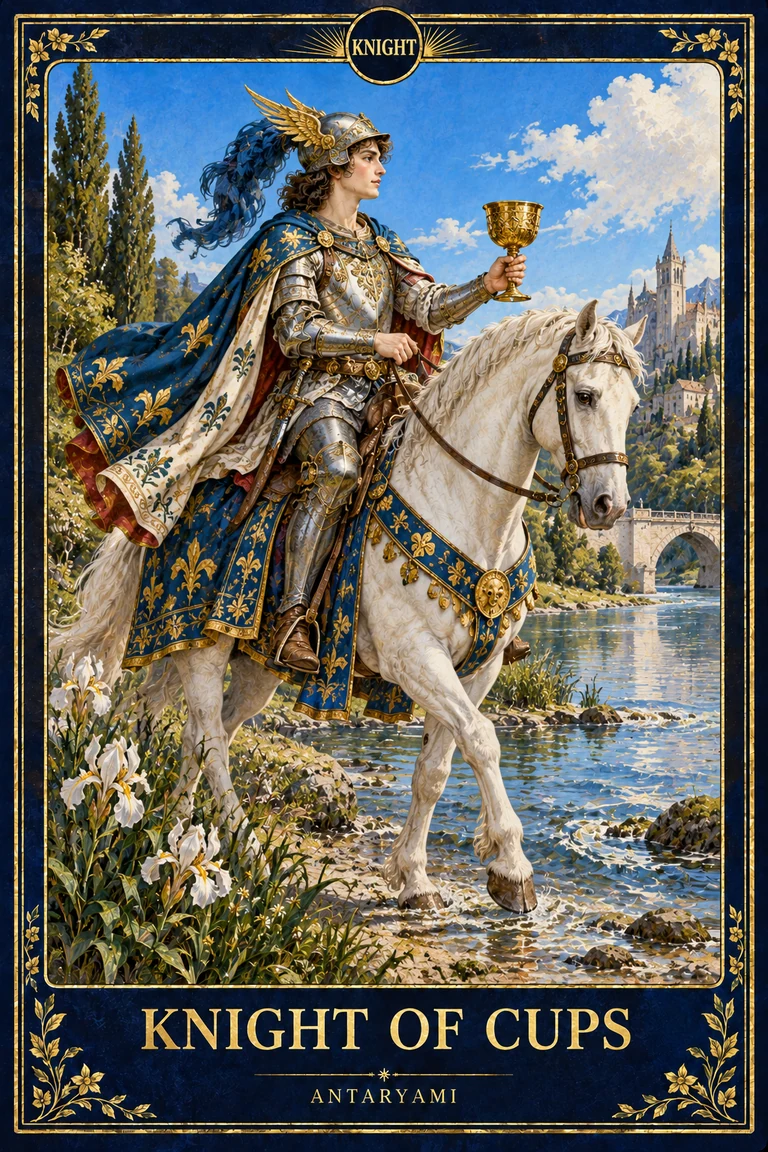
Knight of Cups meaning: an expression becomes an invitation
Contemporary Knight of Cups readings often emphasise romance, a thoughtful invitation, creative expression or an ideal being carried into an encounter. As a court character, the Knight can frame a style of participation rather than identify a literal person. The useful question is how the expression reaches another person. Does it make the offer understandable? Does it leave room for their preferences? Does the action support the sentiment? A beautiful presentation can be valuable, but it does not establish the whole relationship or promise behind it.
Suppose you want to invite a friend into a creative collaboration. You may feel strongly about the idea and describe it with warmth. The next step is to explain the practical form: what you would make, how much time it requires and what each person would provide. That clarity does not ruin the invitation's appeal. It gives the recipient a real choice. The card's cup can represent something offered, while the actual conversation determines whether the offering is welcome and suitable.
An ideal can also inspire work. You may want a gathering to feel generous or a product to make discovery enjoyable. The vision becomes more credible when the experience supports it. A warm welcome should lead to clear information, and a poetic promise should not hide unavailable features. The Knight is most constructive when expression and delivery stay connected. It does not ask you to abandon imagination; it asks how to carry imagination outward in a form that respects the people who will receive it.
The quiet rider and cup: movement with a different mood from Wands
Antaryami's original Knight of Cups shows a rider on a white horse carrying a vessel beside a stream. The scene feels measured rather than charging. That composition can suggest approaching an exchange with care, allowing the offering to be seen before demanding a response. Ask whether your message creates enough space for the recipient to understand it. The image does not reveal whether a real person is sincere, and a calm presentation does not automatically make a promise reliable.
Waite describes a graceful, non-warlike rider and distinguishes the Knight's dreamlike manner from the more restless Wands counterpart. His meanings include approach, invitation and proposition, while his reversed list contains severe accusations. This guide uses invitation and follow-through as contemporary themes without applying those accusations to anyone from the card alone. The Museum Tarot art is newly created, with its own horse, water and landscape, rather than a facsimile of the historical illustration.
The stream does not calculate an astrological water placement, and the court figure does not identify a particular partner by gender, appearance or temperament. Some traditions use correspondences, but those need their own method labels and do not verify identity. Here the picture offers a question about how something is presented. Its beauty can make that question memorable while leaving practical evidence in charge of trust. A credible invitation is understood through its terms, context and subsequent behaviour, not certified by the elegance of a rider holding a cup.
Sources: Waite: Knight of Cups quiet approach, invitation and proposition
Upright: say what you are offering and make an answer easy
An upright Knight of Cups reflection can encourage you to express interest with care. Perhaps you want to invite someone to a gathering, share a creative piece or open a conversation you have postponed. State the offer clearly enough that the person does not have to infer every detail. Include the relevant time, purpose and expectation, then allow a straightforward answer. Warmth works best when it is not used to make refusal difficult. A genuine invitation leaves the recipient's freedom visible.
For a creative presentation, consider the audience without losing the feeling you want to convey. A song, illustration or story can be moving while still needing enough context to be understood. Ask what the viewer needs to know and what the work can communicate on its own. A thoughtful introduction may help, but avoid explaining every emotion the audience is supposed to have. The card's offering becomes more generous when people can meet it through their own response rather than being required to admire it in one prescribed way.
Follow-through begins after the invitation is accepted. Confirm the plan, provide the information promised and communicate if something changes. That ordinary reliability supports the emotional tone. An upright reading should not end at the attractive moment of asking. It can prompt you to consider the whole exchange, including what the other person will experience after saying yes. The result is an invitation that remains appealing because it is clear and considerate, not one whose beauty fades when the practical details are finally encountered.
Reversed: inspect the gap between the sentiment and the action
A reversed Knight of Cups can prompt reflection on idealisation, inconsistent expression, an unclear offer or a promise that is not matched by action. Start with actual behaviour. Has a plan been confirmed? Are the terms understandable? Does the person follow through? The card cannot establish deceit, infidelity or a hidden motive. Waite's historical reversed list contains accusations, but treating those as evidence about someone in your life would be an unsupported leap. Use the theme to examine the exchange, not to manufacture a verdict.
Imagine being offered a collaboration through enthusiastic messages, yet never receiving a clear description of the work or payment. You can ask for those details before agreeing. If they remain unavailable, you can decline or pause without deciding the other person's entire character. The practical gap itself is enough to consider. A beautiful sentiment may be genuine but still insufficient for the commitment requested. The reversed reflection can help you preserve that distinction, so warmth does not become a reason to abandon ordinary verification.
If you are making the offer, check whether your language promises more than you can deliver. You may want the experience to feel special, but exaggeration can create disappointment. Narrow the promise to something real and communicate it well. The card's contemporary usefulness is not cynicism about every ideal. It is alignment between expression and action. An invitation becomes more trustworthy when the recipient can understand what is available, what remains uncertain and what will happen after they accept.
Romance: a lovely gesture does not decide the relationship
The Knight of Cups is often discussed as a romantic card, and its offering can certainly support reflection on affection. But it cannot predict a proposal, identify a future spouse or prove that someone is about to confess love. Those events depend on real people and their choices. A useful question is how interest can be expressed in a way that is welcome, clear and proportionate. The card should not supply consent on another person's behalf or make a grand gesture seem compulsory.
A practical example is planning a surprise. Consider whether the recipient enjoys surprises and whether the setting gives them freedom to respond. A public declaration may feel romantic to the person making it while placing the recipient under pressure. A quieter invitation can be more considerate. The point is not to remove beauty from the gesture. It is to let beauty serve the exchange rather than require the other person to preserve the scene by agreeing before they have had room to think.
In an established relationship, the theme may prompt a thoughtful expression grounded in what the person actually values. A remembered preference or a clear offer of time may matter more than a gesture selected because it resembles romance from outside. Notice whether the care continues in ordinary behaviour. Tarot cannot certify sincerity, but you can examine consistency and respect. The Knight's most useful relational invitation is to make affection understandable and freely received, with follow-through that allows the moment to remain meaningful after the presentation ends.
Work: a persuasive pitch should reveal the offer, not conceal it
A Knight of Cups workplace reflection can help someone presenting a creative proposal. An appealing story may invite attention, but the audience also needs the purpose, scope and evidence. Show a sample, explain the intended benefit and name the limits. A professional pitch can be emotionally engaging without asking people to accept every claim because the presentation feels moving. The card can inspire thoughtful delivery while keeping the work itself available for inspection.
For a product experience, consider the route after the attractive first impression. Can visitors find the tools, understand availability and read the terms when they want more detail? Does the purchase invitation lead to a clear offer? A polished gallery should not make the actual product harder to understand. The Knight's offering can become a useful design principle: make the invitation beautiful, then make its substance accessible. That allows customers to deepen their interest through information instead of discovering hidden conditions after they have already committed.
Financial or contractual choices need real verification. Tarot cannot establish whether a provider is trustworthy, whether a partnership is profitable or whether a transaction is safe. Check the party, terms and relevant advice. If you are selling, avoid suggesting that a customer's emotional response proves the product is right for them. Give them space to compare and decline. A credible invitation respects that choice. Its warmth is stronger when it points toward an honest, deliverable experience rather than using an ideal to hurry people past the questions that would make their decision informed.
Knight of Cups versus Page of Cups and Knight of Wands
The Page of Cups often foregrounds a feeling or imaginative surprise still finding its form. The Knight of Cups foregrounds carrying an expression or invitation outward. The Knight of Wands foregrounds initiative, movement and the energy of pursuit. These distinctions can clarify a reading without creating fixed personality types. Are you exploring what you feel, deciding how to offer it or acting quickly on an interest? The answer should come from the actual stage of the situation, not from the court title you find most appealing.
Imagine arranging a creative evening. The Page of Cups lens may ask what atmosphere or idea first moved you. The Knight of Cups lens may ask how to present the invitation thoughtfully. The Knight of Wands lens may ask how to initiate the practical action and keep it moving. None guarantees that the event will be successful. The comparison helps you identify the work needed now, so an attractive invitation does not replace organisation and an energetic launch does not erase the care required for the people attending.
Another misconception is that the Cups Knight must be a romantic person with a particular appearance or astrological sign. Historical and modern systems may use correspondences, but this guide reads the court through a mode of participation. That leaves room for any adult to examine the theme. You can make a thoughtful offer without claiming a permanent identity, and you can decline an appealing one without declaring its maker dishonest. The card becomes more useful when it sharpens the question of expression and follow-through rather than assigning a stranger a role in your imagined story.
An Antaryami invitation check: feeling, offer and follow-through
For an Antaryami tarot draw, try what would make this invitation clear and considerate. The Knight's named spread position can frame a resource of thoughtful expression or a challenge of an ideal unsupported by action. The inspected walkthrough allows optional questions and reversals, but it does not reveal another person's sincerity or predict a proposal. Use the interpretation to examine the actual offer, with consent, practical terms and consequential decisions remaining connected to evidence and the people involved.
Write an invitation check in your own journal with three entries: the feeling you want to express, the concrete offer and the follow-through it requires. If the offer is vague, make it smaller and clearer. If the follow-through exceeds your capacity, revise the promise before presenting it. Then ask whether the recipient can comfortably decline or suggest a different form. This exercise does not measure romantic destiny. It helps turn an appealing sentiment into an exchange that is understandable, voluntary and reliable enough to remain meaningful beyond the first impression.
Explore Antaryami's tarot walkthrough and current app availability page before choosing access. Nitish Raj Walia's Journal for Temior Technologies Pvt Ltd pairs original card art with substantial explanations and practical questions, making the product experience visible before a purchase decision. The Knight of Cups leaves a fitting closing invitation: beauty can open the door, while clarity gives people a reason to enter thoughtfully. A professional experience centre should offer both, with enough detail for curiosity to deepen and enough honesty that the next step can be chosen freely.
Make the invitation easy to understand and answer
I want to make a thoughtful gesture but keep imagining a grand scene
Ask what the recipient actually enjoys and choose a proportionate offer with room for a real answer. A quieter, clearer invitation can be more considerate than a public moment that pressures them to preserve your preferred picture.
An appealing offer has warmth but no clear practical terms
Request the scope, cost, timing and responsibilities before agreeing. You can appreciate the sentiment while recognising that a consequential commitment needs more than an attractive presentation.
Astrological interpretations are for reflection, not a diagnosis, a guaranteed prediction or a substitute for professional advice. Journal guides are prepared with AI assistance; they are educational content, not individual consultations.


