 Antaryami
Tarot reading workshop
Strength and Seven of Wands: two ways to discuss a boundary
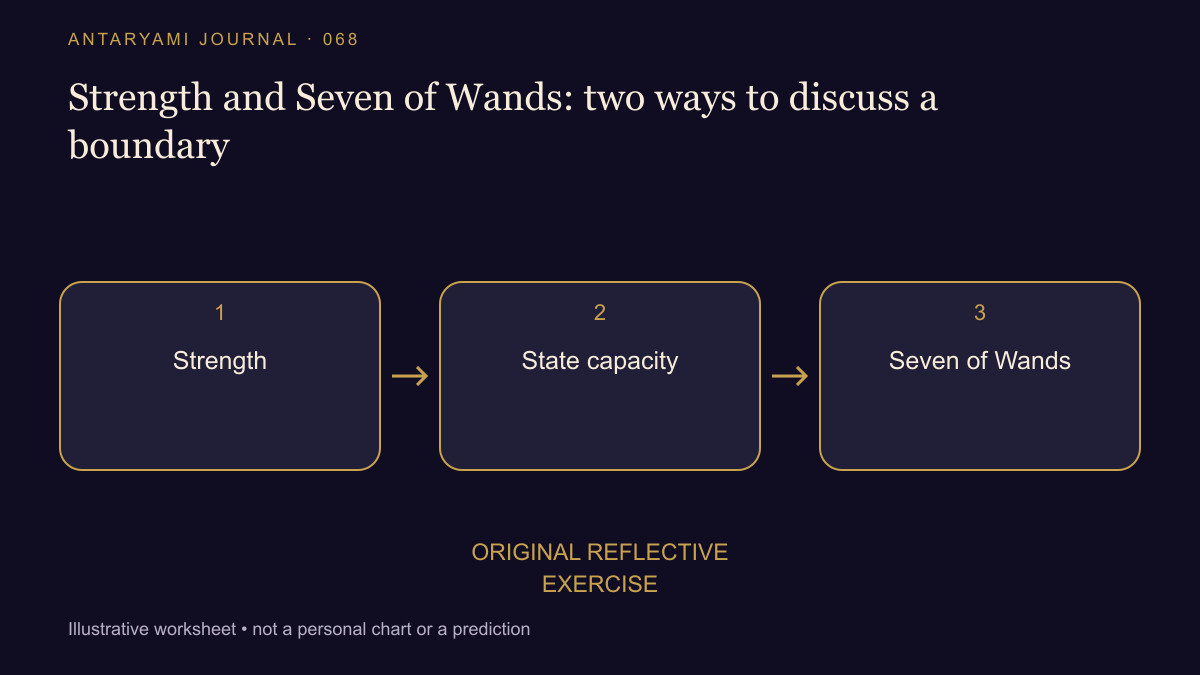
A boundary can involve both calm communication and a clear limit on what happens next. This original Strength-and-Seven-of-Wands exercise explores those two parts without assuming that conflict is inevitable. It does not establish that another person is hostile or that a reader should win a confrontation. The fictional example is an ordinary workload discussion, not guidance for handling immediate danger.
Name the request rather than the enemy
Imagine a fictional team member receiving extra tasks after agreeing to a full week's workload. Write the actual request, its deadline and the commitments already accepted. Avoid beginning with everyone is trying to take advantage of me unless there is evidence for that broader claim. The reading cannot reveal another person's private intention.
Use the Strength position here to ask how the limit can be communicated steadily. A possible sentence is: I can complete the agreed report by Thursday; taking on this additional task would move that date. The sentence describes capacity without attacking the other person or pretending that every request must be accepted.
Specify the boundary's practical consequence
Use the Seven of Wands position to ask what the person will do if the request remains unchanged. They might ask the manager to prioritise the tasks, decline the additional work or agree a revised deadline. A boundary is clearer when its consequence is within the person's actual authority and is not a threat they cannot carry out.
Do not prescribe confrontation solely because the card looks defensive. Context matters, including power differences and relevant workplace procedures. If the situation involves harassment, coercion or safety concerns, use appropriate support and formal channels. Symbolic interpretation does not replace those protections or establish what response is safe.
Evaluate communication and outcome separately
The other person may accept the limit, negotiate it or react poorly. Their response does not by itself prove that the original boundary was wrong. Review whether the statement was accurate and whether the chosen next step was possible. Keep any assumptions about motives separate from recorded messages or decisions.
Finish the exercise with one sentence stating capacity and one next action if priorities conflict. A historical Tarot reference can contextualise the card names, while this exercise remains an original communication prompt. Its purpose is to support a proportionate decision, not to designate winners, enemies or morally superior personalities. If the person does not want to rehearse a conversation through cards, the same practical questions can be asked directly without a reading at all.
Astrological interpretations are for reflection, not a diagnosis, a guaranteed prediction or a substitute for professional advice. Journal guides are prepared with AI assistance; they are educational content, not individual consultations.