 Antaryami
Tarot reading workshop
Separate the Tarot image from the story you bring to it
Looking at a Tarot image and telling a story about it are different activities. The first can describe visible features; the second brings interpretation, memory and expectation. Keeping those layers separate makes a reading easier to discuss without treating a personal association as a fact about someone else's life. This exercise works with any deck whose image the participant can actually see.
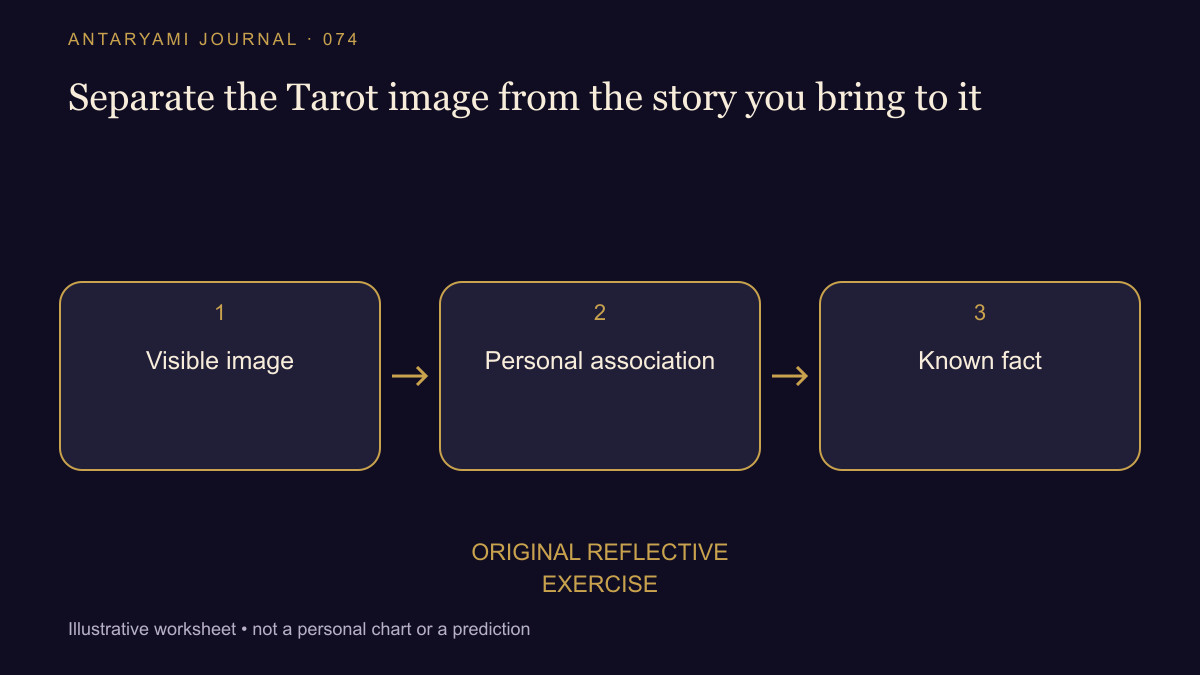
Describe before explaining
Choose one card and write three neutral observations about the picture. These might concern the number of figures, their direction of travel, an object or the surrounding landscape. Avoid beginning with betrayed, successful or lonely unless those words are visibly printed on the card. They are interpretations of the scene rather than simple descriptions.
Then add what you associate with the image. A closed gate might remind one person of privacy and another of exclusion. Neither association is established as the correct account of the participant's circumstances merely because the gate is visible. Ask what the person themselves notices before supplying a complete narrative for them.
Identify where the story becomes a claim
Suppose an image evokes a difficult workplace conversation. A reflective statement might be that the picture reminds the person to clarify an agreement. A stronger statement that their colleague is plotting against them requires evidence the card does not provide. The leap from association to accusation should remain visible and should not be encouraged.
For a fictional journal entry, use three columns: what is visible, what I associate with it and what I actually know about the situation. An unanswered message belongs in the known column; an assumption about why it was unanswered belongs elsewhere. This arrangement helps prevent interpretation from silently becoming evidence.
Leave room for a different response
The person may see a detail the reader overlooked or find the image unhelpful. Do not treat disagreement as proof that the symbolism is operating unconsciously. A reading that cannot admit a mismatch asks for belief rather than participation. It is acceptable to set the card aside and discuss the practical question directly.
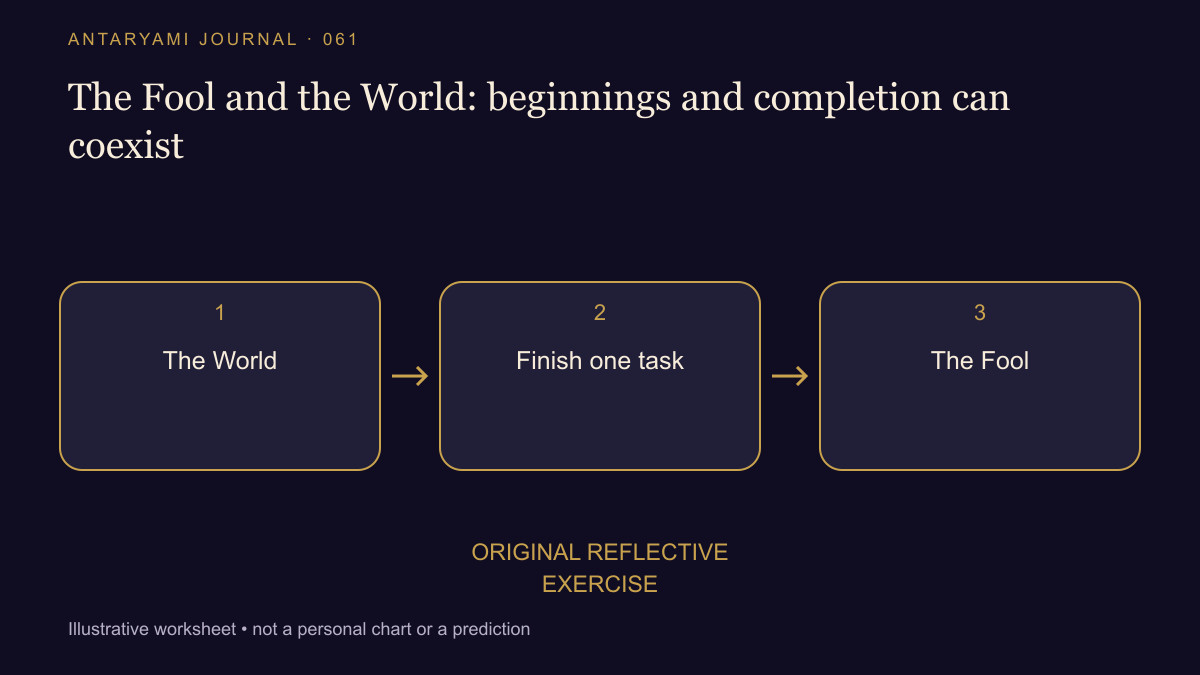
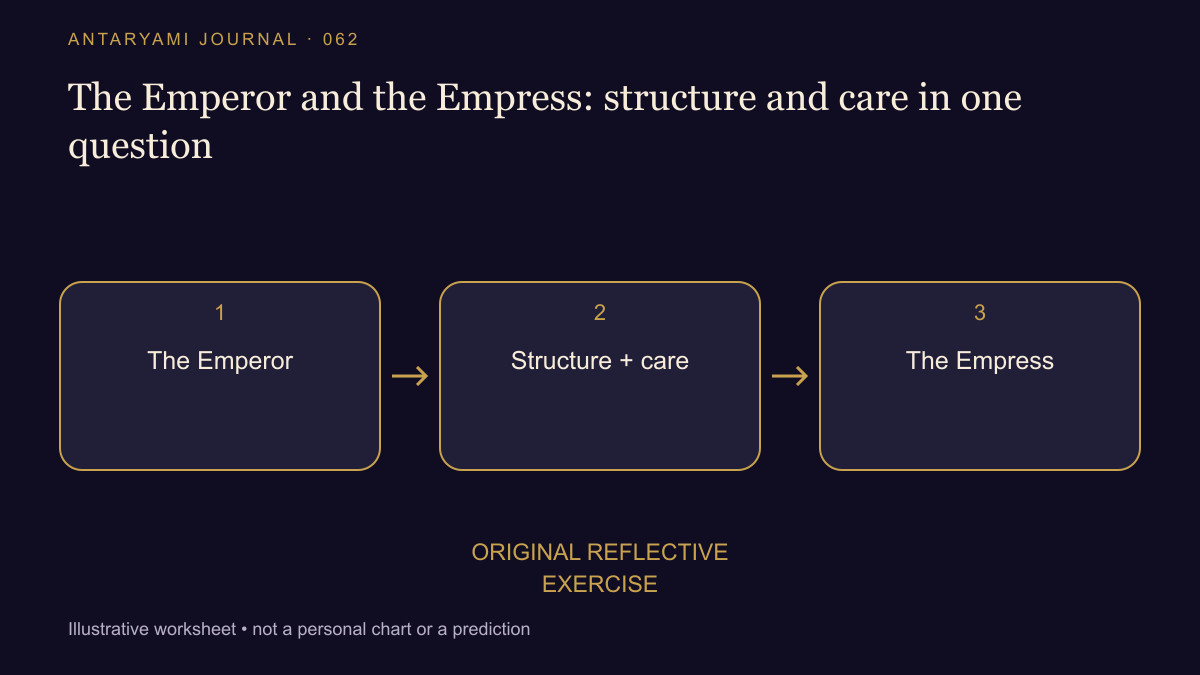
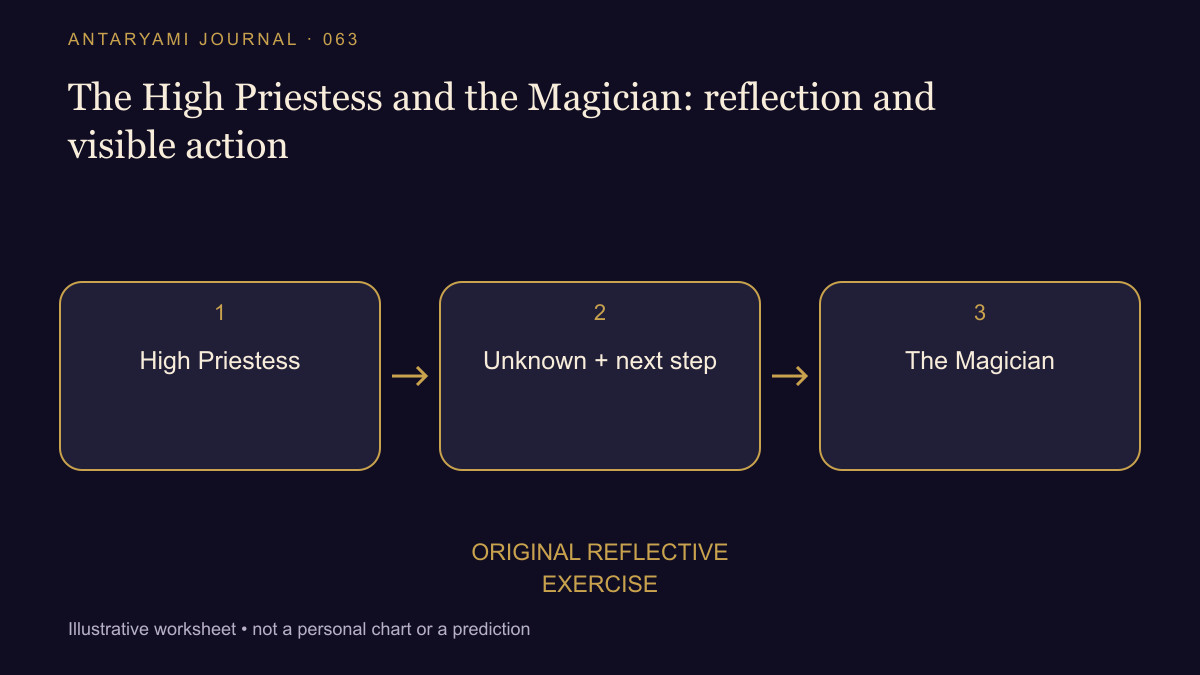
When sharing the exercise, identify the deck and image where relevant without reproducing artwork you do not have permission to use. Our accompanying diagram is an original conceptual illustration, not a scan of a particular commercial deck. The aim is a clearer conversation about how meaning is formed. It cannot establish hidden motives, predict an event or prove that one person's first association is more authoritative than the experience of the person whose life is being discussed.
Astrological interpretations are for reflection, not a diagnosis, a guaranteed prediction or a substitute for professional advice. Journal guides are prepared with AI assistance; they are educational content, not individual consultations.