Antaryami
Festival planning
Dev Uthani Ekadashi and Tulsi Vivah 2026: traditions and the wedding-season connection
A seasonal threshold can be understood in more than one way. A religious tradition may describe an awakening; a household may prepare a Tulsi Vivah gathering; a couple may begin asking about a wedding date. These conversations are related, but the answer to one does not automatically complete the others. Dev Uthani Ekadashi and Tulsi Vivah offer a useful example of why festival literacy matters. This Antaryami guide explains their 2026 calendar context, identifies a devotional interpretation and shows why a general wedding-season connection is not a personal marriage calculation. It leaves the ritual details with named traditions and the practical decisions with the people involved. A meaningful calendar marker should help a family ask clearer questions, not become pressure to rush a relationship or a promise that every date afterwards is equally suitable.
Dev Uthani Ekadashi and Tulsi Vivah: checked 2026 dates
The Chandigarh Drik Panchang Ekadashi listing gives Devutthana Ekadashi on Friday, 20 November 2026, and separately lists Gauna and Vaishnava Devutthana Ekadashi on Saturday, 21 November. Its Chandigarh Tulasi Vivah page gives Saturday, 21 November. These labels should remain intact. Two dates in the Ekadashi listing are not an instruction from this article to undertake a two-day fast.
The pages were checked on 13 October, including direct retrieval of the city-specific entries where the research browser could not open them. The displayed heading confirmed Chandigarh. This matters because an unselected page can show another country while still presenting the correct-looking year. Keep the city and observance label beside the date before forwarding it to a household group.
For your own participation, follow the relevant institution or responsible tradition-bearer. A calendar label, a local programme and an individual's practical needs require different questions. Ask whether an invitation is for worship, a ceremonial gathering or a community event arranged on another convenient day. Put the actual civil date and arrival time in the invitation. That allows guests to understand the plan without expecting them to decode a specialist list. If you are considering fasting, individual health questions belong with qualified professionals; this educational guide does not determine who can safely undertake it.
Sources: Drik Panchang: 2026 Ekadashi observances, Chandigarh; Drik Panchang: Tulasi Vivah 2026, Chandigarh; retrieved directly 13 October; Drik Panchang: Prabodhini Ekadashi 2026, Chandigarh; retrieved directly 13 October
The awakening language belongs to a devotional account
Dev Uthani, Devutthana and Prabodhini appear as related names in the calendar explanation. BAPS Swaminarayan Sanstha describes Prabodhini Ekadashi as an awakening observance and the conclusion of Chaturmas within its tradition. This is a religious and symbolic account. It should not be treated as an astronomical claim that a planet begins to wake, or as proof that every person's circumstances must improve on that date.
The metaphor can still invite a serious question. What have you been attending to, and what have you allowed to become automatic? A contemporary reader might examine a habit of forwarding claims without checking them, postponing a responsibility or listening only when a conversation confirms an expectation. These are reflective prompts from this guide, not a replacement for the institution's theology or ritual instructions.
An awakening theme is most useful when it sharpens attention rather than guarantees reward. Suppose you decide to revisit an unfinished conversation. The festival may have prompted that decision, but the quality of the conversation will depend on what you say, how you listen and the other person's circumstances. Do not erase their agency by announcing that the calendar has already settled the outcome. Devotional language can carry meaning while practical action remains something a person must undertake with care. Keeping the two connected but distinct avoids both a dismissive reading and an exaggerated promise.
Sources: BAPS Swaminarayan Sanstha: its Prabodhini Ekadashi explanation; Drik Panchang: Prabodhini Ekadashi 2026, Chandigarh; retrieved directly 13 October
Tulsi Vivah is a ceremonial union, not a forecast of a customer wedding
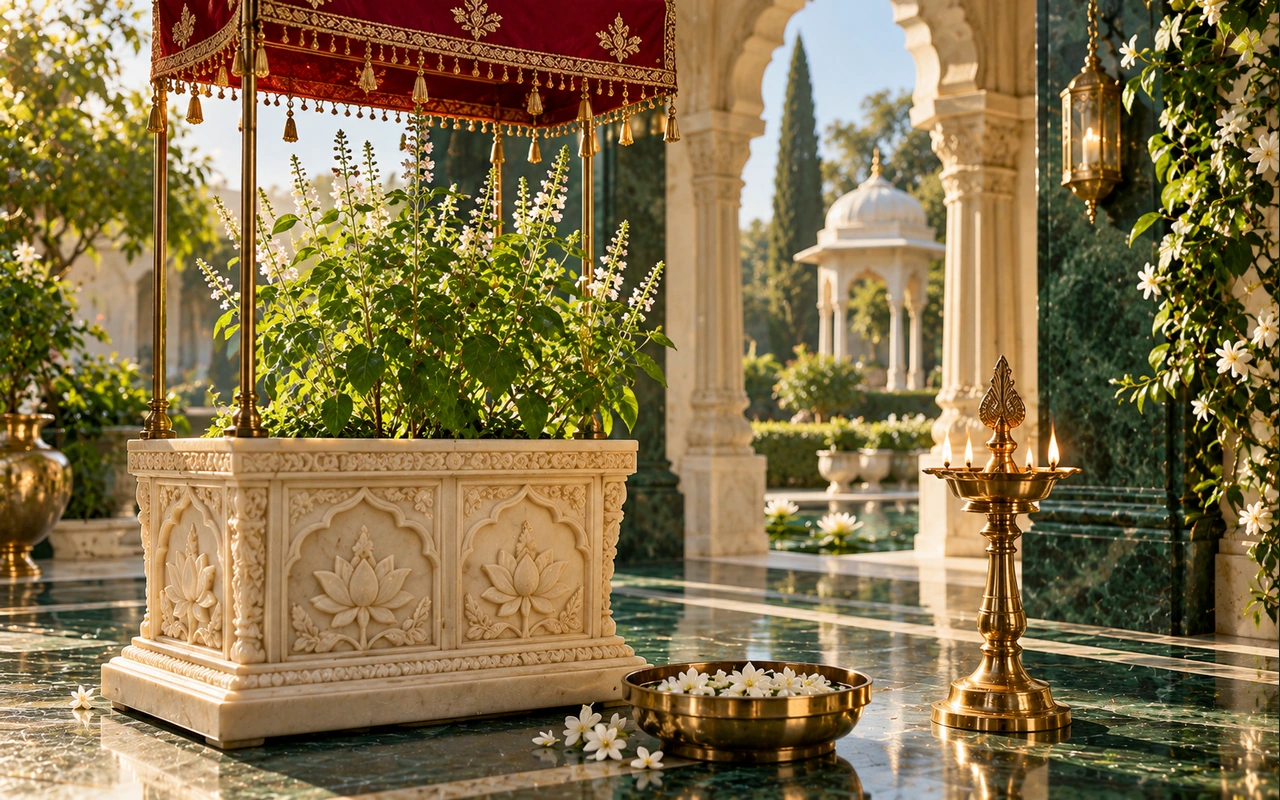
The Tulasi Vivah explanation describes a ceremonial marriage of the revered Tulasi plant with Vishnu or a relevant form such as Krishna. The devotional representation should be understood within its tradition. A photograph of a decorated plant introduces the subject, but it does not establish a ritual sequence or predict when a person reading the article will marry.
For a visitor, the first questions are practical and contextual. Which institution or household is arranging the event? What form of worship does it follow? What is expected of someone attending rather than officiating? Ask those questions before treating a general online article as authority to perform a rite. A public explanation can make the names accessible without improvising the mantras, eligibility rules and sequence for everybody.
It is also important not to turn a sacred wedding representation into a ranking of ordinary families. A person who is unmarried, child-free or participating differently should not be presented as incomplete by a marketing caption. The religious narrative and a person's life circumstances are different subjects. Antaryami's conceptual cover shows a plant and decorative setting, not a real customer's ceremony. It allows us to illustrate the topic without borrowing someone else's private story or claiming that buying app access produces a marriage result. Understanding the symbolism should make the event more legible, not make a reader anxious about their worth.
Sources: Drik Panchang: Tulasi Vivah 2026, Chandigarh; retrieved directly 13 October
Why another institution may describe a different lunar day
Shree Swaminarayan Temple Sydney's Tulsi Vivah explanation names Kartik Sud 15 in its tradition, while the consulted calendar page selects a Dwadashi-related 2026 observance. This is a useful reminder that a named institutional practice and a general provider listing need not use the same event selection. The difference should be acknowledged, not silently removed to create a universal-looking timetable.
If you intend to attend a particular temple, its current programme is the relevant appointment. An explanatory page about a recurring festival may describe a lunar context without confirming this year's public event time. Ask the institution for the actual programme before making travel arrangements. Conversely, do not treat a practical event date as evidence that every other calendar label is wrong.
This way of reading also helps when relatives use different vocabulary. Ask whose tradition and which activity they mean. You can then compare the descriptions without assuming that disagreement over a label is disagreement over devotion. A clear account may say that the household follows this arrangement, while a named institution describes another. That statement leaves room for learning. It avoids the common digital mistake of collecting several specific examples, discarding their contexts and presenting the remaining fragments as one compulsory ritual. Good knowledge is not made more authentic by hiding the differences that helped explain it.
Sources: Shree Swaminarayan Temple Sydney: its Tulsi Vivah tradition; Drik Panchang: Tulasi Vivah 2026, Chandigarh; retrieved directly 13 October
A wedding-season connection is not permission for every later date
The end of Chaturmas is relevant to marriage-date discussions in traditions that avoid that period. Drik Panchang's marriage-method explanation includes Chaturmas among the considerations in its electional process. This establishes a connection between the seasonal context and date selection; it does not show that every hour after a festival marker is a suitable personal wedding muhurat.
Think of an ordinary scheduling analogy. The opening of a venue's booking season does not mean that every booking is available or appropriate for every event. There are still dates, people, arrangements and conditions to consider. The analogy does not calculate a religious muhurat. It simply separates a broad seasonal threshold from the specific selection a family may ask its officiant to make.
If planning a wedding, identify which tradition or calculation method the family wants to follow and who is responsible for explaining it. Keep venue availability, travel, budget and the couple's agreement visible alongside the traditional preference. Do not allow an unlabeled best-date list to replace that conversation. A calendar can help frame a choice, but the people entering a relationship still have needs and decisions of their own. An article about a festival should not tell them that the season has made consent, practical readiness or thoughtful planning unnecessary.
Sources: BAPS Swaminarayan Sanstha: its Prabodhini Ekadashi explanation; Drik Panchang: the criteria used in its marriage-date selection
Muhurta and relationship understanding answer different questions
A wedding muhurat concerns the selection of a time under a particular traditional method. Relationship understanding concerns the people, their communication and the life they intend to share. Compatibility systems may add another traditional layer of interpretation, but none of these categories should be confused with verified knowledge of a person's character or a guaranteed marriage outcome.
For example, imagine a couple who have identified a preferred event date but have not agreed how they will handle work, residence or family responsibilities. The timing choice does not answer those practical questions. Another couple may communicate carefully while still needing to clarify the event arrangements. Recognising the separate tasks makes planning more honest: one selected field cannot stand in for the entire relationship.
This is also a useful question to bring to an app. What exactly is the feature calculating or explaining? Is it a calendar entry, a chart comparison, a symbolic interpretation or a practical account record? Read the method label and its limitations before assigning it a larger role. Antaryami's journal encourages that distinction before personal access is considered. A clear explanation should help readers understand what they are seeing, not borrow certainty from a precise date and transfer it into claims about another person's intentions. The people involved remain more than the instruments used to discuss them.
Attend the ceremony without turning it into a checklist contest
Ask the organiser what you should bring, when to arrive and which activities are open to visitors. If helping, take responsibility for a defined task rather than assuming that any unsolicited addition will fit the programme. A ceremonial arrangement may have specific requirements, and a volunteer can respect them without treating the clarification as criticism.
For a household event, consider the care of the actual plant as well as the decoration around it. This guide does not provide horticultural or ritual instructions for every setting. It recommends asking the responsible person how the plant is normally cared for and avoiding a display that prioritises a photograph over that care. Symbolic attention should not make the living object disappear behind the ornaments placed around it.
Keep guests' individual needs in view. Explain food ingredients, provide a comfortable place to sit where possible and avoid pressuring someone to disclose health information or participate in fasting. Decide about photographs and public sharing in advance. A visitor's presence does not automatically authorise a commercial caption about their personal future. The event can be documented accurately as a named community or household programme, with the photographer's observations separated from claims that no photograph can establish. Such ordinary consideration makes the learning experience more welcoming for somebody encountering the tradition for the first time.
Use the threshold to begin one considered task
Choose a task that reflects the attention you want to bring into the coming season. It might be checking a family calendar carefully, reading the institution's account of an observance or having a practical conversation that has been postponed. Write down the first action and the person or source you need to consult. Keep it specific enough to do without requiring an idealised transformation of your whole life.
If the task concerns a major commitment, give it the seriousness that commitment requires. A symbolic season marker should not shorten the process of understanding an agreement, assessing readiness or obtaining appropriate professional advice. You can honour a traditional preference while still asking questions, allowing another person to decide and declining an arrangement that does not fit your circumstances.
Continue with Antaryami's festival, chart and relationship-literacy guides when you want to explore those distinctions. Check current app availability rather than assuming that an educational topic describes an already released personal feature. For Dev Uthani Ekadashi and Tulsi Vivah 2026, the checked Chandigarh dates offer a reference with tradition labels attached. The awakening theme, the ceremonial union and the wedding-season discussion remain related without becoming one promise. Let the occasion help you notice what deserves attention, then bring that attention to the real conversations and responsibilities that follow.
Separate the threshold from the personal decision
Do the two listed Ekadashi dates require a two-day fast?
No such instruction is given here. The provider lists separate observance categories; consult the responsible tradition-bearer and qualified medical advice for personal health questions.
Does the end of Chaturmas make every later date a personal wedding muhurat?
No. A broad seasonal context and a specific traditional election are different levels of selection. Practical readiness and the couple agreement remain separate.
Astrological interpretations are for reflection, not a diagnosis, a guaranteed prediction or a substitute for professional advice. Journal guides are prepared with AI assistance; they are educational content, not individual consultations.