Antaryami
Festival planning
Kanya Puja explained: meaning, customs and respectful participation
A child arrives at a festival gathering and finds that, for a moment, the adults are making room for her. There may be a carefully prepared seat, food, flowers and a form of welcome that belongs to the household's devotional practice. Kanya Puja can be encountered through this ordinary-looking scene, but its meaning is larger than a plate of sweets. It brings a religious idea into contact with a person's actual treatment. That connection deserves care. An explanation should identify the tradition it describes, recognise that local arrangements vary and keep the participant's dignity in view. This Antaryami article introduces the subject without inventing a compulsory ritual for every family. It asks what a respectful invitation looks like, why Kumari Puja is an important comparison and how the attention offered during worship can remain meaningful after the visitors leave.

What does Kanya Puja mean?
Kanya Puja is a name used for devotional worship or honouring of girls in relevant Hindu traditions. The closely related term Kumari Puja appears in institutional descriptions of worship of the Divine Mother. Belur Math explains its Kumari Puja as worship of a young girl regarded within the ceremony as Devi. That statement describes a religious understanding, not a scientific claim about the child's body or an entitlement to control her behaviour.
Begin by distinguishing the symbolic role from the person taking part. A participant may be addressed through a devotional idea during the rite, but she is also a child with preferences, questions and a life outside the gathering. The symbolism does not erase those ordinary facts. Adults remain responsible for the welcome, the explanation and the conditions under which participation occurs.
It is also worth distinguishing an introduction from a ritual manual. A household deciding how to perform worship should follow its responsible tradition-bearer or officiant. A public article can explain vocabulary and ask useful questions without supplying an improvised liturgy. This makes the topic more approachable for visitors who want to understand what they are seeing. You can appreciate the practice's devotional purpose while recognising that the detailed sequence, items and eligibility rules belong to a specific custom rather than a universal social-media checklist.
Sources: Belur Math: its Durga Puja and Kumari Puja tradition
Kanya Puja and Kumari Puja: connected names, specific practices
The names can appear in conversations about the same broad devotional theme, yet the arrangements described under them need not be identical. Belur Math places Kumari Puja within its Ashtami worship. A household invitation labelled Kanya Puja may concern a different local arrangement. If you are attending, ask the organiser how the term is being used there instead of importing every detail from a ceremony you watched somewhere else.
An institutional programme can have a selected participant, an officiant and a formal sequence. A family gathering may concentrate on welcoming several children and sharing food. Recognising these different settings is not a judgment about which gathering is more sincere. It is a way of reading the invitation accurately. A respectful account names the setting rather than presenting one photograph as evidence for all practice across India.
This distinction becomes especially useful when somebody asks what is required. Required by whom is the missing part of the question. Is the instruction coming from your household custom, the temple you are visiting or an anonymous video? Clarify that before buying items or making promises to guests. Antaryami's approach to knowledge starts with such labels: the name of the instrument or tradition, the source of a rule and the question the rule is meant to answer. Beautiful presentation should make these details easier to notice, not persuade a reader that differences no longer matter.
Sources: Belur Math: its Durga Puja and Kumari Puja tradition
Does the observance belong to Ashtami or Navami?
A date should be connected to a named programme. For the 2026 Delhi Navratri listing consulted for this series, Ashtami and Maha Navami appear in the 19 October programme, while other observance labels extend into 20 October. The presence of a lunar name on a calendar does not by itself select every household's Kanya Puja appointment. Ask which activity the organiser is arranging and which tradition or instruction governs it.
A useful invitation might say that children are welcome for a meal after the family's worship, followed by the actual civil date and arrival time. It can also say whom a parent should contact with questions. That is clearer than forwarding a cropped puja-time graphic and expecting each guest to infer whether the time is for worship, food or setup. The planner should retain the original source even if the guest only needs the practical invitation.
If relatives follow different customs, describe your own plan without declaring theirs invalid. You can say that this is our household's arrangement this year and still take a question seriously. If a programme must change, send a corrected message rather than assuming that an old image will disappear. Calendar literacy is useful here because it reduces a preventable conflict: a family can distinguish a traditional observance choice from the ordinary work of getting people to the right doorway at the right time.
Make the invitation understandable to the participant
An adult may know why a ceremony is important, while a child hears only that she must attend and sit still. Explain the arrangement in words she can understand. Say who will be present, what she is being invited to do and approximately how long the visit will take. Avoid promising a reward that depends on perfect performance or presenting uncertainty as something she must conceal to keep the adults pleased.
Involve the responsible parent or guardian in the practical conversation. Discuss transport, supervision, food preferences and whether the child is comfortable with the setting. These are not substitutes for devotion; they are part of the conditions in which a real person participates. An invitation should not turn into a demand for private records, birth details or public photographs merely because the gathering has a sacred purpose.
Leave space for a question or a change of mind. A child who is tired, uneasy or simply confused should not be shamed through a religious label. The organiser can explain the programme kindly and consider another arrangement where appropriate. This article does not establish ritual eligibility, but it does recommend treating the people involved as more than decorative components of an event. The welcome becomes clearer when the adults recognise that attention, understanding and voluntary participation are things they must cultivate, not facts automatically supplied by a beautiful setting.
Food, seating and the small details that make welcome real
Start with the space a guest will actually use. Is there a comfortable place to sit? Can the accompanying adult remain nearby where appropriate? Does the group know when food will be served? Consider these questions before planning how the table will look in photographs. A neat arrangement should support the people arriving rather than require them to behave like part of an exhibition.
Ask about food requirements instead of assuming that one festive plate suits everybody. Describe what you intend to serve and let the responsible adult tell you what needs adjusting. A guest should not have to justify a preference in front of a room full of strangers. Clear preparation is more useful than insisting that accepting every item proves respect for the household. If a tradition prescribes particular offerings, separate that discussion from the practical question of what an individual guest can comfortably eat.
Also decide how gifts or small tokens will be offered. Avoid turning them into a competition between children or an opportunity to compare family income. A simple, consistent arrangement can prevent awkwardness. The goal is not to publish a new rule about the correct cost of a gift. It is to keep the welcome from being overshadowed by a display of spending. Visitors may remember a calm explanation and a considerate seat long after they forget the colour of the tablecloth. Those details are worth the organiser's attention.
A ceremony is not automatic permission to publish a child
The urge to record a meaningful occasion is understandable. It still helps to decide about photography before someone raises a phone. Explain whether pictures are wanted, who will take them and where the organiser hopes to share them. Ask the responsible adult and pay attention to the child's comfort. Do not infer permission from attendance, a smile or the fact that several other people are already taking photographs.
If a family prefers not to be photographed, make that easy to respect. The organiser can suggest a picture of the flowers or the prepared space instead. A caption does not need the child's full name, school, home location or birth information to communicate the occasion's meaning. Avoid making a public image the price of participating in the celebration.
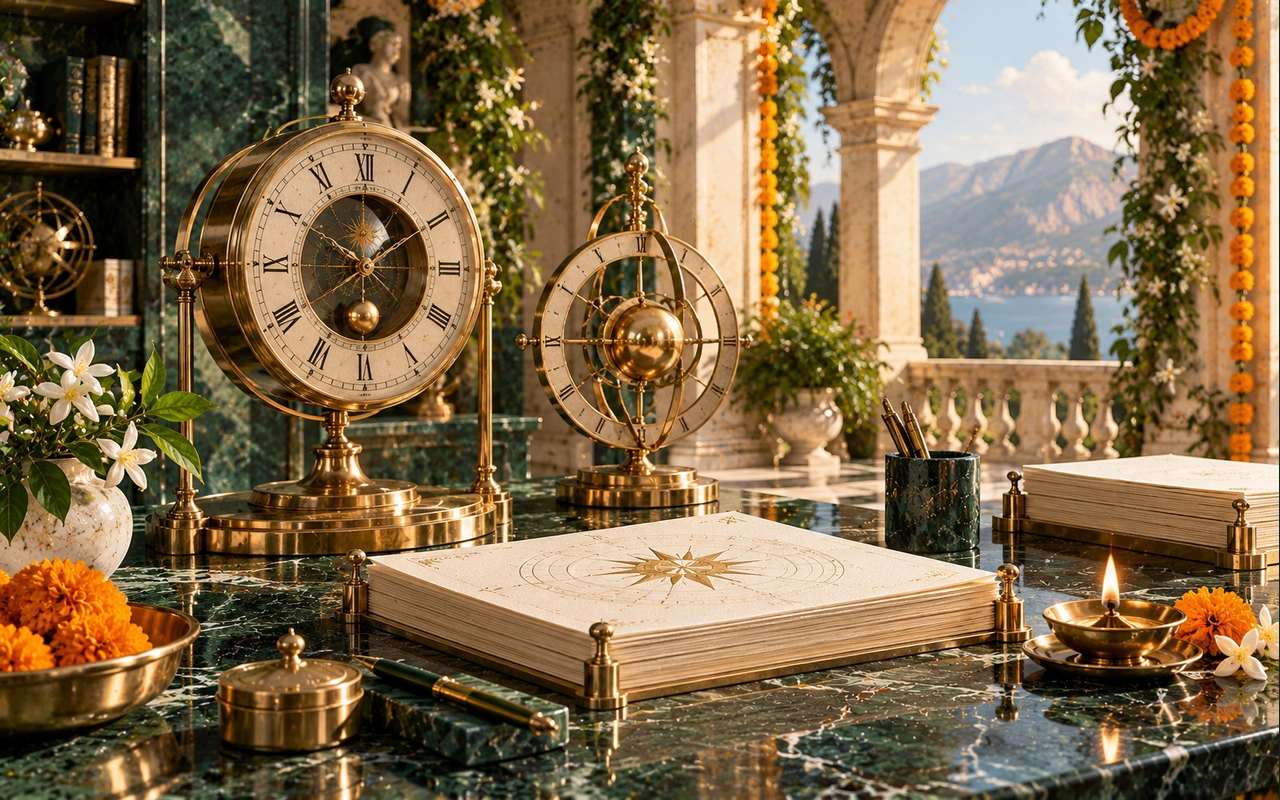
The same care applies to narration. Do not invent a personal spiritual destiny for a participant or use a child to support a commercial claim about guaranteed blessings. Antaryami's cover for this article deliberately shows an unoccupied conceptual setting, not a real ceremony or customer. The distinction lets us illustrate hospitality without presenting someone else's family event as our evidence. You can remember an occasion warmly while recognising that other people have a legitimate interest in how their images and stories are used. That awareness is part of respectful attention, not an obstacle to it.
What should remain after the worship ends?
A powerful question is whether the respect offered during the ceremony changes how girls and women are treated outside it. Belur Math's account connects Kumari Puja with awareness of women's potential divinity and respectful treatment. That is a stated devotional purpose. It should not become a way to excuse dismissive behaviour once the special seat has been put away.
You do not need a grand public pledge to examine the gap. Notice who is listened to in a household discussion, whose discomfort is dismissed and whose work is taken for granted. An adult can make a small correction: answer a child's question patiently, avoid an insulting comparison or share a task more fairly. These are ordinary actions that another person can experience, rather than claims about an invisible reward that nobody can check.
Be careful, however, about presenting your own reflective exercise as an ancient mandatory rite. The questions in this paragraph are contemporary suggestions from this guide. They are not an invented quotation from a scripture. The devotional source and the practical reflection can stand beside each other with their labels intact. A meaningful occasion may inspire a person to behave differently, but a website cannot guarantee that conducting it will produce wealth, pregnancy, family harmony or protection from misfortune. Keeping those promises out of the explanation leaves more room for the actual dignity the tradition asks participants to consider.
Sources: Belur Math: its Durga Puja and Kumari Puja tradition
A respectful checklist for learning, not a universal ritual prescription
Before attending or arranging a gathering, clarify the name of the practice, the responsible organiser and the selected observance date. Ask whether the invitation is for worship, a meal or both. Check the practical needs of the participants and decide about photographs before the ceremony. These questions help you understand the arrangement without pretending that a general article has supplied every detail of your household's tradition.
When you read further, prefer sources that identify their own setting. An institutional description is valuable because you can tell whose practice is being described. A primary devotional text can explain religious language, while a calendar page can identify a date-selection convention. Neither should be stretched beyond the question it actually answers. A confident video that combines all of them into a single shopping list still needs its claims examined individually.
Explore Antaryami's festival and instrument guides when you want that kind of context. The website lets you look around and learn vocabulary before considering personal app access. Here, the most useful outcome is not a prediction but a clearer understanding of how symbolism meets conduct. A ceremony may be brief; the way a participant is heard and welcomed can matter much longer. Keep that human scale in view, allow traditions to remain specific, and let the care offered at the event continue in the ordinary interactions that follow.
Make the welcome specific
Does an institutional Kumari Puja describe every household custom?
No. It documents a named tradition. Ask your own organiser about its programme rather than importing every detail from another setting.
Does attendance authorise public photographs?
Do not assume it does. Explain intended photography beforehand and respect the participant and responsible adult choices.
Astrological interpretations are for reflection, not a diagnosis, a guaranteed prediction or a substitute for professional advice. Journal guides are prepared with AI assistance; they are educational content, not individual consultations.