Antaryami
Festive plans & people
Festival photos: share the joy, not somebody's private details
A picture can carry a welcome beyond the gathering. It can also reveal more than the people in it expected, especially when screenshots include names or account details.
Ask before turning a moment into public content
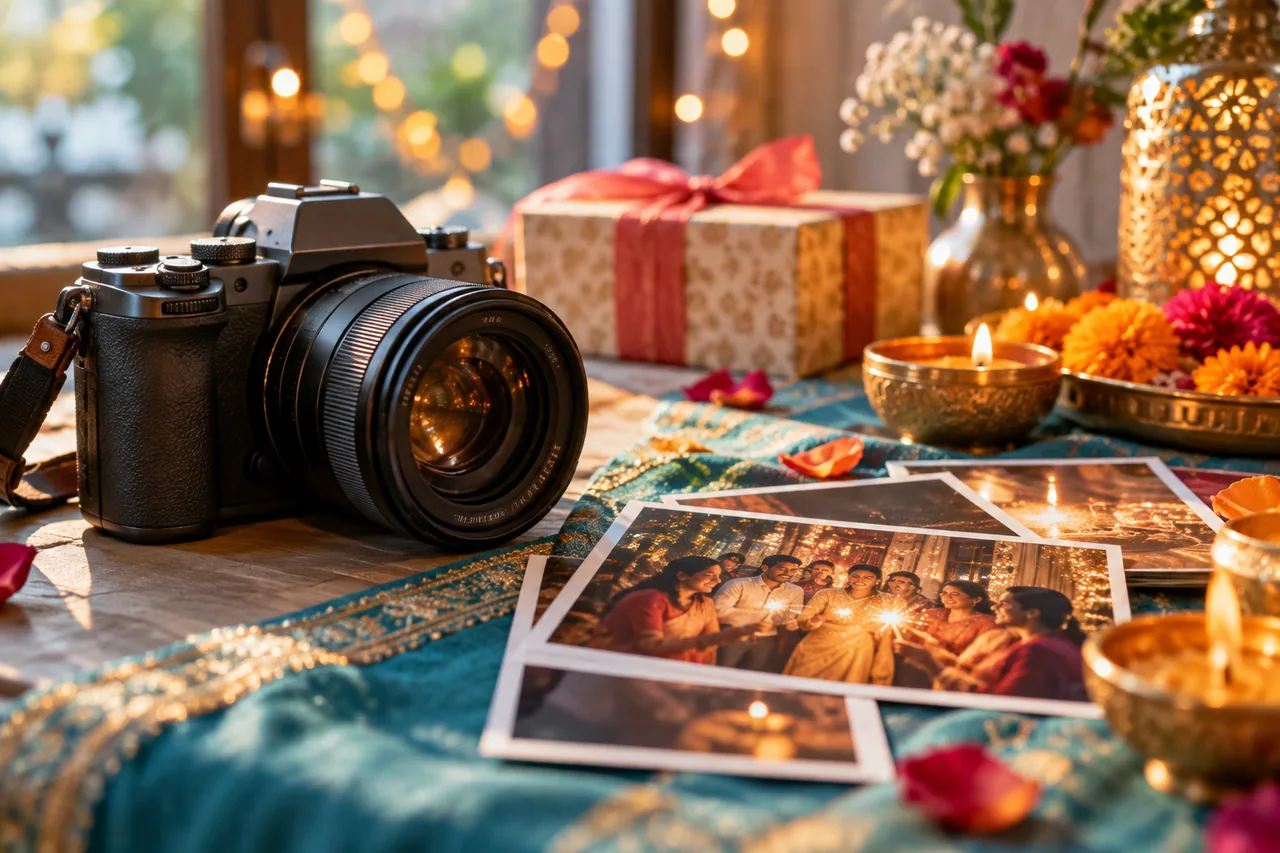
Get permission before posting recognisable people, particularly children or someone who has asked for privacy. Check the background for documents, addresses or screens. A group celebration does not automatically imply consent to a public advertisement. The courteous question is simple: are you comfortable with me sharing this?
The photograph may feel spontaneous: the lights look beautiful, everyone is together and you want to share the moment. Before posting, look at the people as well as the scene. Someone may be comfortable joining the celebration but not appearing on a public account. Attendance and publication are different choices. Asking first need not spoil the mood; it can be part of making the gathering feel considerate.
A simple question is often enough to begin: "May I share this photo publicly?" Be clear about the destination rather than assuming a family message and an open social page are equivalent. A person might agree to one and not the other. If several people are identifiable, each person's preference matters. The enthusiasm of the person holding the phone does not settle the choice for everyone in the frame.
Notice the background too. A visible address, school identifier, travel document or phone screen may reveal more than the intended celebration. The point is not to become suspicious of every picture. It is to take a brief look at what the image actually contains. A careful crop or another photograph may preserve the joy while leaving unnecessary details out. Thoughtful sharing begins before the caption is written.
Keep chart screenshots personal
An Antaryami report or profile view may contain private birth information. Do not publish it as a festive greeting without the relevant person's permission. A fictional illustration is a better choice for explaining a feature publicly. Good promotion can respect privacy while still showing why a product is interesting.
A screenshot needs the same attention as a camera photograph. If you are sharing an astrology result during a festival, the screen may contain a full name, birth details or another relative's selected profile. Those are not decorative labels. They identify a person and their record. Do not post the screen merely because the chart looks attractive. Ask whether the person wants that information shared and whether a public example would serve the purpose instead.
An Antaryami educational illustration is a different kind of image from a private chart. The public instrument tour is there to explain the experience without exposing a visitor's saved data. If you want to show somebody what the instrument looks like, that distinction can help. You can share the public explanation rather than a family member's report. The product demonstration does not need a real person's private record to become interesting.
Captions can disclose information even when the image does not. A name, location or story about somebody's difficult year may be more personal than the group photograph itself. Ask whether those details are theirs to share. A warm caption can describe your own gratitude and the occasion without narrating another person's private experience. Care is not limited to hiding numbers; it includes letting people decide which parts of their lives become public.
A practical pause
- Ask the people shown before posting.
- Check screens and documents in the background.
- Use fictional chart examples for public product demonstrations.
Choose the step that fits your actual situation. You do not have to follow every suggestion, buy a product or make a major decision to learn something from the question. A useful explanation leaves you more informed and free to decide, rather than feeling that you must act immediately.
If someone declines, make the response easy. "Of course, thank you for telling me" is better than asking them to justify the preference in front of everyone. You might take another picture, leave that image private or simply enjoy the moment without posting it. A celebration is not incomplete because it produces fewer public photographs. The people present should not have to perform availability for the camera in order to belong.
If a picture has already been shared and a person objects, acknowledge the problem and take the requested correction seriously. Avoid arguing that they looked good or that only a few people saw it. Those points do not answer the question of whether they wanted it published. A courteous apology names the action rather than making the person feel unreasonable for asking. Practical repair matters more than a long explanation of your good intention.
You can set expectations gently at a larger gathering. Tell guests where official photographs may appear and offer a clear way to opt out. The exact arrangement depends on the event, but the principle is simple: make the choice visible before people discover it through a posted image. An invitation that respects this boundary helps more people participate comfortably, including those who prefer to keep their personal lives less public.
Keep the context visible
Festivals carry different meanings across households and communities. This journal offers respectful introductions and practical reflection, not a universal ritual timetable. A current public event listing is different from a local observance rule. Confirm arrangements with the relevant organisers and people involved, and avoid presenting participation, spending or a particular ritual as a test of someone's value or belonging.
You are welcome to read the Antaryami Journal without a personal reading. If you choose to explore further, use the website to create or manage your account, and check the intended saved profile before any personal instrument or report. The fuller Antaryami experience belongs in the app; public editorial examples are not your own calculated chart.
Festive sharing also benefits from a pause about meaning. A group photograph captures a moment, not the whole quality of a relationship or a family's happiness. Do not compare your private day with somebody else's best image and conclude that the celebration has failed. You can appreciate a beautiful scene without treating it as a standard everyone must meet. The warmth of the occasion may exist in details that were never photographed.
Astrological and auspicious themes can add a personal layer to a caption, but they should not become claims about everyone shown. One person may enjoy the symbolism and another may not share the belief. Keep the wording in your own voice: what the moment means to you, rather than a declaration that a particular sign or ritual guarantees the group's future. A welcoming celebration leaves room for different ways of understanding it.
Nitish Raj Walia's Antaryami Journal encourages that combination of curiosity and care. Enjoy the picture, ask before sharing and keep private records out of the frame. The next useful step may be very small: a question, a crop or deciding not to post. Those choices do not diminish the celebration. They make its welcome more genuine, because the people in the memory remain more important than the reach of the photograph.
Astrological interpretations are for reflection, not a diagnosis, a guaranteed prediction or a substitute for professional advice. Journal guides are prepared with AI assistance; they are educational content, not individual consultations.