Antaryami
Tarot reading workshop
Justice and Judgement: accountability without self-condemnation
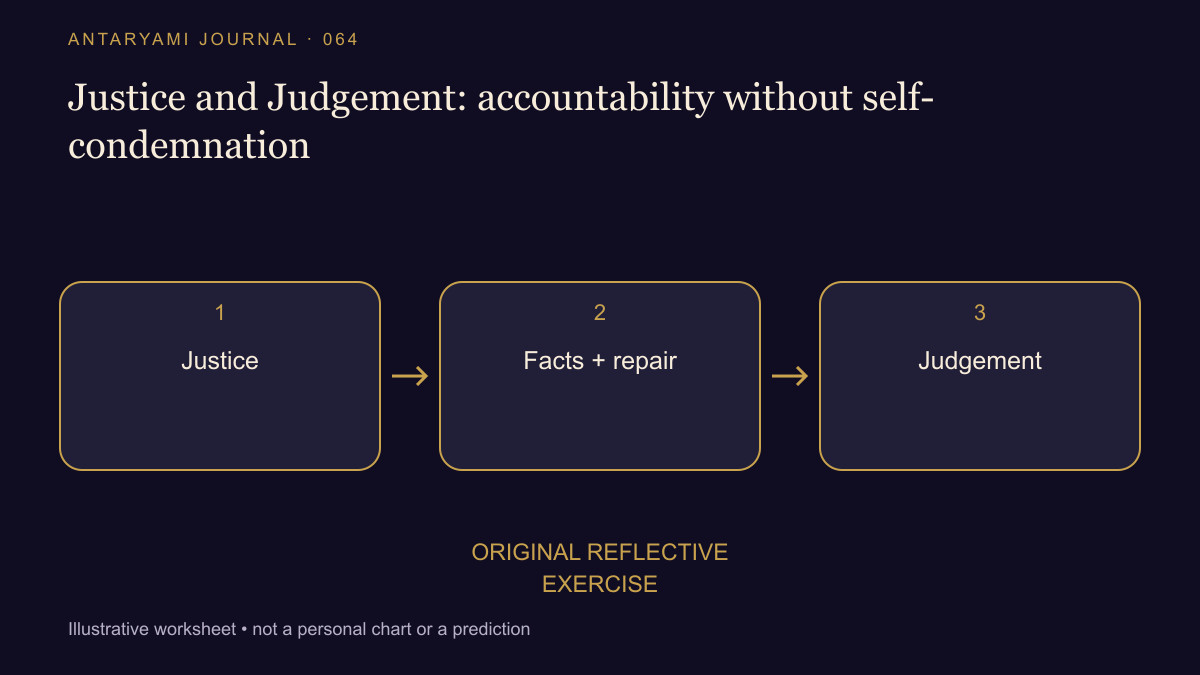
Accountability concerns what happened, what can be repaired and what should change. Self-condemnation turns a specific mistake into a total verdict about a person. This original Justice-and-Judgement exercise keeps those questions apart. It is reflective writing, not legal advice, a diagnosis or a declaration that punishment or absolution has been delivered by cards. The chosen positions should be explained before the discussion begins.
Describe the incident without a character verdict
Imagine a fictional colleague who sent a report late. Start with observable facts: the agreed deadline, the actual submission time and the effect on the next person's work. Avoid beginning with I always ruin everything or they deliberately sabotaged me. Those claims go beyond the available evidence and make repair harder to identify.
Use the Justice position here to ask what an accurate record and proportionate response require. That might mean acknowledging the missed deadline, checking the consequences and agreeing on a replacement schedule. The card does not decide a contractual dispute or establish what another person is legally owed.
Turn review into a specific next step
Use the Judgement position to ask what can be learned without rewriting the incident. Perhaps the task needed an earlier check-in or a more realistic estimate. A useful change can be tested: send a progress note two days before the next deadline rather than waiting until the work is already late.
Do not confuse understanding the cause with denying the impact. An overloaded schedule may explain a delay while the recipient still needs a reliable delivery plan. Equally, accountability does not require accepting unrelated accusations or unlimited extra work. Keep the response tied to the actual event and the authority of the people involved.
Review repair through observable evidence
Write a short record of the acknowledgement, the agreed remedy and the next review date. Ask whether the affected person has received what they need, rather than deciding that an emotional reading has completed the repair. Forgiveness, trust and formal obligations are separate matters; none can be assumed from a symbolic interpretation.
Historical sources provide context for these card names, but this paired exercise is an original discussion structure. It makes no claim that a spread can establish guilt, innocence or someone else's private feelings. If the issue involves a formal legal, employment or safety process, use the relevant qualified support. For ordinary reflective work, the pair is useful when it moves the conversation from a global judgement of worth toward a truthful account and a bounded, practical act of repair.
Astrological interpretations are for reflection, not a diagnosis, a guaranteed prediction or a substitute for professional advice. Journal guides are prepared with AI assistance; they are educational content, not individual consultations.