Antaryami
Chart essentials
Sidereal vs tropical zodiac: why your sign can change
Sidereal and tropical astrology use different zodiac reference conventions. A changed sign label between them is not necessarily a calculation error. Compare the convention before comparing the interpretation, especially when moving between a Vedic chart and a familiar Western horoscope.
Start with the reference convention
The two systems do not place their zodiac starting point in the same way. That is why the same birth instant can receive different labels. Do not manually move every placement back one sign: a position close to a boundary needs an actual calculation, and a shortcut can produce another incorrect chart.
The question often begins with a small surprise: you have always called yourself one sign, but a new chart displays another. Before reaching for an explanation about your personality, check the framework. A sign is not a label calculated independently of a reference system. It belongs to a zodiac convention. If two services choose different conventions, the same birth information can produce different sign labels without either service having changed the recorded birth moment. The surprise is understandable, but it is not yet evidence of a mistake.
An everyday comparison may help. A temperature written in Celsius looks different from one written in Fahrenheit. You would not compare the bare numbers before checking the units. Zodiac conventions are not simply temperature units, and their historical meanings differ, but the habit is useful: identify the reference before interpreting the label. Start by writing down what each service says it uses. If the setting is hidden or unclear, that missing context is part of the problem you need to resolve.
It is also worth separating zodiac signs from astronomical constellations. A chart convention and the boundaries used to identify constellations in astronomy are not the same thing. Images of a star pattern can illustrate a topic without providing the calculation rule for your chart. Ask the service how it defines the zodiac position, not whether its decorative picture looks like the stars you recognised outside. An attractive illustration should never have to carry the technical explanation by itself.
What does ayanamsa tell you?
In sidereal calculation, the ayanamsa setting identifies the offset convention being used. Lahiri is one convention, not a generic synonym for all sidereal astrology. A fair comparison records this setting alongside date, time and location. If a calculator hides its convention, a precise-looking degree still does not give you enough information to reproduce the result.
Within a sidereal calculation, the ayanamsa choice matters. If you compare two sidereal charts, check that choice rather than stopping at the word "sidereal." The name tells you something about the offset convention used in the calculation. Near a sign or subdivision boundary, a difference in settings can be especially noticeable. This does not mean every disagreement has the same cause. It means the method name is a useful clue to examine before changing your saved birth information.
You do not need to adjust the chart yourself to make a comparison useful. Record the selected method and the displayed values for one planet. Keep the original date, local time and location beside them. A good support question might be, "These inputs match, but these two services use different ayanamsas; could that explain this placement?" That is more actionable than asking why one service says you are a different person. The chart settings concern a model of positions, not a replacement identity.
Be cautious about mixing methods halfway through a reading. A paragraph written for one convention should not silently borrow the placement label from another. When the screen changes its convention, check whether the accompanying explanation follows the same choice. A reading that uses one method consistently is easier to understand than one that combines whichever descriptions sound most appealing. Consistency does not prove an interpretation true, but inconsistency can make even the basic discussion difficult to follow.
Do not mix two charts accidentally
Keep a comparison in two labelled columns. Record the Sun, Moon and Ascendant from each complete chart rather than borrowing favourite descriptions from different settings and calling the mixture one calculation. Interpretive comparison can be interesting, but it is different from testing whether two engines produce the same numbers under identical inputs.
A useful comparison has a limited purpose. You might want to understand why the Moon sign differs, or why a house placement has changed. Begin with that one question. Confirm whether the object position differs because of the zodiac reference, whether the house differs because of the house system, or whether the birth instant differs because of time handling. These are distinct layers. Treating them all as one mysterious "accuracy" problem makes the investigation harder than it needs to be.
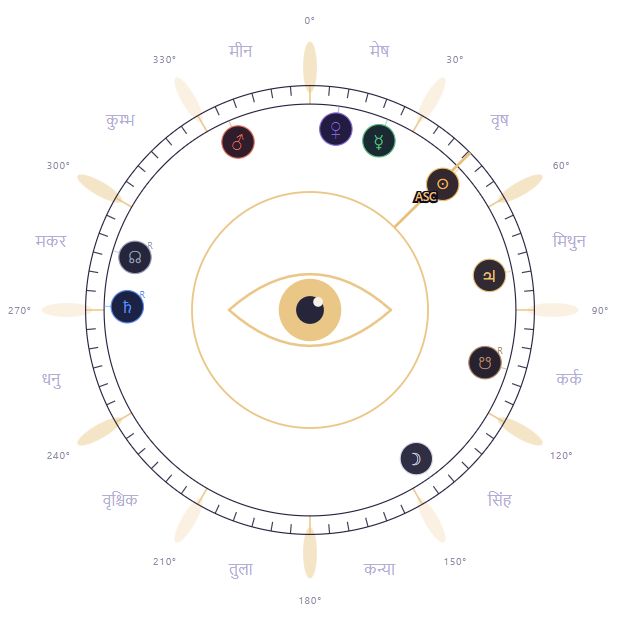
This is where the numerical table earns its place beside the diagram. A wheel can be beautiful, but the table lets you inspect a named object and its displayed value. Note exactly what the value measures before comparing it with another table. Keep precision in perspective, too: additional decimal places are not evidence that the birth time itself is exact. The result can be calculated finely while its input remains approximate. Both facts can be true, and a responsible explanation makes room for both.
Swiss Ephemeris is relevant to the positional calculation, not a shortcut past these questions. Antaryami has licensed the library for astronomical calculations. That licensing fact does not tell you which settings a particular screen used or establish a live engine path by itself. A useful methodology explanation should identify those choices and any fallback method. It should also separate the calculated position from the traditional interpretation that follows, instead of using an engine name to lend certainty to every sentence.
Which should you use in Antaryami?
Read the method shown beside the result. The reviewed website tools use the stated Traditional/Lahiri convention; that label is not a claim that every other method is wrong. If you are investigating a mismatch, send support the public method names and the differing placement labels through an appropriate private channel, not somebody else's birth details in a public comment.
Once you understand the difference, you can choose how to explore without turning it into an argument about which sign deserves your loyalty. If you are learning a particular tradition, use its stated framework consistently and read explanations written for it. If you are comparing traditions, label the comparison clearly. Do not merge two descriptions into a new personal verdict simply because each contains a sentence you recognise. That can feel convincing while leaving the method less clear than before.
Try writing one short summary in your own words: "These charts use the same birth details but different zodiac conventions." Or, if that is not what the evidence shows, write what is still unresolved. Perhaps one site does not disclose its settings. Perhaps the city selection differs. A modest statement that you can support is more valuable than a grand conclusion about which system has revealed your destiny. Your understanding grows when the explanation remains specific enough to check.
With Antaryami, the intention is to make those distinctions easier to see. A chart should invite an informed question, not require you to accept an unfamiliar label without context. Keep your selected profile, method and interpretation together. Then decide whether a traditional description offers a useful perspective on an experience you actually recognise. You may find something worth considering, or you may not. Neither response requires you to erase the person you were before opening the chart.
Astrological interpretations are for reflection, not a diagnosis, a guaranteed prediction or a substitute for professional advice. Journal guides are prepared with AI assistance; they are educational content, not individual consultations.