Antaryami
Chart essentials
What is a Kundli? A birth chart explained
A Kundli is an astrological chart calculated from a birth date, time and place. It records placements within a chosen system; it does not establish a fixed life story. Kundali, Janam Kundli and birth chart are common search terms for this starting point.
What information does a Kundli need?
Begin with the date on the birth record, the local clock time and the city of birth. The time zone belongs to that historical place and date, not the country where you now live. If the time is uncertain, keep that uncertainty visible. A polished diagram cannot turn an approximate input into an exact one.
Imagine sitting down to look at your chart for the first time. There are unfamiliar names, several symbols and perhaps a number beside almost every line. It is tempting to jump straight to the most dramatic sentence. But a better beginning is much quieter: whose chart is this, which birth details produced it, and what exactly am I looking at? Those three questions make the rest of the experience easier. You do not need to learn every technical term before you are allowed to be curious.
Suppose a family member remembers your birth as "around breakfast" while a written record gives a specific time. Keep those sources distinct rather than combining them into a newly confident answer. A remembered window is a window; a recorded clock time is a different kind of evidence. Neither should disappear simply because a form asks for one neat value. If you cannot establish the time, say so. The honest result may be a more limited reading, and that is preferable to an elaborate interpretation built on an invented minute.
Place deserves the same attention. A city with a familiar name may exist in more than one region. Check the selected location rather than assuming the first search result is yours. The birthplace is where the birth happened, not where the family home was, where you were registered later, or where you live now. Once these details are confirmed, keep them attached to that person. In a family account, choosing another profile should mean choosing another complete set of inputs, not merely changing the name above an old chart.
Why are there different-looking charts?
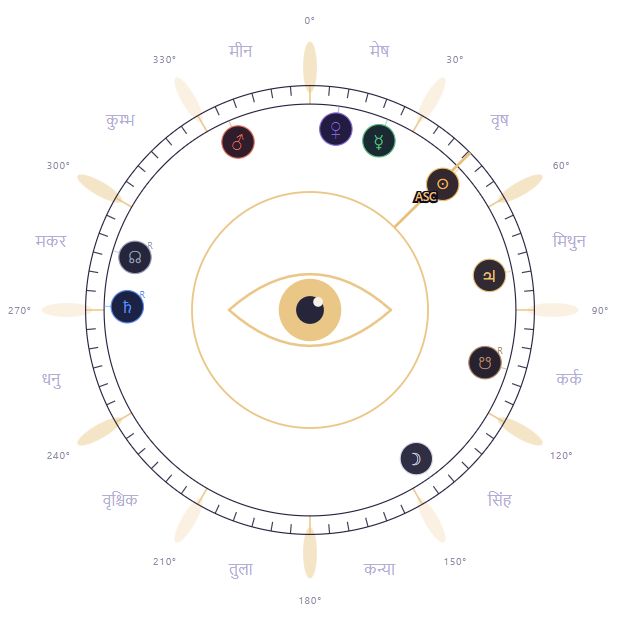
A circular wheel and a diamond-shaped chart can display the same underlying placements. Before comparing pictures, compare the zodiac convention, calculation method and house system. Different drawing styles do not automatically mean different results. Conversely, two similar pictures can hide different settings. The numerical placement list is often the best place to begin a comparison.
Think of the diagram as a way of arranging information, rather than the information itself. A train journey can appear on a timetable, a route map or a ticket. The formats look different, but you would expect the departure and destination to agree. Chart formats work similarly: before worrying about which picture looks more familiar, identify the placement being represented. If one view says the Moon is in a particular sign, the accompanying table for the same calculation should say the same thing.
There is another layer beneath the drawing: the method. A service may use a different zodiac convention or house system, and those choices can affect the labels you see. That is why a screenshot alone is often insufficient for comparing two results. Keep the settings alongside the birth inputs. Swiss Ephemeris provides astronomical calculation tools; its presence does not make every interpretation scientifically established, nor does it remove the need to check how a particular application uses those tools. Accurate calculation and thoughtful explanation are separate responsibilities.
If a comparison leaves you puzzled, narrow the question. Instead of asking why two entire charts are different, compare one object and one value. Does the Moon longitude agree? Does the displayed sign follow the same zodiac convention? Does the house differ because the house method differs? Small comparisons are easier to investigate than an argument about which whole chart feels more convincing. You are looking for an understandable reason, not a winner in a contest of confidence.
What can you read first?
Start with the Ascendant, Moon and Sun, checking the name of each placement rather than interpreting every symbol together. Then choose one house or planet to explore. Keep calculation separate from meaning: a position can be computed, while its traditional interpretation is a framework for reflection rather than a demonstrated prediction about your future.
For your first reading, choose a manageable path. Read the introductory explanation of a placement, pause, then ask what that explanation is actually claiming. Is it describing a traditional association, presenting a computed position, or suggesting a question for reflection? These are not interchangeable. A statement about where a planet was is different from a statement about how you might behave. Keeping that distinction visible lets you enjoy the symbolism without treating every sentence as an instruction.
A useful note might say, "This description mentions communication. When do I explain myself clearly, and when do I avoid a conversation?" You can answer that from experience. You might remember a meeting that went well and another that did not. Include both. If you only collect confirming examples, almost any broad description can begin to feel uncannily exact. The examples that do not fit are not inconvenient interruptions; they help you understand the limits of the interpretation.
You also do not have to read everything in one sitting. The aim is not to unlock a final verdict about yourself before closing the page. Start with one placement or one question and let the rest wait. A birth chart is a structured reference within an astrological tradition, not a deadline. Curiosity usually becomes more useful when there is room to digest an explanation rather than moving from one striking claim to the next.
How to use a free Kundli responsibly
Confirm whose saved profile is selected before calculating. Never reuse one person's profile by overwriting it with somebody else's details. Read the method and uncertainty notes before comparing results with another service. Antaryami's public instruments show a fictional example; the saved-profile tools require sign-in. An educational example should never be mistaken for your personal chart.
Before saving or sharing a reading, give the profile name one last look. This sounds small until an account contains several relatives with similar names. A report should belong to the same person as the chart, and an older download may reflect earlier inputs. If you corrected the birth details, check whether the report was generated before or after that correction. A familiar cover image does not establish that the underlying information is current.
Antaryami is most useful here when the experience stays understandable: your selected profile, the calculation context and the explanation should belong together. If something appears inconsistent, stop relying on the personal interpretation and ask for clarification with the specific mismatch. You do not need to send somebody else's private birth details to make that point. "The selected name and the report name differ" is already a clear and important observation.
Then return to the reason you opened the chart. Perhaps you wanted to understand a term, begin a reflective practice or explore a question that matters to you. A good first visit can be modest: you understand the inputs, recognise a few labels and know what you want to ask next. Thank you for giving yourself the time to begin carefully. You do not need a dramatic prediction to make that first step worthwhile.
Astrological interpretations are for reflection, not a diagnosis, a guaranteed prediction or a substitute for professional advice. Journal guides are prepared with AI assistance; they are educational content, not individual consultations.