 Antaryami
Panditji Edition
A first consultation that leaves room to ask
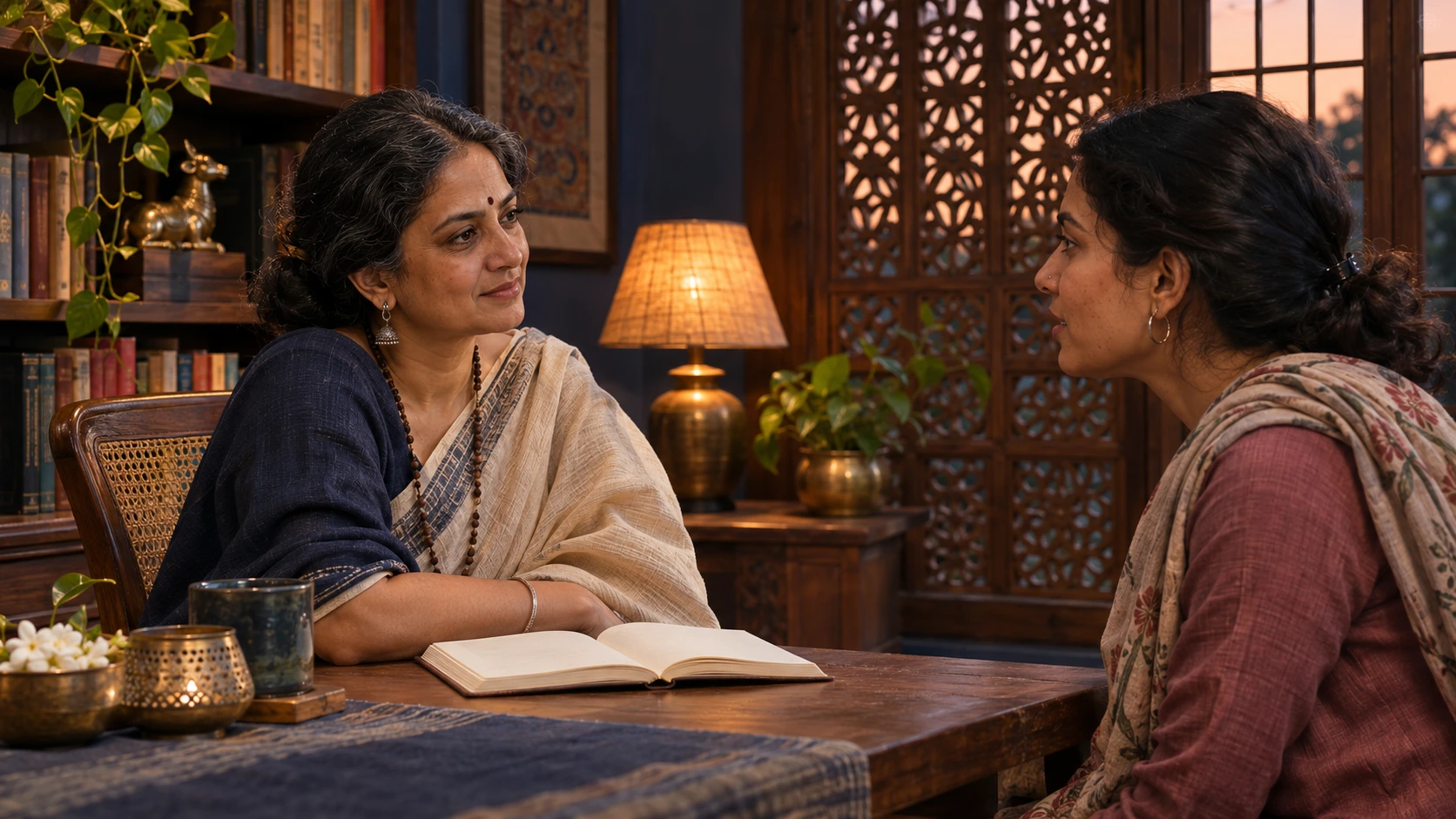
A person arriving for a reading may have a simple question and a long story behind it. Starting with a complicated chart can make them feel they have to understand everything at once. Begin by asking what brought them in and what would make the conversation useful today.
Agree what belongs in the session
If the question is about planning a ceremony, find out who needs to attend, where it will happen and how much flexibility the family has. A personal reading might call for a birth record. An event schedule usually has several facts you can establish before asking for anyone’s birth details.
Give the person a short description of the method. “I’m checking the venue’s local calendar first” tells them what you are doing. “I’ll look at your chart separately if that would help” lets them choose. The same approach works when opening a chart, a timing view or a numerology table.
Show one thing clearly
Rather than turning the screen toward a crowded list, point to the one value that matters for the question. Give it a name and explain why it is relevant in your tradition. If the value depends on an estimated time, say so while it is visible. The client can then ask about the uncertain part instead of wondering whether the whole discussion rests on a guess.
Close with a choice the person owns
Imagine the family has two convenient weekends. A practitioner can describe which one aligns with the selected convention and help the family see what they would trade off by choosing the other. Send a short note with the options, the location and the next fact to check. A good first consultation gives someone room to think and a clear way to come back with a question.
Astrological interpretations are for reflection, not a diagnosis, a guaranteed prediction or a substitute for professional advice. Journal guides are prepared with AI assistance; they are educational content, not individual consultations.